
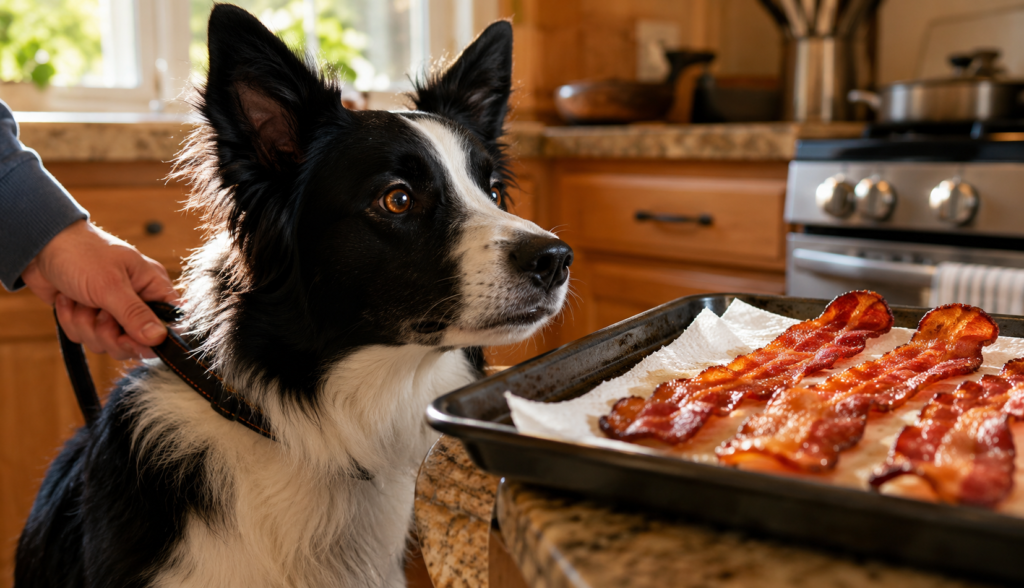
Bacon has become so culturally embedded as the thing dogs love most that questioning it almost feels contrarian. Dog treat aisles are full of bacon-flavored products, bacon memes feature dogs, and the smell of frying bacon produces a reaction in most dogs that makes it feel like the most natural treat in the world. But there’s a meaningful difference between bacon-flavored dog treats formulated for dogs and actual bacon, and there’s an equally meaningful difference between what a dog desperately wants and what’s actually good for it. Bacon sits at a unique intersection of extremely high sodium content, extreme fat content, and cultural normalization that makes it worth examining more carefully than most foods.
Is Bacon Safe for Dogs?
I’ve seen this firsthand more than once: a dog steals a strip of bacon off a plate and appears completely fine afterward. That immediate non-reaction is part of what makes bacon feel safer than it actually is — the harm here isn’t acute toxicity that shows up within minutes, it’s a combination of sodium overload and fat content that causes real problems either immediately or cumulatively over time.
Bacon isn’t toxic the way grapes or chocolate are, meaning a single strip in a healthy adult dog isn’t typically an emergency. But “not an immediate emergency” is a much lower bar than “safe to feed,” and bacon clears the first without coming anywhere close to the second.
The honest answer is no — bacon isn’t a food worth deliberately offering any dog, regardless of how much it’s wanted or how normalized the idea has become in popular culture.
The Sodium Problem Is Extreme Here
Most dog owners miss how concentrated the sodium content in bacon actually is compared to other salty foods. Bacon is cured in salt as a preservation method and then often additionally seasoned, meaning the salt isn’t just surface flavoring but deeply embedded throughout every strip.
A single strip of cooked bacon can carry more sodium than a small dog should consume in an entire day, making even one strip a meaningful sodium exposure rather than a trivial amount. For smaller breeds this scales particularly badly — what registers as a small treat to an owner represents a disproportionately large sodium hit relative to body weight.
Symptoms of dog salt poisoning include excessive thirst, vomiting, diarrhea, and in more severe cases lethargy and neurological symptoms that require veterinary attention rather than simply waiting for things to resolve at home.
Fat Content and Pancreatitis Risk
The first time I dealt with this question from a reader, pancreatitis came up quickly, and it’s the other half of why bacon is such a poor choice beyond just the sodium concern. Bacon is among the highest-fat common foods a dog is likely to encounter, and that fat content creates a real pancreatitis risk that a single fatty meal can sometimes trigger in susceptible dogs.
Pancreatitis is a painful inflammatory condition of the pancreas that causes vomiting, abdominal pain, lethargy, and sometimes fever — symptoms that can appear within hours of a high-fat meal rather than building over time the way some dietary problems do.
Dogs with existing sensitivity to high fat diets, a history of prior pancreatitis episodes, or known digestive vulnerability should treat bacon as completely off limits rather than something manageable in very small amounts, since the threshold for triggering a flare can be lower than owners expect.
Bacon Grease: The Overlooked Risk
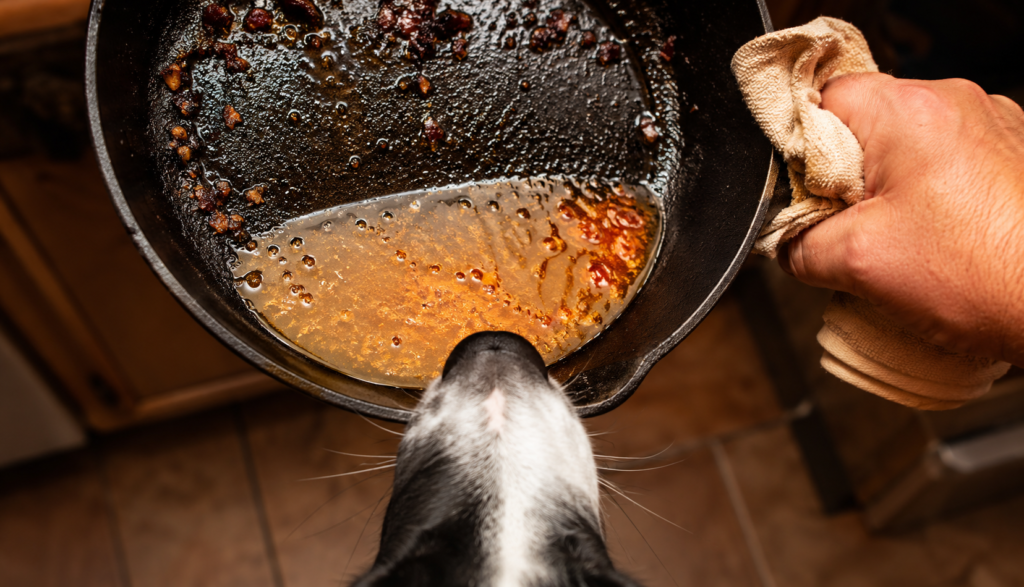
What surprised me was how often the grease gets overlooked in this conversation, since people focus on the strip itself and don’t think about what gets poured off the pan. Bacon grease concentrates the fat content of bacon without any of the protein, meaning it delivers the pancreatitis and weight gain risk in an even more direct form than the bacon strips themselves.
Dogs that get into a pan of bacon grease, or are regularly given food cooked in bacon grease as a flavor enhancer, are exposed to fat content levels that the strip-by-strip conversation doesn’t fully account for. A seemingly small amount of grease carries a significant caloric and fat load relative to any portion size that would seem reasonable as a topping.
Disposing of bacon grease in a way that’s inaccessible to your dog, rather than leaving a pan on a low counter or a grease container within reach, removes this specific risk without requiring any change to your cooking habits beyond disposal.
Raw Bacon: An Additional Concern
I’ve watched this come up when people consider whether raw bacon is at least better than the cooked version from a fat content standpoint. Raw bacon still carries the same extreme sodium content as cooked bacon and adds a separate parasites concern from raw pork that cooking eliminates.
The trichinosis risk associated with raw pork generally applies to raw bacon as well, since curing is a preservation process rather than a cooking method and doesn’t eliminate parasites the way heat does.
Raw bacon isn’t a safer alternative to cooked bacon on any axis that matters — it trades one set of concerns for another without removing either the sodium content or the fat content that make bacon a poor choice regardless of preparation.
What About Turkey Bacon?
Here’s something that rarely gets addressed directly: turkey bacon is commonly assumed to be a healthier alternative to regular bacon, and while it is typically lower in fat content than pork bacon, it still carries significant sodium content from the same curing process.
Turkey bacon isn’t a safe swap that makes bacon-feeding acceptable — it’s a marginally less bad option that still sits firmly in “not worth deliberately offering a dog” territory. The sodium problem doesn’t disappear just because the protein source changed from pork to turkey.
If the goal is a meat-based treat that actually benefits your dog rather than works against it, plain cooked chicken, plain turkey breast, or plain cooked fish deliver real protein without the curing-process sodium load that makes bacon and turkey bacon such poor choices.
Bacon-Flavored Dog Treats: A Different Story
From experience, the smarter call for owners who want to give their dog the bacon experience is to reach for commercially formulated bacon-flavored dog treats rather than actual bacon. These products are specifically designed to carry the smell and flavor dogs respond to without the sodium content and fat content that make real bacon so problematic.
This isn’t a perfect solution since treat quality varies widely and some commercial products have their own ingredient concerns, but the baseline difference between a bacon-flavored treat designed for dog consumption and an actual bacon strip is meaningful enough that the swap is worth making.
Your dog cannot tell the difference between the real thing and a well-formulated treat in the moment — the enthusiasm will be identical, and the health outcome will be significantly better over time.
Signs of Trouble to Watch For
Watch for vomiting, diarrhea, excessive thirst, or a hunched, uncomfortable posture in the hours after bacon exposure, particularly if more than a small amount was involved or if a smaller breed ate a disproportionate quantity relative to its body weight.
More serious dog salt poisoning symptoms including tremors, significant weakness, or seizures require emergency veterinary attention rather than monitoring at home, since severe sodium toxicity can escalate quickly and unpredictably.
If symptoms persist or worsen following any bacon exposure, a vet visit is always the right call, and any dog showing signs of abdominal pain or persistent vomiting after a fatty meal should be evaluated for pancreatitis rather than assumed to have simple digestive upset.
Frequently Asked Questions

Q. What happens if a dog eats bacon?
A. A small accidental piece typically causes no immediate crisis in a healthy dog, but the extreme sodium and fat content make vomiting, diarrhea, or pancreatitis real risks, especially with larger amounts.
Q. Is turkey bacon safer for dogs than regular bacon?
A. Turkey bacon is lower in fat content but still carries high sodium content from the curing process, making it a marginally better but still poor choice as a deliberate treat for dogs.
Q. Can dogs eat bacon grease?
A. No, bacon grease concentrates the fat content of bacon without the protein, making it one of the more direct triggers for pancreatitis and weight gain with even small amounts.