
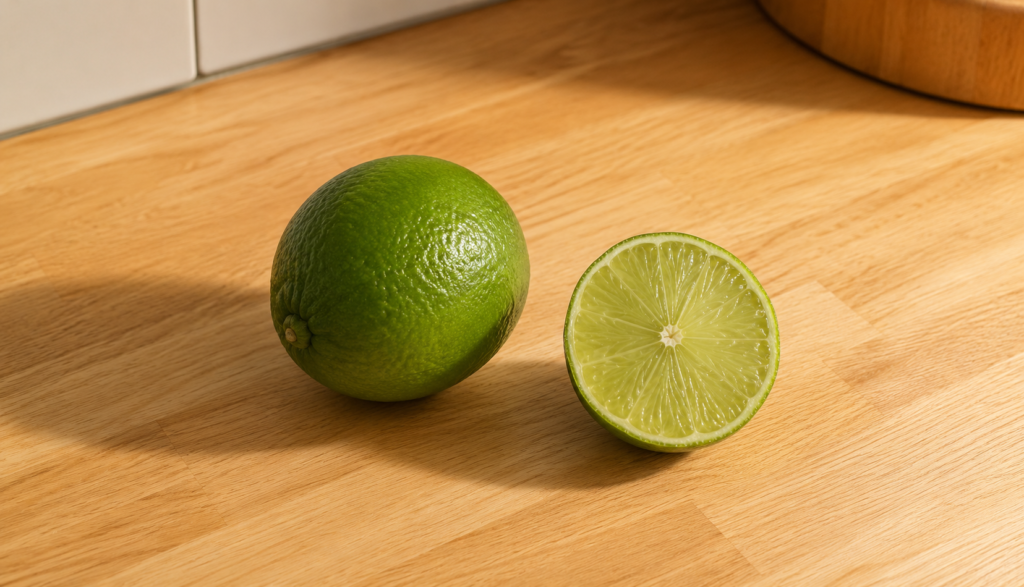
Lime comes up almost as often as lemon in conversations about citrus and dogs, usually because someone’s making a drink with lime wedges nearby and a curious dog gets interested in the smell. I treat lime with exactly the same caution as lemon because, chemically, there’s very little difference between them when it comes to dog safety. Can dogs eat lime? No. The acidity, the psoralen compounds, the essential oils in the peel — all of it tracks closely with what makes lemon inappropriate for dogs. If you’ve already read about lemon, much of this will sound familiar, and that’s intentional, because the two fruits genuinely do present the same risk profile to dogs.
Why Lime Follows the Lemon Pattern Exactly
Lime and lemon are both true citrus fruits with very similar acid and compound profiles. Both contain significant concentrations of citric acid that irritate the canine digestive system more than sweeter citrus fruits like orange. Both carry psoralen compounds and essential oils concentrated heavily in the peel but present in smaller amounts throughout the rest of the fruit, including the flesh. There’s no meaningful safety distinction between the two that would make one acceptable and the other not.
This consistency across true citrus species — orange and mandarin being the sweeter exception, lemon, lime, and grapefruit being the more acidic and compound-dense group — is a useful pattern to internalize rather than evaluating each individual citrus fruit from scratch. If a citrus fruit is notably sour or bitter rather than sweet, that’s a reasonable signal that it likely falls into the higher-risk category alongside lemon and lime rather than the safer orange category.
What surprised me, looking at lime specifically, was how often it appears in households more frequently than lemon, particularly where cocktails, sparkling water, or certain cuisines are common. This increases the practical odds of a dog encountering lime wedges, lime zest, or lime juice residue compared to lemon in some households, even though the underlying risk profile is identical. Frequency of exposure matters as much as the inherent risk when it comes to actual incidents.
Dogs generally show the same instinctive aversion to lime’s sourness that they show toward lemon, which reduces the real-world frequency of significant accidental ingestion. But as with lemon, that natural aversion is a mitigating factor, not a safety guarantee, and it shouldn’t be relied upon as the only thing standing between a dog and a meaningful lime exposure.
What Happens If a Dog Eats Lime
The reaction to lime ingestion mirrors what happens with lemon almost exactly, scaled to the amount and parts of the fruit involved. A dog that licks a lime wedge out of curiosity and pulls away from the sourness typically experiences nothing beyond brief discomfort. A dog that consumes a more substantial piece — particularly involving the peel, where the compound concentration is highest — faces a more serious situation requiring attention.
Vomiting in dogs and diarrhea are the most common outcomes of meaningful lime exposure, generally appearing within a few hours and resolving within a day in mild cases. More significant ingestion, especially of lime peel or zest, can produce more pronounced symptoms including excessive drooling, lethargy, and in cases of substantial exposure, photosensitivity reactions affecting areas of skin exposed to light. These severe reactions require a larger ingested amount than most accidental exposures involve, but they’re documented and worth recognizing if a dog has gotten into a significant quantity of lime.
Lime zest deserves specific mention because it’s used so commonly in cooking and baking, and the zest itself is essentially concentrated lime peel — all of the essential oil content with none of the dilution that comes from the flesh or pith. A dog that gets into a bowl of grated lime zest left out during food preparation is getting a more concentrated exposure than one that licks a whole lime wedge, gram for gram, simply because of how concentrated the zest is relative to the whole fruit.
Lime Juice, Cocktails, and Common Household Exposure

Lime juice carries the same concerns as lemon juice — concentrated acidity and irritant compounds without the dilution of the fruit’s natural fiber and pulp. There’s no appropriate amount of lime juice to give a dog intentionally, whether fresh-squeezed or from a bottled product, and the same logic that rules out lemon juice rules out lime juice entirely.
Cocktails and mixed drinks present a specific, fairly common source of household lime exposure that’s worth flagging directly. Lime wedges used as a garnish, lime juice mixed into a drink, and the general presence of cut limes around bar setups or kitchen counters during gatherings create more opportunities for a curious dog to investigate than most owners account for. Beyond the lime itself, cocktails frequently contain alcohol, which carries its own significant toxicity risk for dogs entirely separate from the citrus concern — a combination that makes spilled or abandoned drinks something to clean up and keep away from dogs promptly rather than leaving unattended.
Most dog owners miss this completely: it’s not just the intact fruit that matters. Lime-flavored sparkling water, lime-infused dishes, and the juice residue left on cutting boards or in empty glasses all carry forward some level of the same concern, even if heavily diluted in some cases. Being generally mindful about where lime has been used in food and drink preparation, and cleaning up residue promptly, reduces the kind of incidental exposure that’s more common with lime than with less frequently used citrus.
Lime Essential Oil and Concentrated Exposure

Beyond the fruit itself, lime essential oil presents a more concentrated and serious risk than anything the whole fruit would deliver, following the same pattern as lemon essential oil. Lime oil appears in cleaning products, candles, diffusers, and various scented household items, and concentrated exposure through ingestion, skin contact, or inhalation can cause more significant symptoms than fruit exposure alone — including vomiting, weakness, drooling, and in serious cases of ingestion, liver impact.
If lime-scented cleaning products, diffusers, or essential oils are part of your household, the same storage precautions that apply to lemon essential oil apply here: keep concentrated products secured away from any space a dog can access, and exercise particular caution with diffusers running in areas where dogs spend significant time. The concentration difference between fruit and essential oil is substantial, and treating essential oils with more caution than the whole fruit is the right calibration.
Lime-scented insect repellents and certain natural pest deterrent products also use the citrus aversion dogs typically show as a functional feature, similar to lemon-based repellents. This commercial use reinforces that the aversion dogs show toward lime scent is a real and fairly reliable behavioral pattern, even as it doesn’t change the underlying need to keep concentrated lime products away from dogs regardless of whether they’d choose to investigate on their own.
What Most People Don’t Know
Key lime, the smaller and more intensely flavored variety often used in key lime pie, carries the same compound profile as standard Persian lime, just in a more concentrated form relative to its smaller size. There’s no meaningful safety distinction between lime varieties — all should be treated with the same avoidance regardless of which specific type is involved.
The relationship between lime and other citrus that aren’t immediately obvious as “lime” is also worth knowing. Kaffir lime, used in some Southeast Asian cooking, and various lime hybrids carry similar compound profiles to standard lime. When encountering an unfamiliar citrus variety in cooking or as a garnish, the safer default is to assume it falls into the higher-risk category with lemon and lime rather than assuming it’s closer to the sweeter, lower-risk orange category without verifying.
The other detail worth understanding: a dog showing genuine interest in lime — persistently trying to get at a lime wedge or zest despite initial aversion — may be displaying general food-seeking behavior unrelated to actually enjoying the flavor. Bored or highly food-motivated dogs sometimes pursue items regardless of taste, which is part of why relying on a dog’s preferences to keep them safe is less reliable than proper storage and supervision. If symptoms persist or worsen after a dog eats any amount of lime, a vet visit is always the right call.
Safe Alternatives for Dogs Who Seem Interested in Sour Flavors
For dogs that show genuine interest in sharp or sour flavors despite the typical citrus aversion, the same safer alternatives that apply to lemon apply equally here. Fresh cranberries offer real tartness without any citrus toxicity concern.Green apple provides a sharper flavor than sweeter red varieties, prepared with the standard core and seed removal that applies to any apple. Plain, unsweetened Greek yogurt offers tang without any risk at all.
None of these options carry the acidity, essential oil concentration, or general irritant profile that makes lime and lemon inappropriate. There’s rarely a good reason to introduce lime to a dog’s diet intentionally when these safer options accomplish the same flavor goal without the risk.
Safe fruits for dogs cover a meaningful range from sweet to tart, which means the established safe list has options for dogs with almost any apparent flavor preference. Lime, like lemon, sits clearly outside that safe range, and the consistency of that classification across true citrus species is one of the more straightforward patterns to apply when evaluating any new or unfamiliar citrus fruit a dog might encounter.
Frequently Asked Questions
Q. Is lime as toxic as lemon for dogs?
A. Yes. Lime and lemon share nearly identical acid and compound profiles, including psoralen compounds and essential oils. Both should be avoided entirely for dogs, with no meaningful safety distinction between them.
Q. What happens if a dog licks a lime wedge?
A. A small lick of lime typically causes only brief discomfort from the sourness, and most dogs pull away on their own. Eating a substantial piece, especially with peel, is more concerning and may cause vomiting or diarrhea.
Q. Is lime zest more dangerous than a whole lime for dogs?
A. Yes, gram for gram. Lime zest is concentrated lime peel with all the essential oil content and none of the dilution from the flesh or pith. A dog getting into zest is getting a more concentrated exposure than from a whole wedge.
Q. Are cocktails with lime dangerous for dogs?
A. Yes, for two reasons. The lime itself carries the standard citrus risk, and most cocktails also contain alcohol, which is separately and significantly toxic to dogs. Clean up spilled or abandoned drinks promptly and keep them out of reach.
Q. Is lime essential oil dangerous for dogs?
A. Yes, more so than the fruit itself. Concentrated lime oil can cause vomiting, weakness, and in serious ingestion cases, liver impact. Keep lime-scented cleaning products, diffusers, and oils stored securely away from dogs.
Q. Do all lime varieties carry the same risk?
A. Yes. Key lime, Persian lime, and other lime varieties share the same compound profile and should all be treated with equal caution. There’s no variety of lime that’s considered safer for dogs.
Q. What should I give my dog instead of lime?
A. Fresh cranberries, green apple, and plain unsweetened yogurt all offer tart or tangy flavors without lime’s toxicity concerns. These are safer ways to satisfy a dog’s apparent interest in sharper flavors.