
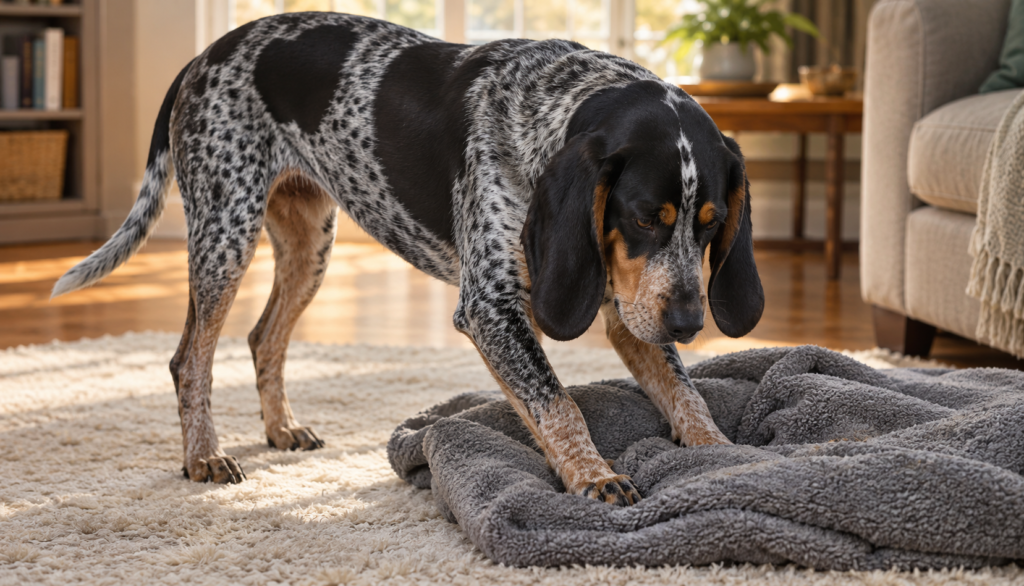
If you have ever watched your dog paw at the floor for a full minute, circle, paw some more, and then flop down as if nothing happened, you are not alone. Why does my dog scratch the carpet is one of the most common questions new and experienced owners ask, and the answer is usually far less alarming than it looks. In most cases, dog scratching carpet is an old instinct, a way to relax, or a sign of leftover energy. Sometimes, though, dog digging at carpet points to stress, boredom, itchy skin, or even pain. This guide explains the common causes, how to tell normal from worrying, what you can do at home, and when a vet visit makes sense.
Is Carpet Scratching Normal?
Short, occasional scratching is normal. Dog scratching the couch, the bed, or a patch of carpet is common, and so is dog scratching the rug by the fireplace or in a sunny corner. A healthy dog may do any of these a few times a day, usually for a few seconds before settling down. This kind of dog scratching the floor tends to happen at predictable moments, such as right before bedtime, after a nap, or when your dog is getting comfortable in a new spot. It stops easily when you call your dog, it does not leave sore paws or damaged nails, and your dog acts happy and relaxed afterward.
The picture changes when the scratching becomes long, frantic, or hard to interrupt. If your dog digs at the same spot for many minutes, ignores treats and calls, tears up carpet fibers, or seems upset while doing it, the behavior has moved from a quirk to a signal. That is when it helps to look at the cause rather than just the carpet.
8 Common Reasons Dogs Scratch the Carpet
1. Instinctive Denning and Nesting
The most common reason is plain instinct, and normal dog digging behavior of this kind has deep roots. Dogs descended from wild ancestors who scratched and turned in circles to flatten grass, clear debris, and shape a safe sleeping spot. That is why you often see dog scratching before lying down, even on a soft bed. This instinctive denning habit survives in every breed, and carpet simply gives your dog something to dig at. It is a harmless form of nesting behavior in dogs and usually needs no fix at all.
2. Leaving Scent Messages
Dogs have scent glands between their paw pads. When your dog scratches the floor, those glands release a personal scent that says, in dog language, “this spot is mine.” This kind of scent marking is quiet and friendly compared with other marking behaviors, and it is especially common in multi-dog homes or after new furniture, guests, or other animals have entered the room. If your dog scratches the carpet in a favorite area and then walks away calmly, scent marking is a likely reason.
3. Seeking Comfort and Regulating Body Temperature
Dogs also dig to adjust their sleeping spot. In warm weather, a dog may scratch at the floor hoping to uncover a cooler layer, while in cold weather the same motion can help make a snug nest. This is a simple way of regulating body temperature and seeking comfort. If your dog scratches the carpet mostly at certain times of year, or only when the room is too warm or too cold, temperature is probably part of the story.
4. Pent-Up Energy and Boredom
A dog with too much pent-up energy will find a way to burn it off, and the carpet is right there. Dog boredom often shows up as destructive behavior such as scratching, chewing, pacing, or following you from room to room. Young dogs, working breeds, and hounds bred for long hours of tracking are especially prone to this when they do not get enough daily exercise or mental stimulation. If the scratching happens most in the evening, or after a day when your dog had a short walk, extra activity is often the cure.
5. Anxiety and Stress Relief
Scratching can be a form of stress relief. A worried dog may dig at the carpet near the front door, at the spot where you usually sit, or in the room where they are left. Dog anxiety can come from changes in routine, loud noises, a new home, or being alone. Look at the context: dog scratching carpet when left alone, along with barking, drooling, or pacing, points toward separation anxiety. Identifying your dog’s anxiety triggers is the first step toward helping them feel safe again. You may also notice dog scratching the door in the same situations, which is another classic sign of distress at being separated from you.
6. Scent Hound Instincts and Hidden Smells
Dogs experience the world through their noses. A crumb, a spilled drink, an old stain, or a pest moving under the floor can all trigger scratching, especially in breeds with strong scent hound instincts. If your dog sniffs one spot intently and then paws at it again and again, there may be crumbs and hidden smells under or around the carpet. In rare cases, scratching at one stubborn spot can mean a mouse or insect is nearby, so it is worth checking the area.
7. Itchy Paws and Skin Irritation
Sometimes a dog is not digging at all but rubbing and scratching to relieve discomfort. Itchy paws from allergies, dry skin, or a reaction to cleaning products can cause skin irritation that your dog tries to soothe by dragging the feet across carpet. Check for redness between the toes, licking, chewing at the feet, a yeasty smell, or hair that has turned reddish-brown from saliva. Dogs that scratch the carpet and lick their paws at the same time deserve a closer look at skin health, not just behavior.
8. Compulsive Behavior, Pain, or Aging
A smaller number of dogs develop compulsive behavior, repeating the same motion again and again until it is hard to stop. In senior dog patients, repetitive scratching and restlessness at night can be an early sign of canine cognitive dysfunction, a condition similar to dementia. Pain from arthritis can also make it hard to get comfortable, so the dog scratches and circles but cannot settle. If the scratching is new, constant, or paired with confusion or stiffness, a veterinary exam is the right next step.
Causes at a Glance
| Cause | What You Will See | Usually Happens | What to Do |
|---|---|---|---|
| Nesting instinct | Scratching and circling, then lying down | Bedtime, naps | Nothing, or offer a dog bed |
| Scent marking | Brief scratching, then walking away calmly | Favorite spots, new smells | Usually harmless |
| Temperature | Scratching and shifting position | Hot or cold rooms | Adjust the room or bedding |
| Boredom or energy | Long scratching, chewing, pacing | Evenings, rainy days | More exercise and play |
| Anxiety | Frantic digging, whining, near doors | When left alone, storms | Calm routine, vet or trainer help |
| Hidden smells | Sniffing and pawing at one spot | After spills or crumbs | Clean the area, check for pests |
| Itchy paws | Rubbing, licking, red skin between toes | Any time, seasonal | Paw check, vet if it continues |
| Compulsion or aging | Repetitive, hard to interrupt, night restlessness | Night, senior years | Vet exam |
What Most People Don’t Know
Most owners assume that a dog scratching the carpet is either being naughty or is secretly itchy. Neither is usually true. The behavior is far more often instinct or emotion than a skin problem, and punishing it almost never helps. A dog that scratches out of worry becomes more anxious when scolded, and the scratching can get worse.
The second thing many people miss is that the timing tells you almost everything. Scratching right before lying down is usually nesting. Scratching near the door while you are out is usually anxiety. Dog scratching carpet at night, especially in an older dog, can be a sign of discomfort or confusion. Before changing anything, keep a short note for a week: when it happens, how long it lasts, and what your dog was doing just before. That small habit often solves the mystery.
Third, hormones matter more than people expect. A female dog going through hormonal changes, such as a heat cycle or a false pregnancy, can show strong nesting urges, including digging at carpet, gathering blankets, and guarding soft toys. If your intact female suddenly starts nesting, it is worth mentioning to your vet.
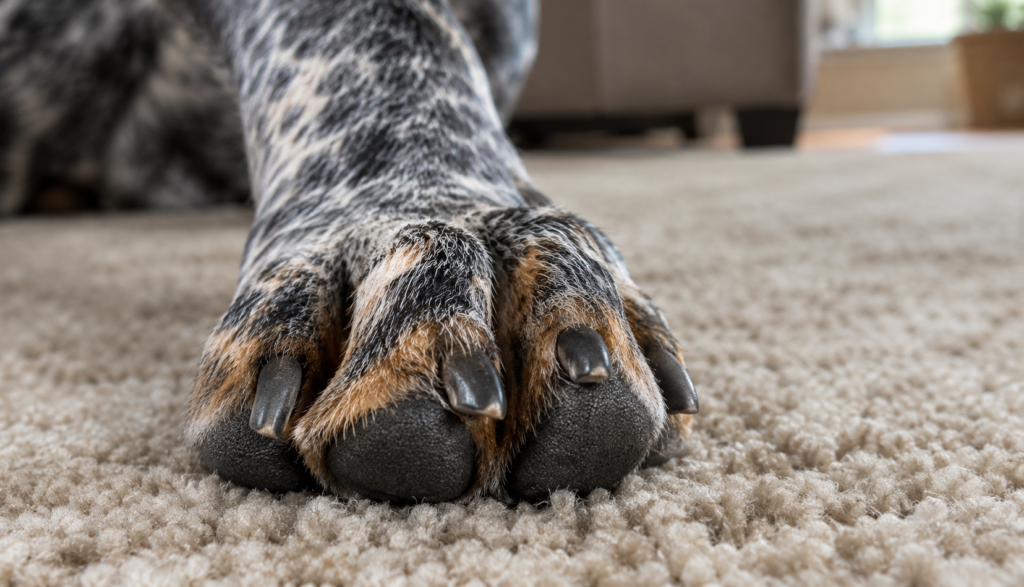
Finally, scratching can hurt the dog. Constant digging can wear down dog nails, tear a nail, or irritate the paw pads, and swallowed carpet fibers can upset the stomach. What looks like a funny habit can quietly turn into a real problem if it goes on for weeks.
When Carpet Scratching Is a Reason to Worry
Most carpet scratching is fine, but some signs deserve attention. Pay close attention if your dog scratches obsessively, meaning dog scratching carpet obsessively for long stretches and cannot be distracted by treats, toys, or your voice. The same goes for dog scratching carpet and whining, which suggests discomfort or distress rather than simple nesting.
Other warning signs include bloody or broken nails, limping, swollen or red paws, eating carpet fibers, sudden changes in sleep, confusion in an older dog, and scratching combined with panting, drooling, or trembling. The same behavior also becomes more concerning if it shows up suddenly in a dog who never did it before. A sudden change in behavior is often the earliest clue that something has shifted, whether emotionally or physically.
How to Stop Your Dog From Scratching the Carpet

If you are wondering how to stop dog scratching carpet without a fight, start by matching the fix to the cause. There is no single trick that works for every dog, but a few steps help in most situations.
Give your dog a better place to dig. A thick, comfortable dog bed placed where your dog already likes to scratch gives the nesting urge somewhere to go. Some dogs enjoy a blanket they can rearrange. A snuffle mat or a digging box filled with toys can also satisfy the urge to dig in a safe way.
Increase exercise and play. Make sure your dog gets enough daily exercise for their age and breed, then add mental stimulation such as puzzle feeders, scent games, and short training sessions. Hounds and other scent-driven dogs often calm down quickly when they get to use their nose. This kind of environmental enrichment reduces both boredom and stress.
Offer chew toys and acceptable outlets. Long-lasting chew toys keep the mouth and paws busy. Rotating toys every few days keeps them interesting.
Use positive reinforcement and redirect. When your dog starts scratching, calmly call them away and give them something better to do, then reward them for choosing it. Redirecting the behavior with positive reinforcement teaches your dog what you want instead of only what you do not. Avoid yelling or punishment, since fear can make anxious scratching worse.
Reduce stress. If your dog scratches when left alone, build a calm departure routine, leave a worn T-shirt or a favorite toy, and consider a trainer or vet consultation for true separation anxiety. Never leave a very anxious dog to simply cope.
Protect the floor and the paws. Keep nails trimmed so scratching does less damage, and cover favorite digging spots with a rug runner or furniture throw. A pet-safe bitter spray on the carpet edge can discourage some dogs, though it works best alongside the steps above, and you should test it on a small hidden patch first.
Clean the spot. If hidden smells are the trigger, an enzyme cleaner can remove the scent that keeps drawing your dog back to the same area.
When to See a Vet
Knowing when to see a vet helps you avoid both overreacting and waiting too long. Book an appointment if the scratching is new and intense, lasts for several days, or comes with other changes. Reasons to call include red, swollen, or bleeding paws, constant licking or chewing of the feet, broken or split nails, limping or stiffness, signs of confusion or restlessness at night in an older dog, and scratching that does not respond to more exercise and enrichment.
A vet can check the paws and skin, look for pain or arthritis, rule out allergies, and talk through anxiety options if needed. If separation anxiety or a compulsive pattern is the cause, a vet or certified behaviorist can build a plan that is far more effective than trial and error. Seek urgent care if your dog has swallowed carpet fibers and is vomiting, refusing food, or seems uncomfortable.
Frequently Asked Questions
Q. Why does my dog scratch the carpet before lying down?
A. This is nesting. Your dog is following an instinct inherited from wild ancestors who scratched and circled to flatten and clear a sleeping spot. It is normal and harmless unless it becomes frantic or goes on for a long time.
Q. Why does my dog scratch the carpet at night?
A. Night scratching is often nesting or boredom, but in older dogs it can signal pain, arthritis, or canine cognitive dysfunction. If it is new, constant, or paired with pacing or confusion, ask your vet.
Q. Is carpet scratching a sign of anxiety?
A. It can be. Anxious dogs often scratch near doors or when left alone, usually with whining, drooling, or pacing. If the scratching happens mostly when you are away, separation anxiety is a possibility worth discussing with your vet or a trainer.
Q. Can I punish my dog for scratching the carpet?
A. Punishment is not recommended. It rarely addresses the cause and can increase stress, making the behavior worse. Redirect to a better outlet, reward calm behavior, and address the reason behind the scratching instead.