

A dog with diarrhea is one of the most common reasons owners search for help at home before calling the vet. In most mild cases, a short food break followed by a bland diet is enough to settle things down. But diarrhea can also be a sign of something more serious, so knowing what to give, what to avoid, and when to stop waiting and get help matters just as much as the remedy itself.
First Step: A Short Food Break
For an adult dog who is otherwise acting normal — still drinking water, no vomiting, no blood in the stool — withholding food for 12 to 24 hours gives the gut a chance to rest. Water should always stay available during this time. This step is not appropriate for puppies, senior dogs, or dogs with existing health conditions, who can drop blood sugar or dehydrate faster and should see a vet sooner rather than trying a fast at home.
The Bland Diet: What to Give
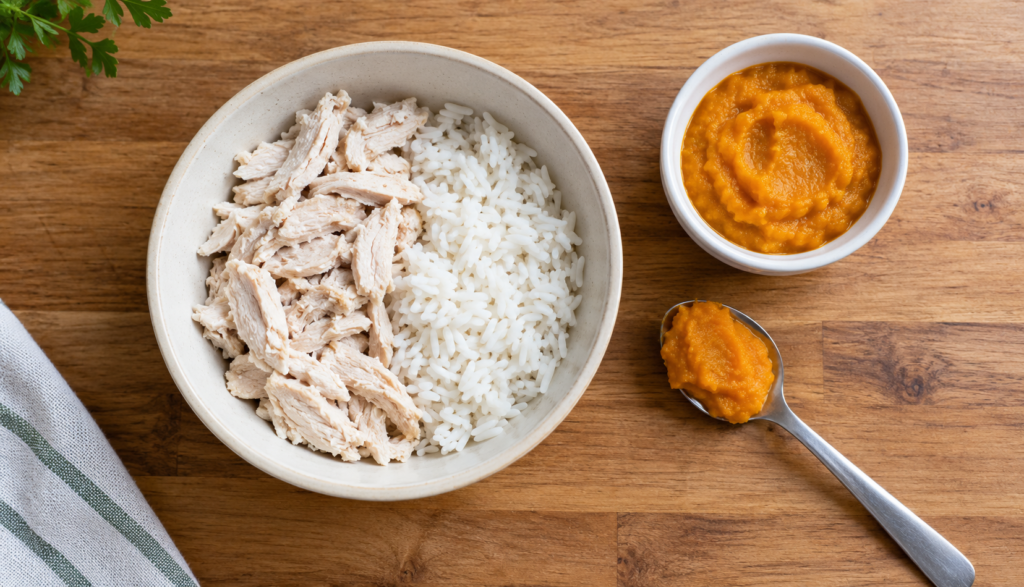
Once the food break is over, or immediately if you skip the fast, a bland diet is the standard next step. The goal is food that is easy to digest and low in fat, not a full nutritional meal.
- Plain boiled chicken — skinless, boneless, no salt, oil, or seasoning
- Plain white rice — well cooked and soft, mixed with the chicken at roughly a 2:1 ratio of rice to chicken
- Plain canned pumpkin — 100% pumpkin, not pie filling, which contains added sugar and spices. A spoonful or two added to the bland meal can help firm up stool due to its fiber content
- Plain boiled potato — skinless, unseasoned, mashed or cubed, as an alternative or addition to rice
- Plain unsweetened yogurt — a small spoonful can help in some dogs, though it’s less universally recommended than the options above and should be skipped if your dog is lactose sensitive
Feed small portions every few hours rather than one large meal, and watch how the dog responds before increasing the amount.
Reintroducing Regular Food
Once stool has been normal for a full day or two, transition back to regular food gradually over 2 to 3 days. Mix increasing amounts of the regular diet into the bland diet rather than switching all at once, which can trigger another round of loose stool.
What Most People Don’t Know
Many owners reach for over-the-counter human anti-diarrheal medication as a first response. This is risky without veterinary guidance — some human medications are unsafe for dogs, and even the ones that can be used require correct, weight-based dosing that a home guess is unlikely to get right. Diarrhea is also the body’s way of clearing something out, so stopping it too aggressively before the underlying cause is addressed can sometimes prolong the real problem rather than solve it.
What to Avoid Giving
- Dairy products beyond a small amount of plain yogurt, since many dogs are lactose intolerant
- Fatty table scraps, fried foods, or rich leftovers, which can worsen digestive upset
- Bones, rawhide, or hard chews during a digestive flare-up
- Any human anti-diarrheal or digestive medication without checking with a vet first
- Sudden large meals once appetite returns — overfeeding can restart the cycle
Home Remedy vs. Vet Visit: Quick Reference
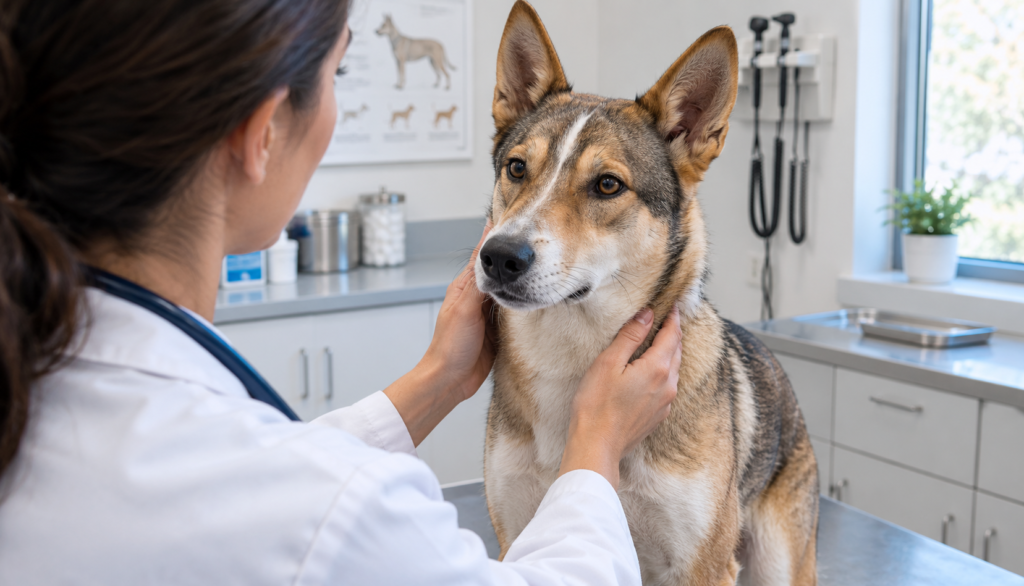
| Situation | What to Do |
|---|---|
| Mild, single episode, dog acting normal | Short food break, then bland diet at home |
| Diarrhea lasting more than 24–48 hours | Contact a vet, even if the dog seems otherwise fine |
| Blood in stool or black, tarry stool | Vet visit promptly — do not wait it out |
| Vomiting alongside diarrhea | Vet visit — combined symptoms raise the concern level |
| Lethargy, not drinking, or dry/tacky gums | Vet visit — signs of dehydration need medical attention |
| Puppy, senior dog, or dog with existing condition | Vet visit — these dogs decline faster and shouldn’t “wait and see” |
| Known or suspected toxin exposure (grapes, chocolate, xylitol, etc.) | Vet or emergency clinic immediately |
Common Causes Behind Sudden Diarrhea
Diarrhea in dogs often traces back to a specific trigger rather than appearing at random. Common causes include a sudden diet change, eating something off a walk or out of the trash, food intolerance, stress or travel, parasites, viral or bacterial infection, or reaction to a new treat or table food. If diarrhea keeps recurring rather than resolving after one bland-diet cycle, a vet visit to rule out parasites or an underlying condition is worth doing rather than repeating the home remedy indefinitely.
Preventing Future Episodes
Introduce any new food gradually over 5 to 7 days rather than switching all at once. Keep human food, trash, and anything picked up on walks out of reach. Stick to a consistent feeding schedule and avoid sudden treat overload, especially with rich or fatty foods. Dogs with a known sensitive stomach often do better on a consistent, limited-ingredient diet year-round.
Frequently Asked Questions
Q. Can I give my dog Pepto-Bismol for diarrhea?
A. Some vets do use it in specific cases, but it isn’t safe for every dog and dosing has to be weight-based. Don’t give it without checking with a vet first.
Q. How long should I withhold food before starting the bland diet?
A. 12 to 24 hours is typical for a healthy adult dog with mild symptoms. Puppies, seniors, and dogs with health conditions generally shouldn’t be fasted without veterinary guidance.
Q. Is rice or pumpkin better for firming up stool?
A. They serve slightly different roles — rice is a bland carb base, pumpkin’s fiber specifically helps firm stool. Many recipes use both together.
Q. When does diarrhea become an emergency?
A. Blood in the stool, repeated vomiting, lethargy, dehydration signs, or diarrhea lasting more than a day or two in a puppy or senior dog all warrant prompt vet attention.