
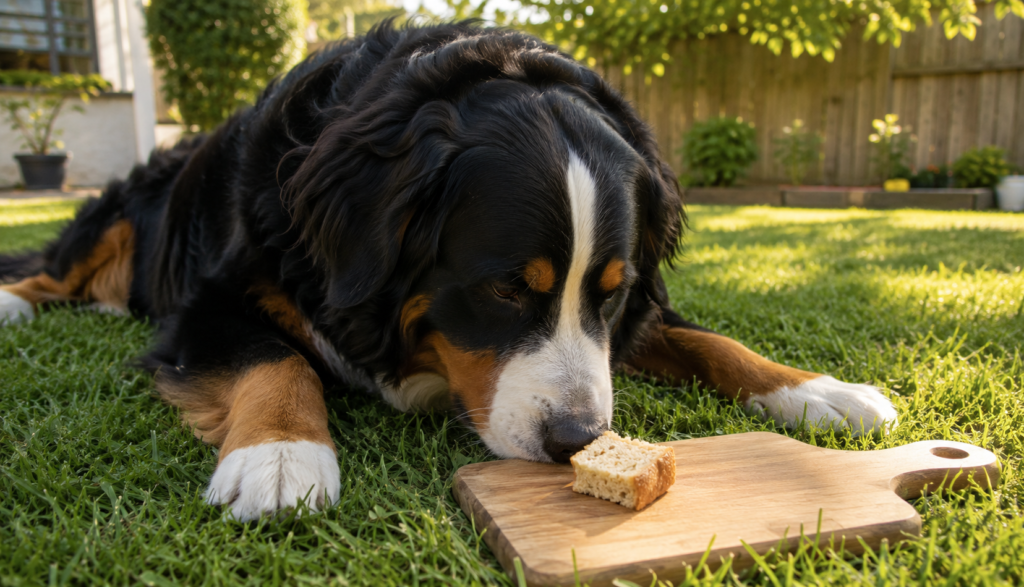
Yes, dogs can eat plain bread in small amounts. Plain white or wheat bread isn’t toxic to dogs and won’t cause immediate harm if your dog steals a slice off the counter. But bread offers almost no nutritional value for dogs, and certain types — like raw dough, garlic bread, or raisin bread — carry real dangers that every owner should understand before sharing a bite.
Is Bread Safe for Dogs?
Plain bread, in small quantities, is generally safe for most healthy adult dogs. It isn’t classified as a toxic food, and a small piece of plain white or wheat bread is unlikely to cause a reaction beyond mild digestive upset in sensitive dogs. That said, “safe” doesn’t mean “beneficial.” Bread is a filler food — high in carbohydrates, low in the protein and nutrients dogs actually need. Vets generally categorize bread as an occasional treat rather than a regular addition to a dog’s diet.
Nutritional Value of Bread for Dogs
Bread is often called an “empty calorie” food for a reason. A typical slice of white bread provides mostly refined carbohydrates with very little protein, fiber, vitamins, or minerals that support a dog’s health. Whole grain and multigrain breads offer slightly more fiber and micronutrients than white bread, but the difference is modest. Neither type contributes meaningfully to a dog’s daily nutritional requirements, which are built around animal protein, fat, and specific vitamin and mineral ratios that commercial dog food is formulated to meet.
| Bread Type | Safety for Dogs | Notes |
|---|---|---|
| Plain white bread | Safe in small amounts | Low nutritional value, high refined carbs |
| Plain wheat/whole grain bread | Safe in small amounts | Slightly more fiber than white bread |
| Sourdough bread | Safe if fully baked | Raw sourdough starter is dangerous — see below |
| Garlic bread | Unsafe | Garlic and onion seasoning are toxic to dogs |
| Raisin bread | Unsafe | Raisins are highly toxic, even in small amounts |
| Banana bread | Depends on recipe | Safe if no xylitol, chocolate, or nuts added |
| Raw bread dough | Dangerous | Yeast expands and ferments in the stomach — emergency risk |
| Rye bread | Safe in small amounts | No specific added risk beyond general bread caveats |
Raw Bread Dough: A Genuine Emergency
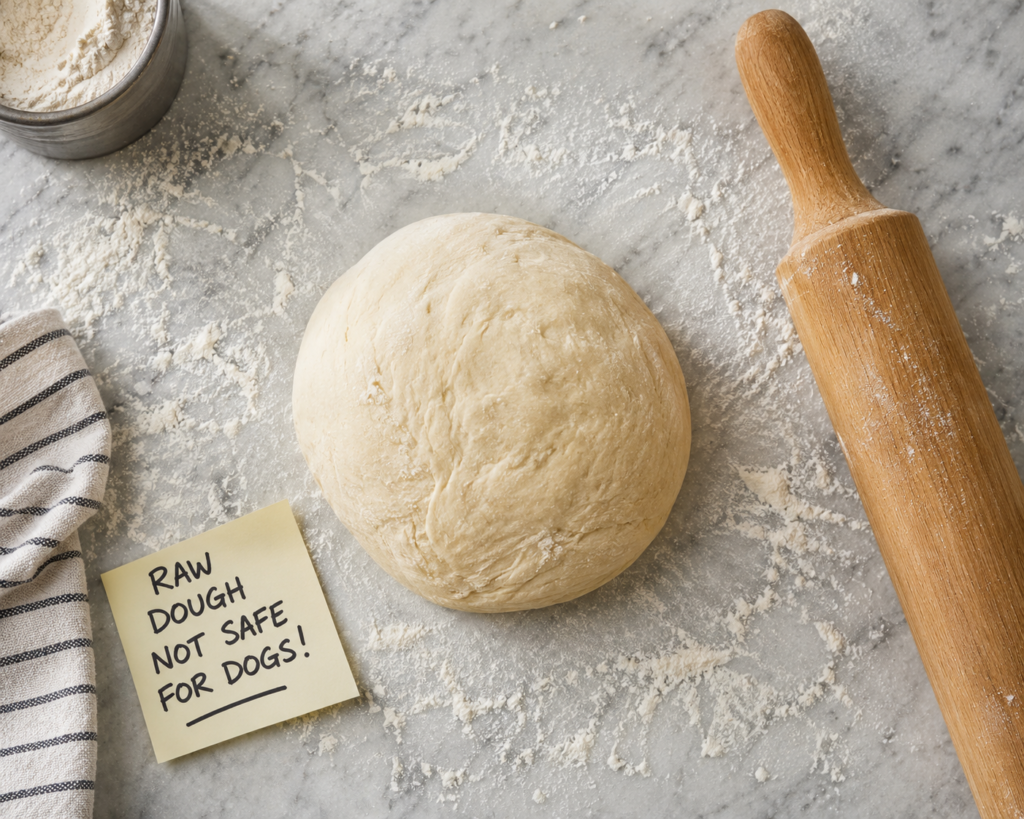
The single biggest bread-related danger for dogs isn’t baked bread at all — it’s raw, unbaked dough containing yeast. If a dog eats raw dough, the warm, moist environment of the stomach mimics ideal proofing conditions. The dough can continue to rise inside the stomach, causing painful bloating and potentially leading to gastric dilatation-volvulus (bloat), a life-threatening emergency in dogs, especially large and deep-chested breeds.
On top of the physical expansion risk, the yeast fermentation process produces ethanol as a byproduct. This means a dog that eats raw dough can also experience alcohol toxicity, with symptoms like disorientation, vomiting, weakness, and in severe cases, seizures or respiratory depression. If your dog eats raw dough of any kind — bread, pizza, or sourdough starter — contact your veterinarian or an emergency animal hospital immediately. This is not a wait-and-see situation.
Ingredients That Turn Bread Dangerous
Plain bread is one thing, but bread is rarely eaten “plain” in most households. Several common bread varieties and add-ins are genuinely toxic to dogs:
- Raisin bread: Raisins and grapes are toxic to dogs and have been linked to acute kidney failure, even in small quantities. Raisin bread should never be given to dogs, and any accidental ingestion warrants a call to your vet.
- Garlic bread: Garlic (and onion) belong to the allium family, which is toxic to dogs and can damage red blood cells, leading to anemia with large enough or repeated exposure.
- Bread with xylitol: Some low-sugar or diet bread products use xylitol as a sweetener. Xylitol is extremely toxic to dogs, even in tiny amounts, and can cause a rapid, dangerous drop in blood sugar.
- Bread with chocolate chips or macadamia nuts: Common in sweet breads like banana or zucchini bread — both ingredients are toxic to dogs independent of the bread itself.
Always check the ingredient list before sharing any flavored, sweet, or specialty bread with your dog.
How Much Bread Can a Dog Eat?
If you’re sharing plain bread as an occasional treat, portion matters more than the bread itself. A general guideline vets use for treats overall — including bread — is that treats should make up no more than 10% of a dog’s daily caloric intake. For most dogs, this means a small piece or corner of a slice, not multiple full slices. Larger dogs can tolerate a slightly bigger portion than toy or small breeds, but bread should never become a meal replacement or a daily habit regardless of size.
Dogs with diabetes, obesity, or a tendency toward weight gain should avoid bread altogether, since the refined carbohydrates can contribute to blood sugar spikes and unnecessary calorie intake without any offsetting nutritional benefit.
Signs of an Allergic or Digestive Reaction
While true wheat or gluten allergies are relatively uncommon in dogs, they do occur. Watch for these signs after your dog eats bread for the first time or in a larger-than-usual amount:
- Itchy skin or excessive scratching
- Ear infections or head shaking
- Vomiting or diarrhea
- Gas or bloating
- Lethargy after eating
If your dog shows any of these symptoms consistently after eating bread or bread-based treats, talk to your veterinarian about a possible sensitivity and consider eliminating bread and grain-heavy treats from their diet.
What Most People Don’t Know
Most owners know to avoid raisin bread and garlic bread, but far fewer realize that the danger from bread dough isn’t limited to yeasted bread loaves specifically — pizza dough, cinnamon roll dough, and sourdough starter all pose the same fermentation and expansion risk if eaten raw. A dog doesn’t need to eat a large amount of raw dough for it to be a problem; even a small ball of rising dough can expand significantly once it reaches body temperature inside the stomach. Additionally, many owners underestimate how quickly “just a taste” of bread becomes a habit — because dogs generally tolerate small amounts without obvious symptoms, owners often gradually increase portion size or frequency without realizing the empty calories are displacing more nutritious food or contributing to slow, steady weight gain over months.
Healthier Alternatives to Bread
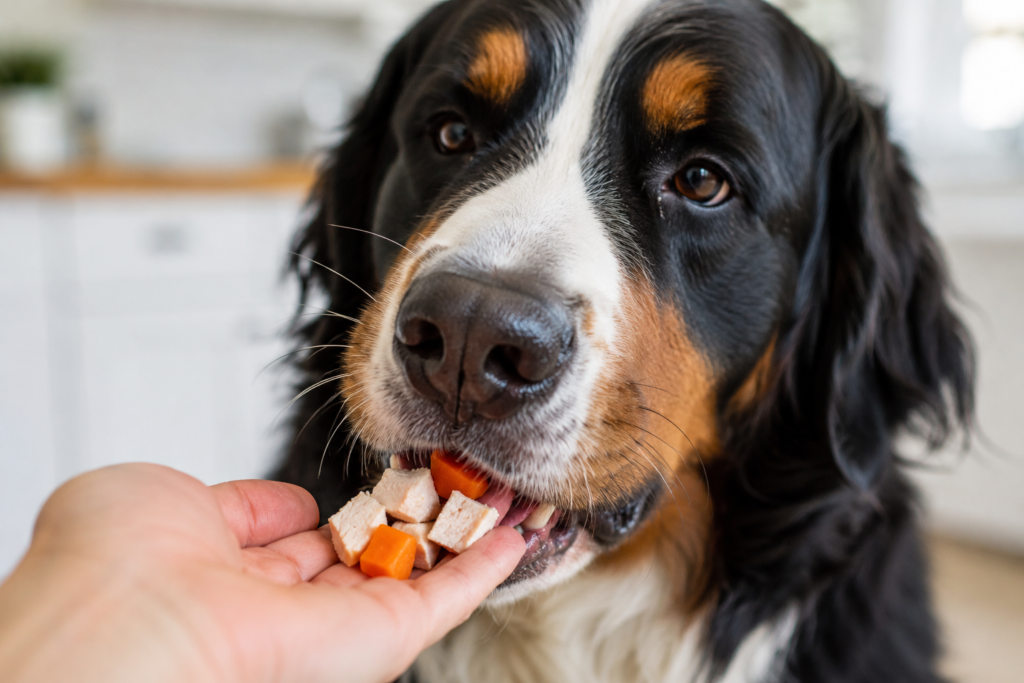
If you’re looking for a low-risk treat option instead of bread, consider swapping in foods that offer actual nutritional benefit:
- Small pieces of plain cooked chicken
- Steamed green beans or carrots
- Plain pumpkin puree (unsweetened)
- Commercial training treats formulated for dogs
- Small pieces of plain, unsweetened cooked sweet potato
These alternatives provide fiber, protein, or vitamins that support your dog’s health, rather than empty carbohydrate calories.
Frequently Asked Questions
Q. Can dogs eat toast?
A. Yes, plain toast without butter, jam, or toppings is safe for dogs in small amounts, similar to plain bread. Toasting doesn’t add or remove any specific risk — the same moderation guidelines apply.
Q. My dog ate a whole loaf of bread — should I be worried?
A. A large quantity of bread, even plain, can cause significant digestive upset, bloating, and in large or deep-chested breeds, may raise the risk of gastric dilatation. Contact your veterinarian if your dog eats an unusually large amount of bread, and monitor closely for vomiting, a distended abdomen, or signs of discomfort.
Q. Is sourdough bread safe for dogs?
A. Fully baked sourdough bread is generally safe in small amounts, the same as other plain breads. However, raw sourdough starter is dangerous for the same reasons as raw yeast dough — it can expand in the stomach and produce alcohol through fermentation. Never let your dog access an unbaked sourdough starter.