

Yes, dogs can eat honey in small, controlled amounts. Honey is not toxic to dogs and can even offer some health benefits, but it comes with real risks tied to sugar content, calorie density, and — in rare cases — bacterial contamination. Understanding how much honey is safe for your dog, which types to choose, and which dogs should avoid it entirely is essential before adding it to your pup’s diet.
Is Honey Safe for Dogs?
Honey is generally considered safe for adult, healthy dogs when given in moderation. It is a natural sweetener made by bees from flower nectar, and it contains trace vitamins, minerals, and antioxidants. Most veterinarians agree that a small amount of honey — roughly a teaspoon or less depending on your dog’s size — is unlikely to cause harm in a healthy adult dog.
That said, “safe” does not mean “risk-free.” Honey is still sugar, and sugar in excess creates real problems for dogs, especially those with existing health conditions. The safety of honey depends heavily on the individual dog, the amount given, and how often it’s offered.
Health Benefits of Honey for Dogs
In small quantities, honey may offer some genuine upsides for dogs:
- Seasonal allergy support: Some owners use small amounts of local, raw honey to help dogs build tolerance to local pollen, though scientific evidence in dogs specifically is limited.
- Cough soothing: Honey has mild soothing properties that may help calm a dog’s throat during kennel cough or minor respiratory irritation.
- Antioxidant content: Raw honey contains antioxidants that can support overall cellular health.
- Wound care (topical use): Medical-grade honey, particularly manuka honey, has been used topically on minor wounds for its antibacterial properties — though this should only be done under veterinary guidance.
- Quick energy source: The natural sugars in honey provide a fast, short-term energy boost, which is sometimes used cautiously in dogs experiencing low blood sugar episodes, under vet direction.
These benefits are modest and should never be the primary reason to feed honey regularly. Think of honey as an occasional treat with minor bonus properties, not a supplement.
Risks and Side Effects of Honey
The risks of honey scale directly with the amount fed and the individual dog’s health status.
- Weight gain: Honey is calorie-dense. Regular feeding, even in small amounts, can contribute to unwanted weight gain over time.
- Dental health: The sugar in honey can stick to teeth and contribute to plaque buildup and cavities if given frequently without dental care.
- Digestive upset: Too much honey at once can cause stomach upset, diarrhea, or vomiting, particularly in dogs unaccustomed to sugary foods.
- Blood sugar spikes: Honey causes a rapid rise in blood glucose. This is a significant concern for dogs with diabetes or insulin resistance.
- Allergic reactions: Though uncommon, some dogs can have an allergic reaction to honey or bee-derived products, showing symptoms like facial swelling, hives, or difficulty breathing.
- Botulism risk in puppies: Raw honey can occasionally contain botulism spores. In puppies with immature immune and digestive systems, this poses a small but real risk, similar to the well-known warning against giving raw honey to human infants.
Which Dogs Should Avoid Honey Entirely
Some dogs should not be given honey under any circumstances, regardless of amount:
- Diabetic dogs: The sugar spike from honey can seriously destabilize blood sugar control and interfere with insulin management.
- Overweight or obese dogs: The extra calories work directly against weight management goals.
- Puppies under one year old: Due to the small but present botulism spore risk and their still-developing digestive systems, most vets recommend avoiding raw honey for young puppies.
- Dogs with a known honey or bee product allergy: Any dog that has previously reacted to honey, propolis, or bee pollen should avoid it going forward.
- Dogs with pancreatitis history: High-sugar, calorie-dense foods can aggravate a dog’s pancreas and should be avoided in dogs prone to pancreatitis.
How Much Honey Can Dogs Have?
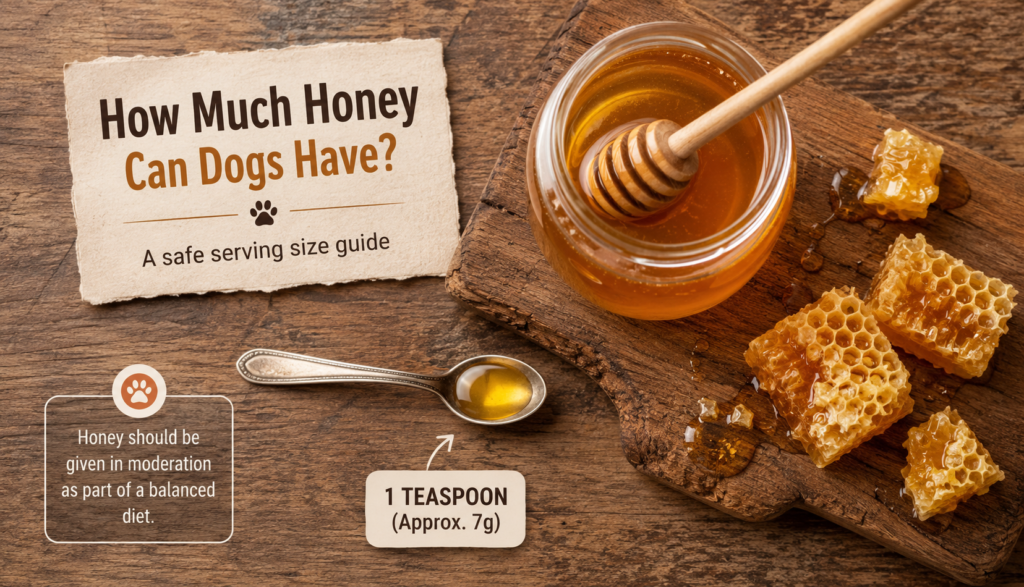
If your vet has confirmed your dog is a good candidate for honey, general moderation guidelines look like this:
| Dog Size | Safe Serving Size | Frequency |
|---|---|---|
| Small (under 20 lbs) | 1/4 teaspoon | Occasional, not daily |
| Medium (20–50 lbs) | 1/2 teaspoon | Occasional, not daily |
| Large (50+ lbs) | 1 teaspoon | Occasional, not daily |
These amounts are general guidance, not a substitute for individualized veterinary advice. Dogs with any underlying health condition should only receive honey with explicit vet approval and a specific recommended dose.
Raw Honey vs. Processed Honey
Not all honey is the same when it comes to feeding your dog:
- Raw honey: Unpasteurized and minimally processed, raw honey retains more natural enzymes and antioxidants. It’s often preferred for potential allergy-support use, but it carries the small botulism spore risk mentioned above, making it unsuitable for puppies.
- Manuka honey: A specific raw honey variety known for stronger antibacterial properties. Sometimes used topically on wounds under vet supervision, but should still be given orally only in the same small, moderate amounts as any other honey.
- Pasteurized/commercial honey: Heat-treated to remove bacteria and extend shelf life. This is generally the safer choice for regular occasional feeding, especially for households with puppies.
- Flavored or blended honey products: Avoid these. Many contain added sugars or other ingredients not meant for dogs. Always check the label for a single ingredient: honey.
Whichever type you choose, always avoid sugar-free honey substitutes or any honey blend containing xylitol, which is highly toxic to dogs even in tiny amounts.
What Most People Don’t Know
Most owners assume honey is simply “natural sugar” and therefore automatically healthier than table sugar for their dog — but a dog’s body processes the sugars in honey almost identically to any other sugar source. The “natural” label doesn’t reduce the calorie load or the blood sugar spike.
Another overlooked detail: the allergy-relief theory behind local honey is based on the idea of gradual pollen exposure building tolerance, but this concept is far better studied in humans than in dogs, and even in human medicine the evidence is mixed. Feeding local honey specifically to “cure” a dog’s seasonal allergies is a popular home remedy with weak scientific backing — it shouldn’t replace a proper vet-diagnosed allergy management plan.
Finally, many owners don’t realize that the botulism spore concern with raw honey isn’t about the honey making a healthy adult dog sick in the way it might a human infant — adult dogs typically have digestive systems mature enough to handle the spores without issue. The real caution zone is specifically young puppies, not adult dogs in general, which is a distinction often lost in blanket “no honey” advice online.
Signs of an Allergic Reaction or Overdose
Watch for these symptoms after your dog eats honey, and contact your vet if they appear:
- Facial swelling, hives, or itching
- Difficulty breathing
- Vomiting or diarrhea
- Lethargy or unusual weakness
- Excessive thirst or urination (especially concerning in diabetic or pre-diabetic dogs)
If your dog consumes a large, uncontrolled amount of honey — such as getting into an entire jar — contact your veterinarian, particularly if your dog is diabetic, elderly, or has a history of pancreatitis.
Frequently Asked Questions

Q. Can puppies eat honey?
A. Most veterinarians recommend avoiding raw honey for puppies under one year old due to the small risk of botulism spores affecting their immature digestive systems. Pasteurized honey carries less risk, but it’s best to wait until your puppy is fully grown and check with your vet first.
Q. Is manuka honey better for dogs than regular honey?
Manuka honey has stronger antibacterial properties and is sometimes used topically on wounds under veterinary guidance, but nutritionally and calorically it should still be fed in the same small, moderate amounts as any other honey — it isn’t a “healthier” option to feed more freely.
Q. Can dogs with diabetes ever have honey?
A. Generally no. Honey causes a rapid blood sugar spike that can seriously interfere with insulin regulation in diabetic dogs. Any sweetener use in a diabetic dog’s diet should only happen under direct veterinary supervision.
Q. Can dogs with diabetes ever have honey?
A. Generally no. Honey causes a rapid blood sugar spike that can seriously interfere with insulin regulation in diabetic dogs. Any sweetener use in a diabetic dog’s diet should only happen under direct veterinary supervision.