
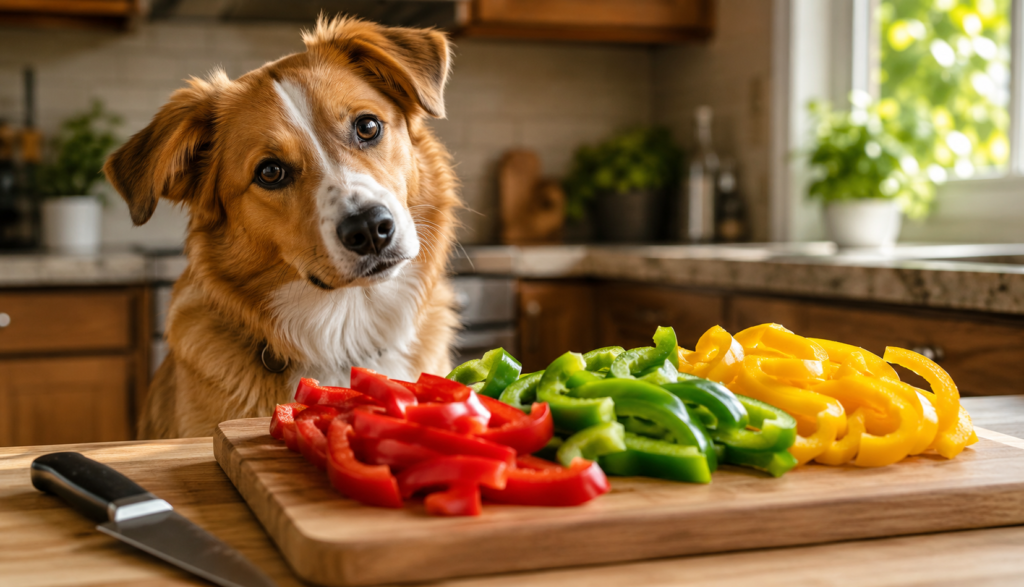
My dog has a strange habit of going straight for red bell peppers whenever I’m chopping vegetables, completely ignoring the green ones sitting right next to them. At first I thought it was just preference, but it turns out there’s an actual nutritional reason behind that instinct. Bell peppers are safe for dogs, and not all colors are created equal when it comes to what they actually offer. Between the color differences, the seeds and stem, and the constant confusion with spicier pepper varieties, there’s more nuance here than a simple yes or no answer covers.
Are Bell Peppers Safe for Dogs?
I’ve seen this firsthand across several dogs now: bell peppers are one of the more genuinely beneficial vegetables you can offer. They’re not toxic, they don’t appear on any serious warning list, and most dogs tolerate them without any noticeable digestive upset.
Whether it’s a red bell pepper, green bell pepper, or yellow bell pepper, the flesh itself is safe in small amounts for the vast majority of healthy dogs. This is genuinely one of the lower-risk vegetables in terms of pure safety.
The bigger considerations here are less about toxicity and more about preparation, portion, and making sure you’re actually dealing with a sweet pepper rather than something spicier from the same plant family.
Red vs Green vs Yellow: Which Is Best?
Most dog owners miss this completely: the color of a bell pepper isn’t just cosmetic, it actually reflects ripeness and nutrient density. Green bell peppers are harvested earlier and tend to be less sweet, with a noticeably lower nutrient profile compared to their fully ripened counterparts.
Red bell pepper varieties have ripened the longest and carry significantly more vitamin C and antioxidants as a result. Yellow bell pepper sits somewhere in the middle, offering a reasonable nutritional boost without quite matching the red variety’s peak levels.
None of the colors are unsafe, so this isn’t a safety distinction, it’s purely a “which one gives my dog slightly more nutritional value” distinction if you happen to have a choice on hand.
Seeds, Stems, and Skin
The first time I dealt with this question from a reader, the seeds came up immediately as a concern, and the honest answer is that bell pepper seeds aren’t toxic, just not particularly useful either. They pass through most dogs without issue, though they offer no real nutritional value of their own.
The stem is a different story. It’s tougher, harder to digest, and can present a mild choking hazard if a dog swallows a chunk without chewing properly. Removing the stem before offering any piece is a simple step that removes this risk entirely.
The skin itself is fine and doesn’t need to be peeled, though some dogs with sensitive stomachs may digest it more easily if the pepper is lightly cooked rather than served completely raw.
Bell Peppers vs Spicy Peppers (Important Distinction)
Your Attractive Heading
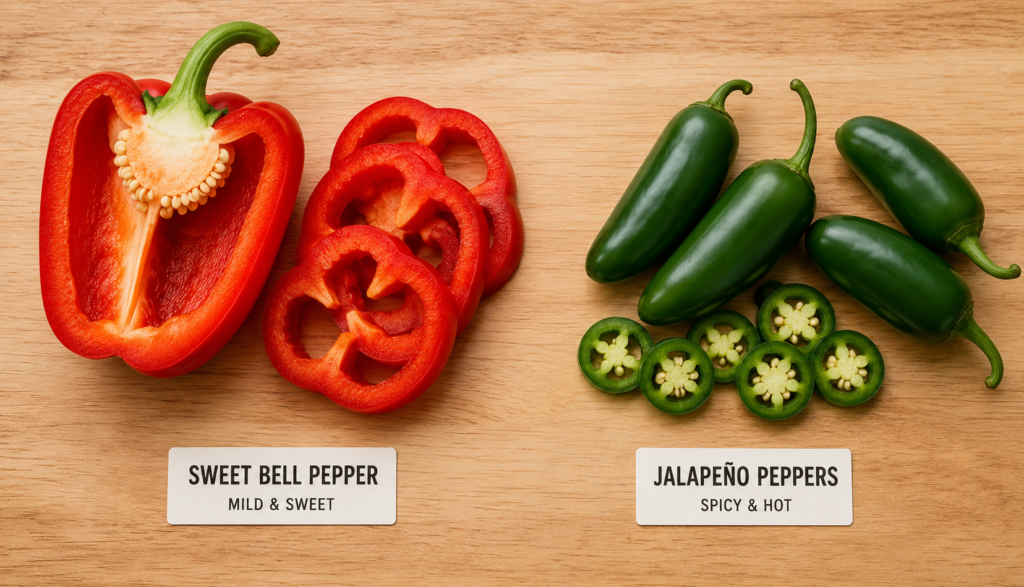
What surprised me was how often people lump all peppers into one category without realizing how different bell peppers and spicy peppers actually are. Bell peppers, despite belonging to the same broader plant family, contain essentially none of the capsaicin compound responsible for heat in chili peppers and hot peppers.
This distinction matters because spicy peppers, while not classically toxic, can cause significant digestive upset, irritation, and discomfort in dogs that bell peppers simply don’t produce. If a recipe or dish contains jalapeños, habaneros, or any hot pepper variety, that’s an entirely different risk conversation than plain bell peppers.
Sticking strictly to sweet bell peppers, and double-checking any mixed dish for hidden spicy pepper content, keeps this distinction clear and avoids an unpleasant surprise for your dog.
What Most People Don’t Know
Here’s something that rarely gets mentioned: bell peppers are botanically classified as fruits, not vegetables, despite being treated as a vegetable in virtually every kitchen and nutritional conversation. This classification quirk doesn’t change anything about safety or preparation, but it does explain why bell peppers carry a sweeter taste profile and a different nutrient mix compared to most other dog-safe vegetables, leaning closer to fruit-like vitamin C levels than typical green vegetables ever achieve.
How to Prepare Them Safely
From experience, the smarter call is to always remove the stem and seeds, even though the seeds aren’t dangerous, simply because the stem creates unnecessary risk for very little benefit. Cutting the flesh into small, manageable pieces also reduces any chance of a larger piece causing a choking hazard.
Raw bell peppers are perfectly fine for most dogs, but lightly cooked or steamed versions can be gentler on dogs with more sensitive digestion, softening the texture without stripping away much vitamin A or vitamin C.
Avoid any seasoning, oil, or sauce typically used in human cooking, since the pepper itself needs nothing added to remain a healthy treat.
Risks and Things to Watch For
I’ve watched this go wrong mostly with overfeeding rather than the pepper itself causing trouble. Too much bell pepper at once, even the safe sweet varieties, can lead to mild digestive upset or diarrhea simply due to the fiber content hitting a dog’s stomach all at once.
Confusing a spicy pepper for a bell pepper, particularly in mixed dishes or salsas, is the other real risk worth watching for, since that introduces compounds bell peppers themselves never carry.
If symptoms persist or worsen, a vet visit is always the right call, but for most dogs, a few small pieces of plain bell pepper cause nothing beyond mild stomach upset at worst.
Frequently Asked Questions

Q. Can dogs eat bell pepper seeds?
A. Bell pepper seeds aren’t toxic to dogs, though they offer no nutritional benefit and can pass through undigested. Removing them is an easy precaution rather than a necessity.
Q. Which color bell pepper is best for dogs?
A. Red bell peppers carry the most vitamin C and antioxidants since they’re the most fully ripened, but green and yellow varieties are still safe options in small amounts.
Q. Are spicy peppers the same as bell peppers for dogs?
A. No, spicy peppers like jalapeños contain capsaicin and can cause real digestive irritation in dogs, while bell peppers are sweet and contain virtually none of that compound.