
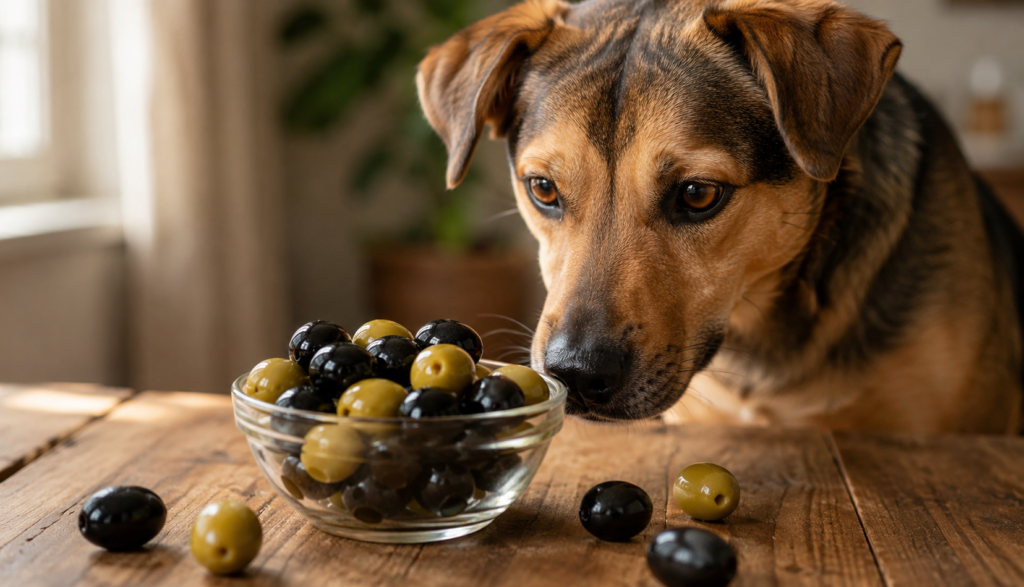
I once watched my dog steal an entire olive straight off a charcuterie board, pit and all, and spent the next hour googling instead of enjoying the party. He was completely fine, but that scare is what got me looking into olives properly instead of just assuming they were either totally safe or totally dangerous. The truth sits in the middle. Plain olives aren’t toxic to dogs, but there’s more going on with pits, sodium, and stuffed varieties than most people realize before their dog gets curious about the snack tray.
Are Olives Safe for Dogs?
I’ve seen this firsthand more than once: a dog grabs an olive and nothing dramatic happens. Plain, pitted olives, black olives or green olives, aren’t on any toxic food list, and most healthy dogs can handle a small amount without issue.
The safety question with olives is less about “are they poisonous” and more about “what’s attached to them.” A single plain olive is a low-risk situation. The same can’t always be said for what comes alongside it on a party platter.
So the answer is yes, with conditions. Olives themselves are safe for dogs in small amounts, but the details around preparation matter more here than with most vegetables.
The Pit Problem
Most dog owners miss this completely: the olive pit is actually the bigger concern, not the olive flesh itself. An olive pit is hard, small, and easy for a dog to swallow whole, creating a genuine choking hazard, especially in smaller breeds.
Beyond choking, pits can also become a blockage risk if swallowed, potentially leading to digestive upset or, in rarer cases, an obstruction that needs veterinary attention. This risk scales with the size of the dog and how many pits they manage to get into.
If a dog grabs a pitted olive, pit included, the situation calls for more attention than if they’d simply eaten the flesh alone. Removing pits before offering any olive removes this risk entirely.
Stuffed Olives and Hidden Dangers
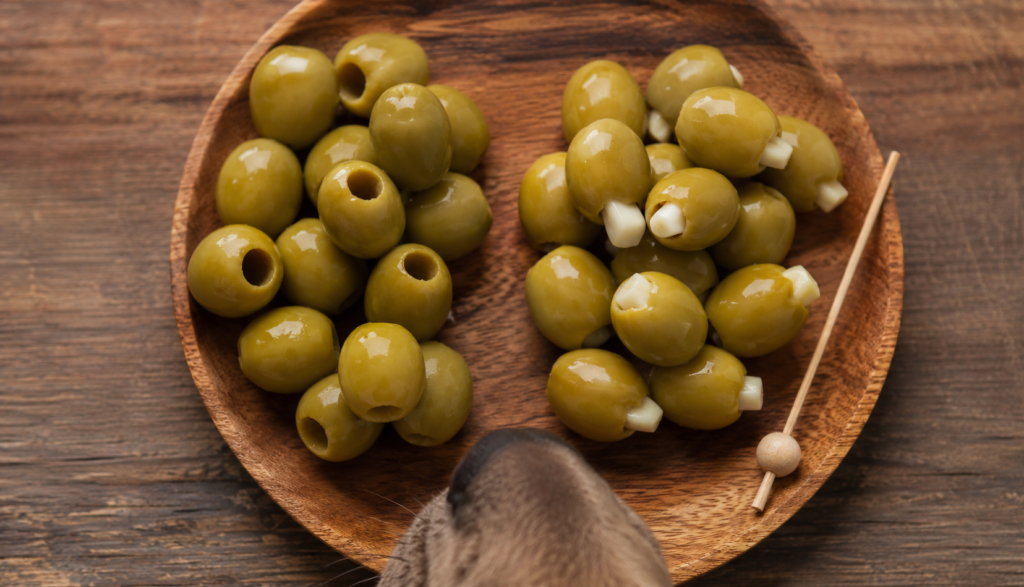
The first time I dealt with this question from a reader, the conversation immediately turned to stuffed olives, and for good reason. Olives stuffed with garlic are far more concerning than plain ones, since garlic is genuinely toxic to dogs regardless of the amount.
Blue cheese, pimento, and other stuffing varieties introduce their own issues too, often adding extra fat content or ingredients that have nothing to do with the olive and everything to do with unnecessary risk. Checking what’s actually stuffed inside before assuming “it’s just an olive” matters more than people expect.
Plain, unstuffed olives remain the only version worth considering as an occasional treat at all. Everything else on that snack tray needs a second look first.
Sodium and Fat Content
What surprised me was how much sodium content brined olives actually carry. Canned olives and jarred varieties are typically preserved in a salty brine, and that salt content adds up quickly compared to how small an olive actually is.
This matters most for dogs with existing kidney health or heart health concerns, where excess salt intake can put additional strain on already sensitive systems. Even healthy dogs can experience symptoms like increased thirst or mild digestive upset if they eat several brined olives at once.
Fat content is comparatively minor but still worth noting for dogs managing weight, since olives, while low calorie individually, aren’t entirely without caloric impact in larger amounts.
What Most People Don’t Know
Here’s a detail that rarely comes up: olive oil, despite coming from the same fruit, is actually considered one of the more dog-friendly additions to a meal in small amounts, often used to support coat health. This creates a strange contradiction where the oil pressed from olives is viewed more favorably than the olive itself, mostly because the whole fruit carries pit and sodium concerns that pure oil simply doesn’t have. If you’re looking for an olive-related benefit for your dog, a few drops of plain olive oil drizzled over food is generally a safer route than handing over the fruit directly.
How to Safely Offer Olives
From experience, the smarter call is to only offer plain, pitted, unsalted or low-sodium olives, and only in genuinely small amounts. One or two olives, pit removed, is plenty for most dogs as an occasional treat.
Rinsing brined olives under water before offering them removes some of the surface sodium content, though it won’t eliminate everything absorbed during the brining process itself.
This isn’t a food worth building into a regular treat rotation. It’s a “fine once in a while, prepared correctly” food rather than a daily snack option.
Signs of Trouble to Watch For
I’ve watched this go wrong mostly when a dog gets into a whole bowl rather than a single olive. Watch for vomiting, diarrhea, or excessive thirst after a larger olive exposure, since these can point to either salt intake issues or a swallowed pit causing discomfort.
If garlic-stuffed olives were involved, symptoms tied to garlic toxicity, including lethargy, pale gums, or vomiting, can take a day or two to appear and shouldn’t be dismissed just because the dog seemed fine immediately afterward.
If symptoms persist or worsen, a vet visit is always the right call, particularly any time pits or garlic-stuffed varieties were part of what your dog actually ate.
Frequently Asked Questions

Q. Can dogs eat olive pits?
A. No, olive pits should always be removed before offering olives to a dog. Pits are a choking hazard and can cause a blockage if swallowed, especially in smaller breeds.
Q. Are green olives or black olives better for dogs?
A. Neither is inherently better, both are generally safe plain and in small amounts. What matters more is whether they’re pitted, unstuffed, and low in added sodium content.
Q. Can dogs have olive oil?
A. Yes, a small amount of plain olive oil is generally considered safe for dogs and is sometimes used to support skin and coat health, though it should still be given sparingly.