
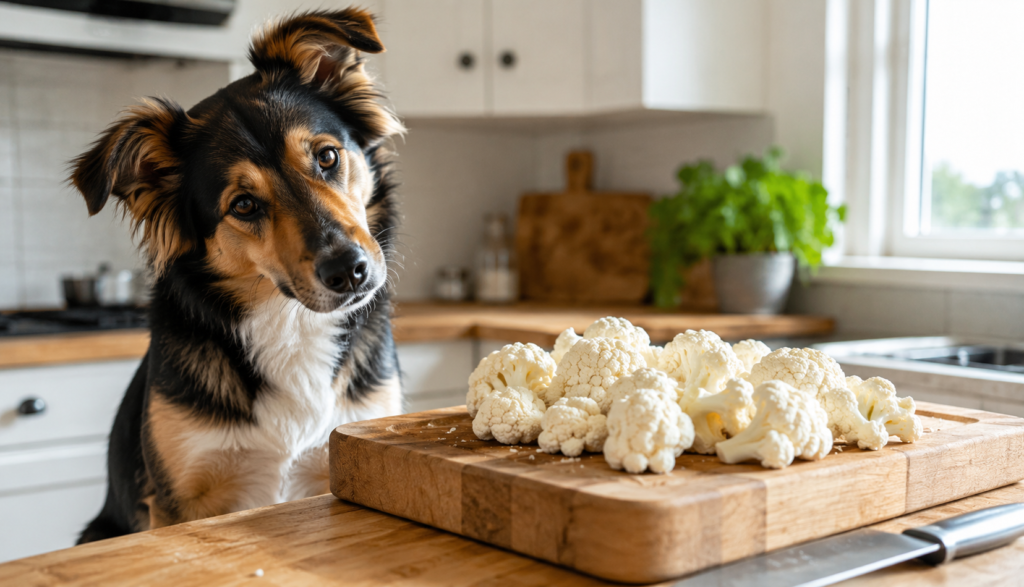
My dog once cleared an entire bowl of roasted cauliflower off the counter while I was plating dinner, and the next twenty-four hours taught me more about this vegetable than any article ever could. He was fine, just gassy enough that I opened every window in the house. That experience sums up cauliflower pretty well. It’s safe for dogs, it’s not on any toxic food list, but it comes with a very specific side effect that catches a lot of owners off guard. Understanding why that happens, and how much is actually fine, makes this a much less confusing vegetable than it first appears.
Is Cauliflower Safe for Dogs?
I’ve seen this firsthand across several dogs now: cauliflower itself isn’t dangerous in any meaningful way. It’s not toxic, it doesn’t carry the kind of red-flag risk that onions or grapes do, and most dogs can eat small amounts without any serious problem.
The bigger issue with cauliflower isn’t safety in the traditional sense, it’s tolerance. This cruciferous vegetable is known for causing digestive reactions in both humans and dogs, which is the actual reason people hesitate before sharing it.
So the short answer is yes, cauliflower is safe for dogs, but “safe” here comes with an asterisk around quantity that matters more than it does with most other vegetables.
Why Cauliflower Causes Gas in Dogs
Most dog owners miss this completely: cauliflower belongs to the same cruciferous vegetable family as broccoli and cabbage, and that family is notorious for producing gas during digestion. The fiber content and certain natural compounds in cauliflower ferment in the gut, which is exactly what leads to bloating and noticeable flatulence afterward.
This isn’t a sign that something’s wrong, it’s just how this particular vegetable breaks down. Dogs with more sensitive stomachs tend to notice this more than others, sometimes with mild digestive upset on top of the gas itself.
The fix isn’t avoiding cauliflower entirely, it’s controlling portion size. A few small florets rarely cause a problem. A full bowl absolutely will.
Raw vs Cooked vs Cauliflower Rice
The first time I dealt with this question from a reader, the cauliflower rice trend came up immediately, since it’s everywhere in human diets right now. Plain cauliflower rice is fine for dogs in small amounts, as long as it hasn’t been seasoned for a human meal.
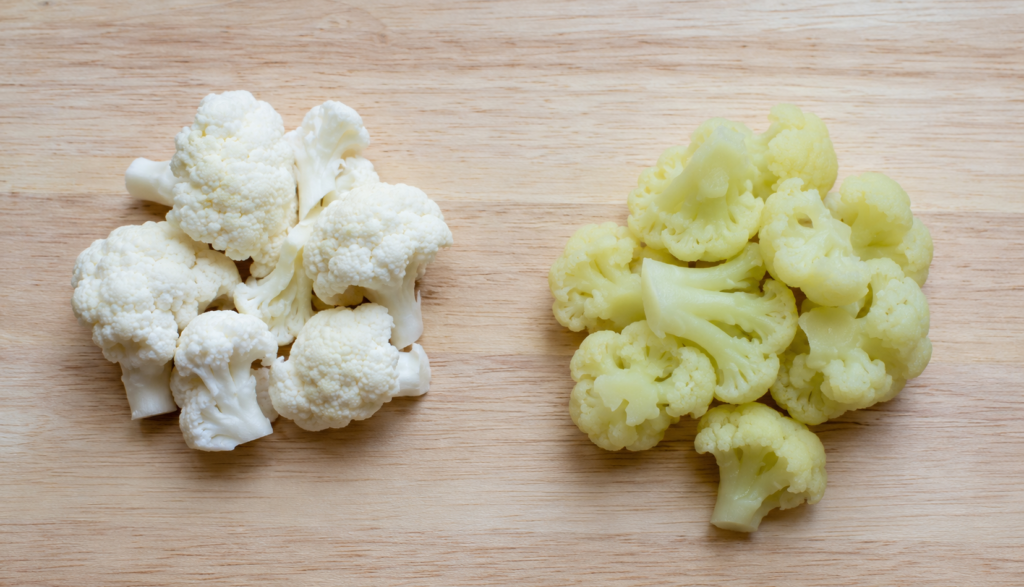
Raw cauliflower florets are perfectly safe but tend to be harder for dogs to digest, which can make the gas issue slightly worse. Cooked cauliflower, whether steamed or roasted plain, tends to be gentler on a dog’s stomach and easier to break down.
Roasted cauliflower is fine too, but only if it’s plain. Anything roasted with oil, garlic, or seasoning blends crosses into territory that has nothing to do with the cauliflower itself and everything to do with what’s been added to it.
Nutritional Benefits
What surprised me was how genuinely nutrient-dense cauliflower is for something so low calorie. It offers solid fiber content along with a meaningful dose of vitamin C, all while staying light enough to work as an occasional treat without adding much to a dog’s daily calorie count.
For dogs managing weight, cauliflower can fit into a broader weight management plan the same way other low calorie vegetables do, giving volume without much caloric impact.
Senior dogs sometimes benefit from the fiber here too, though as always, introducing any new vegetable gradually rather than all at once is the safer way to gauge how a dog’s stomach actually handles it.
What Most People Don’t Know
Here’s something that rarely gets mentioned: the cauliflower stalk, the dense core that holds the florets together, is actually higher in fiber than the florets themselves. That makes it more likely to cause noticeable gas and bloating if a dog eats a large chunk of it. Most owners trim that part away when cooking for themselves and don’t think twice about tossing it to the dog as scraps. If you’re going to share cauliflower, the florets are the gentler option, and the stalk is worth skipping or feeding in much smaller pieces.
How to Prepare It Safely
From experience, the smarter call is to always serve cauliflower plain, cooked, and cut into small pieces. Skip the butter, the cheese sauce, and any seasoning blends meant for a human side dish, since those add fat and salt that cauliflower itself never carries.
Steaming softens the texture and seems to reduce some of the gas-producing effect compared to raw florets, making it a gentler starting point if you’re introducing cauliflower for the first time.
Cutting larger florets into smaller pieces also reduces any choking hazard, particularly for smaller dogs or fast eaters who don’t chew thoroughly before swallowing.
Risks and Things to Watch For
I’ve watched this go wrong mostly with portion size rather than the vegetable itself. A dog that gets into a large amount of cauliflower, especially raw, can end up with noticeable bloating, gas, or a bout of diarrhea that resolves on its own within a day.
Cheese sauce, butter, and seasoned preparations are really where the actual risk lives, since those can introduce fat, salt, and sometimes garlic, depending on the recipe. The cauliflower itself is rarely the problem in those cases.
If symptoms persist or worsen, a vet visit is always the right call, but for the vast majority of dogs, a small amount of plain cauliflower causes nothing worse than a slightly smelly afternoon.
Frequently Asked Questions

Q. Can dogs eat cauliflower every day?
A. Small amounts a couple of times a week are fine for most dogs, but daily cauliflower in larger portions tends to cause ongoing gas and digestive upset for many dogs.
Q. Is cauliflower rice safe for dogs?
A. Plain, unseasoned cauliflower rice is safe for dogs in small amounts, but any version made for human meals often contains garlic, onion, or oils that aren’t appropriate for dogs.
Q. Why does cauliflower give my dog gas?
A. Cauliflower is a cruciferous vegetable, and the fiber content ferments during digestion, which naturally produces gas and occasional bloating in both dogs and people who eat too much.