
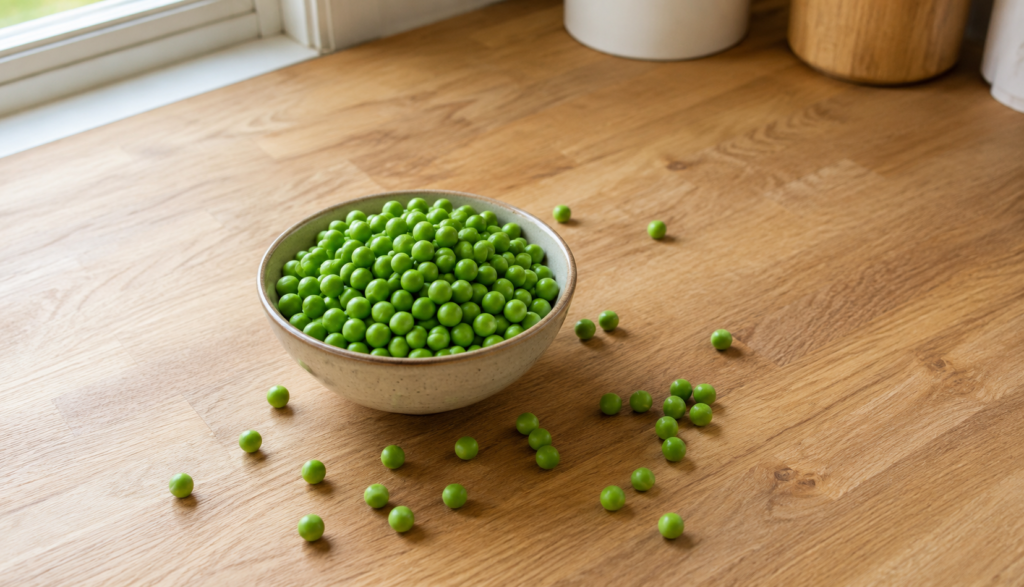
Peas are common enough in commercial dog food that most owners already assume they’re fine, and that assumption holds up well for fresh or frozen peas given plain. I’ve used frozen peas as a quick, no-prep treat for years specifically because they require zero work — straight from the freezer to the bowl or hand, no cutting, no cooking, no real preparation at all. Can dogs eat peas? Yes, and they’re a genuinely useful low-calorie vegetable with real nutritional substance behind them. The main distinctions worth understanding involve which form of peas to use — fresh and frozen are ideal, canned needs more scrutiny — and a specific health consideration around purine content that matters for a smaller subset of dogs.
What Peas Offer Nutritionally
Peas deliver a notable plant-based protein content for a vegetable, alongside a useful combination of vitamin A, vitamin K, and several B vitamins. This protein content is part of why peas show up so frequently as an ingredient in commercial dog foods — they contribute real nutritional density beyond just being a low-calorie filler vegetable. Peas for dogs aren’t just a harmless snack; there’s genuine substance behind their inclusion in many dog diets.
Fiber content in peas supports healthy digestion, and the low calorie density makes them an excellent option for dogs managing their weight, similar in profile to celery or green beans. A handful of peas delivers meaningful volume and nutritional contribution without much caloric cost, which is part of why peas are a popular choice for owners specifically looking for treats that don’t work against weight management goals.
Antioxidant content in peas, while not as concentrated as in berries, still contributes to the overall nutritional picture, supporting cellular health alongside the vitamin and protein content. The combination of these nutrients in a low-calorie package is genuinely useful, and peas earn their place on the safe vegetable list through real benefit rather than just an absence of harm.
What surprised me was how much dogs seem to enjoy the slightly sweet, mild flavor of peas compared to some other vegetables that require more enthusiasm to get a dog interested. Frozen peas in particular, with their firm, cold texture, seem to appeal to dogs in a way that’s reminiscent of how frozen fruit pieces work as a warm-weather treat, just with a vegetable’s nutritional profile instead.
Fresh, Frozen, and Why Canned Needs More Caution
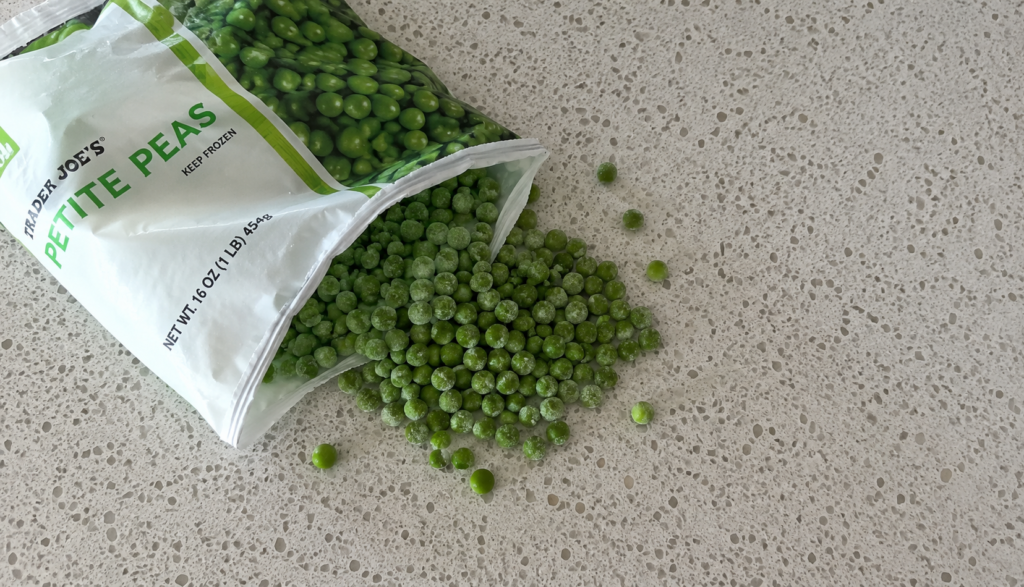
Fresh peas, when in season, are an excellent choice requiring minimal preparation — just rinse and serve, whole or lightly mashed depending on your dog’s size and preference. Frozen peas are equally good and considerably more practical for year-round use, since fresh peas have a limited season while frozen peas are available consistently and retain their nutritional value well through the freezing process.
Frozen peas can be served straight from the freezer as a cold treat, which many dogs enjoy, particularly in warm weather, or thawed first if you prefer a softer texture for smaller dogs or puppies. There’s no meaningful nutritional difference between frozen and fresh peas, making frozen the more practical default for most owners given year-round availability and the convenience of having them ready in the freezer at all times.
Canned peas are where more caution applies. Most canned peas contain added sodium as part of the canning process, and sodium content in canned vegetables generally runs considerably higher than what’s appropriate for regular dog consumption. While an occasional small amount of canned peas isn’t likely to cause serious harm, fresh or frozen peas are the clearly better choice for regular use, and canned peas should be reserved for rare exceptions only, ideally checking the label for low-sodium or no-salt-added versions if canned is the only option available.
Most dog owners miss this completely: the “peas are safe for dogs” understanding that comes from seeing peas in commercial dog food doesn’t automatically extend to every form of peas found in a grocery store. The commercial dog food version is processed without the added sodium that canned peas for human consumption typically include, which is exactly the distinction that matters when choosing how to share peas from your own kitchen.
Pea Pods, Snap Peas, and What’s Actually Fine
Snap peas and snow peas, eaten pod and all by humans, are also generally fine for dogs in moderate amounts, following the same plain preparation principle that applies to shelled peas. The pod itself is more fibrous than the peas inside, which means smaller dogs or dogs that don’t chew thoroughly may find whole pods slightly harder to manage than shelled peas, similar to the chewing consideration that applies to celery’s stringy texture.
For most dogs, cutting snap peas or snow peas into smaller pieces rather than offering them whole reduces any minor choking concern while still allowing the dog to enjoy the pod’s crunch alongside the peas themselves. Standard garden peas, sold and consumed without the pod, don’t have this consideration at all, since you’re working with just the small, soft round peas.
I’ve found that most dogs don’t show a strong preference between pod-included and shelled pea varieties, which makes the choice mostly about convenience and what you have on hand rather than any meaningful nutritional or safety difference. Either works well as an occasional vegetable treat, provided portions stay reasonable and pieces are appropriately sized for your dog.
How Many Peas Dogs Can Have
Peas are low enough in calories and natural sugar that portion guidance here is fairly relaxed, similar to other low-calorie vegetables like celery and cucumber. Too many peas in one sitting can cause mild digestive upset, including some gas, primarily from the fiber content moving through the digestive system, but this requires a genuinely large quantity relative to the dog’s size before becoming a meaningful issue.
For small dogs, a tablespoon or two of peas per serving is appropriate. Medium dogs can handle a quarter cup. Large breeds can manage up to half a cup without much concern. Peas can be offered several times a week, or incorporated into a dog’s regular meals as a nutritional boost without much restriction beyond general portion sense, similar to how carrots are sometimes used as a frequent, low-risk addition.
From experience, the smarter call for dogs prone to gas or digestive sensitivity is to introduce peas gradually and observe how the dog responds before making them a regular, larger-volume addition. Most dogs handle peas without any noticeable digestive response, but individual sensitivity varies, and starting conservatively avoids any unnecessary discomfort during the introduction period.
What Most People Don’t Know
Peas contain purines, naturally occurring compounds that are metabolized into uric acid in the body. This is relevant specifically for dogs with certain health conditions — particularly some breeds prone to urate kidney stones, such as Dalmatians, or dogs with diagnosed kidney disease where purine intake is being actively managed as part of their treatment plan. For these specific dogs, regular or large-quantity pea consumption may not be appropriate, and a vet conversation about purine-containing foods, peas included, is worth having if your dog falls into either category.
For the vast majority of healthy dogs without these specific health considerations, the purine content in peas at normal treat-sized servings isn’t a meaningful concern. This is a case where a real, documented consideration applies narrowly to a specific subset of dogs rather than broadly to the general dog population, and it’s worth understanding the distinction rather than either dismissing the concern entirely or treating it as a reason to avoid peas universally.
The other detail worth knowing: peas are sometimes a component of the broader grain-free dog food conversation discussed in relation to sweet potato, given that peas and legumes together are commonly used as protein and carbohydrate sources in grain-free formulations. As with sweet potato, this is a consideration relevant to commercial diet formulation rather than to giving your dog the occasional handful of peas as a treat, and the distinction between those two contexts matters. If symptoms persist or worsen after a dog eats peas, a vet visit is always the right call, though adverse reactions to plain peas are uncommon in dogs without the specific health considerations mentioned above.
Building Peas Into a Regular Vegetable Rotation
Peas work well alongside carrots, green beans, and celery in a rotating low-calorie vegetable treat schedule, particularly useful for dogs managing their weight where volume and nutritional contribution matter more than caloric density. The convenience of frozen peas specifically — no preparation required, year-round availability — makes them one of the easier vegetables to keep consistently on hand without much planning.
For owners making homemade dog food or treats, peas blend easily into a variety of recipes, adding nutritional value and a mild sweetness that complements other ingredients well. Their small size also makes them useful as a quick training reward, similar to how blueberries function, particularly for dogs that respond well to vegetable-based rather than fruit-based treats.
Safe vegetables for dogs include peas as a genuinely beneficial, low-effort option that holds up well across different uses — standalone treat, meal addition, or recipe ingredient. With basic attention to choosing fresh or frozen over canned, and awareness of the narrow purine consideration for specific health situations, peas earn a regular and well-supported place in most dogs’ diets.
Frequently Asked Questions
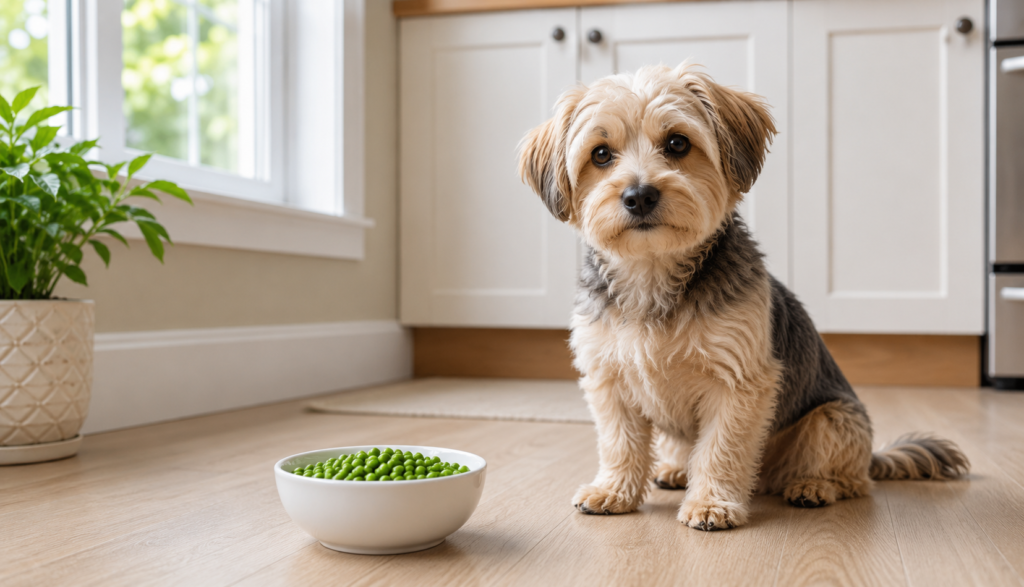
Q. Are frozen peas safe for dogs?
A. Yes. Frozen peas are just as nutritious as fresh and more convenient since they’re available year-round. They can be served straight from the freezer as a cold treat or thawed for a softer texture.
Q. Why should canned peas be avoided?
A. Canned peas typically contain added sodium from the canning process, which is higher than appropriate for regular dog consumption. Fresh or frozen peas are the better choice, with canned reserved for rare exceptions only.
Q. Are peas safe for dogs with kidney issues?
A. Peas contain purines, which may be a concern for dogs with urate kidney stones or diagnosed kidney disease. If your dog has either condition, discuss pea consumption with your vet before making them a regular treat.