
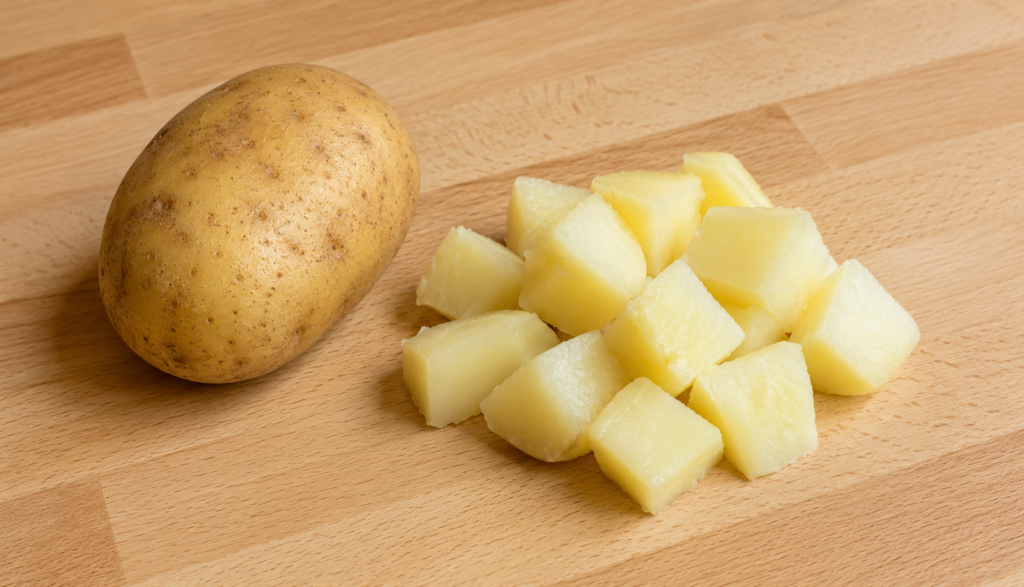
Potatoes occupy a more cautious tier than sweet potatoes, mostly because regular potatoes belong to the nightshade family, which carries a specific toxicity concern that doesn’t apply to sweet potatoes despite the similar name and shape. I’ve worked with this distinction enough times with confused owners that it’s worth stating clearly upfront. Can dogs eat potatoes? Yes, but with a meaningful condition — they need to be fully cooked, plain, and free of any green coloring or sprouting. Raw potato contains solanine, a compound that’s genuinely toxic to dogs in sufficient quantity, and this single fact changes how potatoes should be handled compared to most other root vegetables on the safe list.
Why Potatoes Are Different From Sweet Potatoes
Regular potatoes are part of the nightshade family of plants, which includes tomatoes, eggplant, and peppers alongside potatoes themselves. Nightshade plants produce glycoalkaloids — solanine being the most relevant one here — as a natural defense mechanism against pests and disease. These compounds are concentrated most heavily in the green parts of the potato plant, in any green-tinted skin, and in sprouting eyes, with much lower concentrations present in the properly cooked flesh of a mature, well-stored potato.
Sweet potatoes, despite the similar name, aren’t part of the nightshade family at all — they’re in a completely different plant family, which is why sweet potato doesn’t carry the same solanine concern that regular potato does. This distinction is the single most important thing to understand when comparing the two vegetables, since their safety profiles diverge specifically because of this different botanical classification, not because one is simply “healthier” than the other in a general sense.
Cooked potato in its plain form does provide some nutritional value — fiber, potassium, vitamin C, and complex carbohydrates that offer dogs a source of energy. It’s not a nutritional powerhouse the way sweet potato’s beta carotene content makes it stand out, but properly prepared potato isn’t nutritionally empty either. The cooking process significantly reduces the solanine content present in the flesh, which is the key step that makes potato safe to serve at all.
What surprised me when I looked more closely at this topic was how much solanine concentration varies depending on the potato’s condition. A fresh, properly stored potato with no green coloring and no sprouting contains relatively low solanine levels, especially once cooked. A potato that’s been exposed to light, has begun sprouting, or shows green discoloration has meaningfully higher solanine content, even after cooking, which is why potato selection matters as much as preparation method.
Raw Potato and Why It’s a Genuine Concern
Raw potato carries higher solanine concentrations than cooked potato, since cooking breaks down a meaningful portion of the glycoalkaloid content. A dog eating a significant amount of raw potato is exposed to more solanine than the same dog would get from an equivalent amount of properly cooked potato, and solanine toxicity in dogs produces real symptoms — gastrointestinal upset including vomiting and diarrhea in milder cases, progressing to more serious neurological symptoms including weakness, tremors, and confusion in cases of more substantial exposure.
Beyond the toxin concern, raw potato is also firm and starchy in a way that’s genuinely difficult for the canine digestive system to break down efficiently, similar to the digestibility issue with raw sweet potato but compounded by the solanine factor specific to regular potato. The combination of poor digestibility and toxin exposure makes raw potato a clear category to avoid, distinct from the “cooked is preferred but raw isn’t dangerous” framing that applies to some other vegetables.
I’ve encountered this concern directly with a dog who got into a bag of raw potatoes stored at floor level in a pantry and chewed through a meaningful portion of one before being noticed. The resulting vomiting and lethargy over the following several hours required a vet visit for supportive care, and the dog recovered fully, but it underscored that raw potato isn’t a minor concern to brush off — solanine exposure is a genuine toxicity risk that warrants the same seriousness as other documented food toxins, even though the public awareness around it is lower than something like grapes or chocolate.
If a dog gets into raw potato, particularly in any meaningful quantity, monitoring for symptoms and contacting a vet if anything beyond mild, brief digestive upset appears is the appropriate response, the same approach that applies to other potential toxin exposures.
Green Potatoes and Sprouting — Signs to Never Ignore
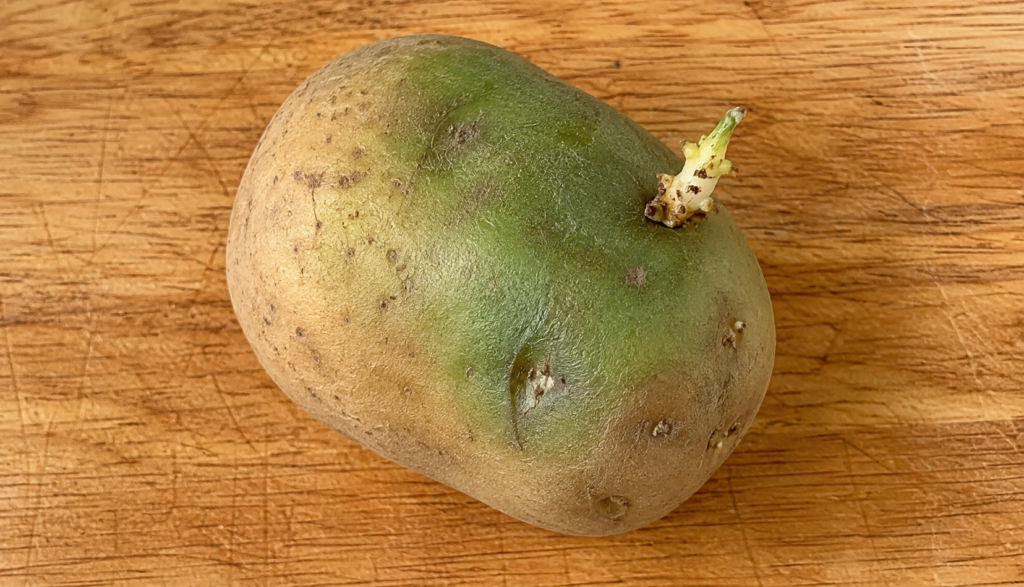
Green discoloration on a potato’s skin is a direct visual indicator of elevated solanine concentration, caused by exposure to light during storage. This greening happens in the same plant tissue that would otherwise photosynthesize if the potato were left growing, and it’s the single clearest warning sign that a potato — even if you’re planning to cook it — carries meaningfully higher toxin levels than a potato without any green discoloration.
Potato sprouts, the small growths that emerge from a potato’s eyes when it’s been stored for an extended period, are another concentrated source of solanine, even more so than green skin. The sprouts themselves and the area immediately surrounding them on the potato carry the highest glycoalkaloid concentration on the entire vegetable. Any potato showing sprouting should have those areas cut away generously, and a potato that’s significantly green or heavily sprouted is better discarded entirely rather than salvaged for any use, dog-related or otherwise.
Most dog owners miss this completely: a potato that’s perfectly fine for human consumption with the green parts cut away and properly cooked might still carry enough residual solanine to be worth extra caution for a dog, given how much smaller most dogs are relative to a human serving size. When in doubt about a potato’s condition, choosing a fresh, unblemished potato specifically for any dog-related use, rather than working with whatever potato happens to be in the pantry, removes this uncertainty entirely.
How to Properly Prepare Potato for Dogs
Selecting a fresh, firm potato with no green discoloration and no sprouting is the first and most important preparation step. From there, peeling the potato removes the skin, which carries somewhat higher solanine concentration than the flesh even on a healthy potato, and peeling is generally recommended for potato intended for dogs even though it’s not strictly necessary for properly cooked, unblemished flesh.
Boiling or baking the peeled potato until fully soft is the appropriate cooking method. No butter, salt, oil, or seasoning should be added — plain, fully cooked potato is the only version appropriate for sharing with a dog. Mashing the cooked potato makes it easy to mix into regular food or serve as a standalone treat, and the soft texture is gentle on digestion once properly cooked.
Boiled potato tends to retain slightly fewer nutrients than baked, similar to how boiling affects most vegetables, but the difference is minor enough that either method works well depending on convenience. What matters most is thorough cooking — the potato should be completely soft throughout, with no firm or starchy raw sections remaining, which would indicate incomplete cooking and correspondingly less reduction in solanine content.
What Foods Made From Potato Should Be Avoided
French fries, whether homemade or from a restaurant, are inappropriate for dogs regardless of the potato safety conversation, simply because of the oil, salt, and often additional seasoning involved in their preparation. The same logic that rules out other fried, heavily salted human foods applies here — the potato itself isn’t the primary concern, but the preparation method introduces fat and sodium levels that aren’t appropriate for regular dog consumption.
Potato chips carry the same concerns as french fries, often compounded by additional flavoring agents that may include onion powder, garlic powder, or other seasonings genuinely toxic to dogs in concentrated form. Mashed potato made with butter, cream, salt, and seasoning — the standard preparation most people make for themselves — is also inappropriate, even though plain mashed potato made specifically for a dog without any additions is perfectly fine.
Most dog owners miss this completely: the distinction with potato-based human foods almost always comes down to what’s been added during preparation rather than the potato itself. This mirrors the pattern seen with other vegetables and fruits throughout this kind of food safety conversation — the base ingredient is frequently fine, but the butter, salt, oil, and seasoning that typically accompany human potato dishes are what create the actual concern.
What Most People Don’t Know
Potatoes are sometimes used in homemade dog food recipes and in some commercial dog foods as a carbohydrate source, similar to sweet potato, though less commonly given the solanine consideration that requires more careful sourcing and preparation compared to sweet potato. If you’re working from a homemade recipe that calls for potato, the same fresh-selection and thorough-cooking principles discussed here apply, and recipes should specify plain, peeled, fully cooked potato without any of the human seasoning additions.
Dogs with epilepsy or certain other neurological conditions are sometimes recommended to avoid nightshade vegetables more strictly than the general dog population, based on some veterinary perspectives that nightshade compounds may have a relationship with neurological sensitivity in predisposed animals, though this is a less universally established concern than the acute solanine toxicity issue. If your dog has a diagnosed neurological condition, discussing potato and other nightshade vegetables specifically with your vet is a reasonable precaution.
The other detail worth knowing: potato starch, used as a binding ingredient in some commercial treats and dog foods, is processed in a way that effectively eliminates the solanine concern, since it’s a refined starch extract rather than the whole vegetable. Seeing potato starch on an ingredient list is a different consideration from feeding whole potato and doesn’t carry the same preparation requirements discussed here. If symptoms persist or worsen after a dog eats potato in any form, a vet visit is always the right call, particularly if raw or green potato was involved.
Choosing Between Potato and Sweet Potato
Given the additional caution potato requires compared to sweet potato — fresh selection, peeling, thorough cooking, avoiding any green or sprouted sections — many owners find it simpler to default to sweet potato as their primary starchy vegetable choice for dogs, reserving regular potato for occasional use when the extra preparation attention feels worthwhile. Both can be part of a sensible rotation, but sweet potato’s more straightforward safety profile makes it the lower-effort, lower-risk default for most situations.
For dogs with no specific dietary need that points toward potato specifically, sweet potato, pumpkin, and other non-nightshade root vegetables offer similar nutritional and digestive benefits without the solanine consideration that potato introduces. Potato remains a perfectly reasonable occasional addition when prepared correctly, but it’s not the vegetable I’d reach for first when a simpler, equally beneficial alternative is available.
Safe vegetables for dogs include potato, but with more qualifications attached than most other entries on a similar list. Understanding why those qualifications exist — the nightshade family classification, the solanine concentration in green and sprouted areas, the digestibility difference between raw and cooked — turns potato from a vegetable to avoid out of vague caution into one that can be served confidently once the preparation requirements are properly understood and applied.
Frequently Asked Questions
Q. Why is raw potato dangerous for dogs?
A. Raw potato contains higher concentrations of solanine, a toxic compound, than cooked potato. It can cause digestive upset and, in larger amounts, more serious neurological symptoms. Always cook potato fully before giving it to a dog.
Q. Can dogs eat green potatoes?
A. No. Green discoloration indicates elevated solanine concentration from light exposure. A potato with any meaningful green coloring should be discarded rather than fed to a dog, even if cooked.
Q. How should potato be prepared for dogs?
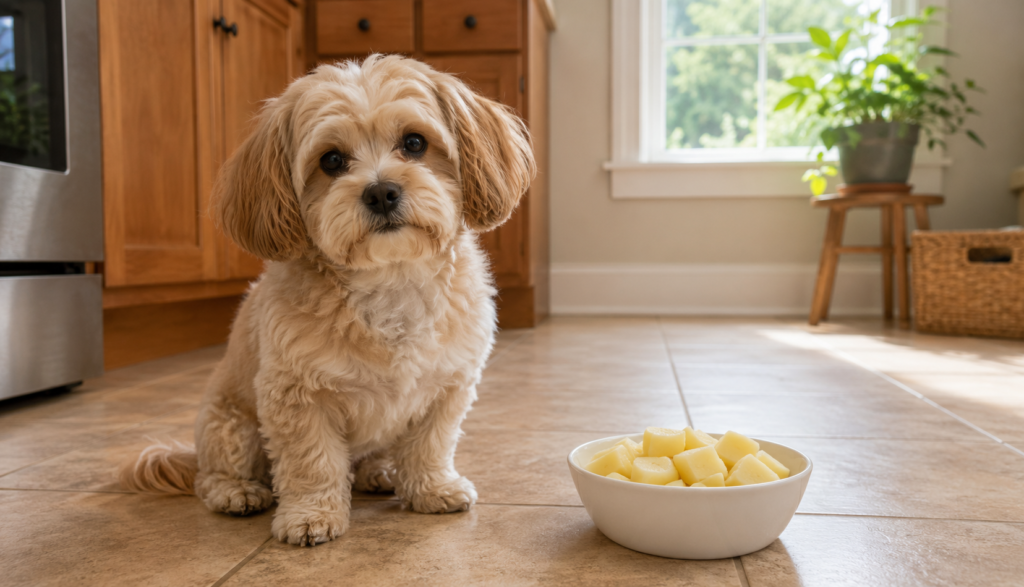
A. Select a fresh potato with no green spots or sprouting, peel it, and boil or bake until fully soft with no butter, salt, or seasoning added. Plain, thoroughly cooked potato in small amounts is the safe approach.