
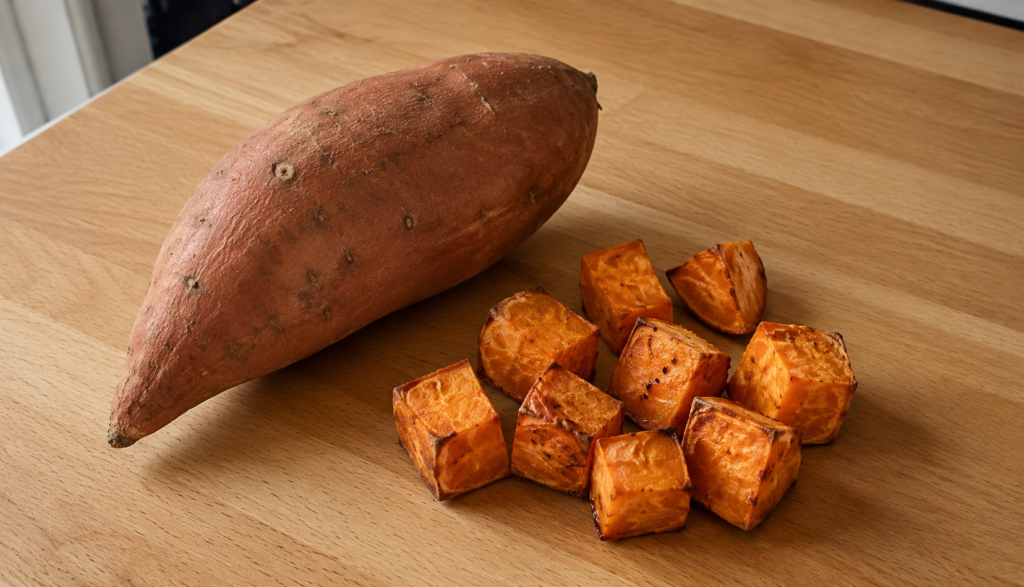
Sweet potatoes show up in commercial dog food often enough that most owners already assume they’re safe, and that assumption is correct — but there’s more nuance to serving them at home than the ingredient list on a kibble bag suggests. I’ve used sweet potato as a regular addition to homemade meals and treats for dogs with sensitive stomachs, and the results have consistently been good, provided the preparation is right. Can dogs eat sweet potatoes? Yes, and they’re genuinely one of the better starchy vegetables available for dogs. The key distinction worth understanding is that cooked sweet potato is the appropriate form — raw sweet potato carries digestibility and choking concerns that cooking eliminates almost entirely.
Why Sweet Potatoes Are a Genuinely Good Addition
Sweet potatoes deliver an impressive beta carotene content, which converts to vitamin A in the body and supports eye health, immune function, and skin condition. The orange flesh that gives sweet potato its color is a strong visual indicator of just how much beta carotene is present — among root vegetables commonly fed to dogs, sweet potato is one of the more concentrated sources available.
The fiber content in sweet potato is substantial and supports healthy digestion, which is part of why sweet potato shows up so frequently as an ingredient in commercial dog foods formulated for sensitive stomachs. Sweet potatoes for dogs work particularly well for animals transitioning between diets or recovering from digestive upset, since the complex carbohydrates and fiber provide a gentle, easily digestible source of energy without the harshness that some other foods can introduce during recovery.
Antioxidant content in sweet potato extends beyond just beta carotene — the vegetable contains a range of compounds that contribute to overall cellular health and help manage inflammation. For senior dogs or dogs managing chronic conditions where inflammation is a relevant concern, sweet potato’s antioxidant profile adds genuine value beyond its role as a simple carbohydrate source.
What surprised me was how versatile sweet potato is across different dog dietary needs. It works as a treat, as a meal addition for dogs needing more calories, as a gentle option during digestive recovery, and as a grain-free carbohydrate source for dogs on diets that avoid grains. Few vegetables serve this many different practical purposes as reliably as sweet potato does.
Why Cooked Is Strongly Preferred Over Raw
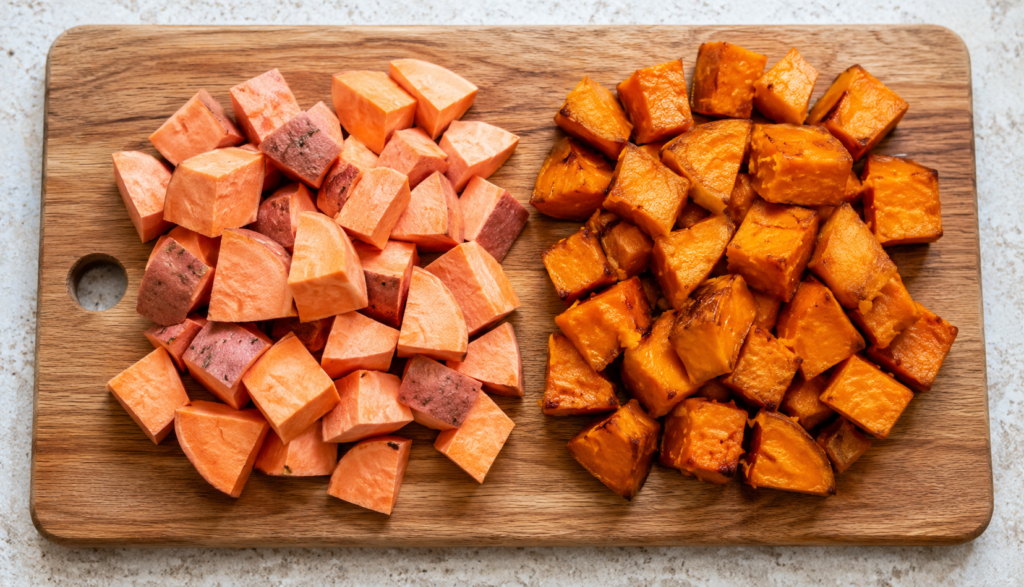
Raw sweet potato is significantly harder for dogs to digest than the cooked version, and this isn’t a minor preference issue — it’s a meaningful difference in how the vegetable’s starches and fiber are processed by the digestive system. Raw sweet potato contains resistant starches that the canine digestive system struggles to break down efficiently, which can lead to digestive upset, bloating, and discomfort that simply doesn’t occur with properly cooked sweet potato.
Beyond digestibility, raw sweet potato is firm and dense, creating a genuine choking hazard, particularly for smaller dogs or dogs that don’t chew thoroughly before swallowing. The texture of raw sweet potato doesn’t break down the way a raw carrot might when chewed — it’s tougher and more resistant, increasing the risk of a dog swallowing a piece that’s too large to pass through safely.
I’ve watched this play out with a dog who was given raw sweet potato chunks as what seemed like a reasonable crunchy treat alternative to carrots. The dog struggled visibly with chewing the pieces and eventually swallowed a chunk that caused noticeable discomfort over the following hours. Switching to cooked sweet potato for the same dog produced zero issues going forward, with the only change being the preparation method.
Cooking sweet potato — whether baking, boiling, or steaming — breaks down the resistant starches and softens the texture considerably, addressing both the digestibility and choking concerns simultaneously. This is one of the clearer cases where a specific preparation method isn’t just a preference but a meaningful safety and digestibility improvement over the raw alternative.
The Right Way to Prepare Sweet Potato for Dogs
Baking or boiling sweet potato without any added butter, salt, sugar, or seasoning is the appropriate preparation method. Wash the sweet potato thoroughly, then bake whole until soft throughout, or peel and cut into chunks for boiling or steaming. Either method works well, and the choice mostly comes down to convenience and what you’re using the sweet potato for afterward.
Once cooked, sweet potato can be served in several forms depending on the purpose. Cubed pieces work well as a standalone treat or training reward. Mashed sweet potato mixes easily into a dog’s regular food for dogs needing extra calories or a gentler addition to their diet. Thin slices, dehydrated in a low oven or food dehydrator, create a chewy treat that many dogs find appealing and that stores well for extended periods, similar in concept to commercial sweet potato chews sold in pet stores.
Sweet potato skin is safe for dogs and doesn’t need to be removed, similar to how carrot skin requires no special handling. The skin contains additional fiber, and washing the sweet potato thoroughly before cooking is sufficient preparation. Some owners prefer to peel sweet potatoes for a smoother texture in mashed preparations, but this is a textural choice rather than a safety requirement.
Sweet potato fries, when made at home without oil, excessive salt, or seasoning — essentially baked sweet potato cut into a fry shape — are a reasonable preparation for dogs. Commercial sweet potato fries, particularly from fast food or restaurant sources, are typically fried in oil and heavily salted, making them inappropriate for the same reasons that apply to most fried, salted human foods.
How Much Sweet Potato Dogs Can Have
Sweet potato is moderate in natural sugar and calorie density compared to something like celery or cucumber, which means portion control matters more here than with the lowest-calorie vegetables, though it’s still considerably gentler than most fruits in terms of sugar content. Too much sweet potato in a single sitting can lead to digestive upset, primarily from the fiber and starch volume rather than any toxic concern.
For small dogs, a few small cubes per serving is appropriate. Medium dogs can handle a quarter cup of cooked, cubed sweet potato. Large breeds can manage up to half a cup without much concern. Sweet potato can be offered a few times a week as a treat, or more frequently if it’s being used as a regular meal addition under veterinary guidance, particularly for dogs with specific dietary needs that sweet potato addresses well.
From experience, the smarter call for dogs being introduced to sweet potato for the first time is to start with a small amount and observe digestive response over a day or two before making it a regular addition. While sweet potato is generally well tolerated, individual dogs vary, and starting conservatively avoids any unnecessary digestive discomfort during the introduction period.
What Most People Don’t Know
Sweet potato’s connection to a broader conversation about grain-free dog food and a documented increase in cases of dilated cardiomyopathy in dogs is worth understanding, even though it’s more nuanced than headlines sometimes suggest. The concern isn’t with sweet potato itself as an occasional treat or meal addition — it’s specifically related to commercial grain-free diets where legumes and certain starches, sweet potato included, replace grains as primary ingredients in proportions that may affect taurine absorption in some dogs, a connection still being researched.
This distinction matters because feeding your dog sweet potato as a treat or as one component of a varied diet is a completely different situation from a commercial diet built primarily around sweet potato and legumes as the main carbohydrate sources. If your dog is on a grain-free commercial diet and you have concerns about this connection, that’s a conversation worth having with your vet about the specific food formulation, not a reason to avoid giving your dog the occasional piece of cooked sweet potato as a treat.
Dehydrated sweet potato chews, sold commercially as a single-ingredient dog treat, are a popular and generally well-regarded option that avoids the moderation concerns of fresher preparations since they’re meant to be a longer-lasting chew rather than a quickly consumed treat. These products are often recommended specifically for dogs with grain sensitivities or those needing a more digestible chew alternative to harder options like bones or antlers. If symptoms persist or worsen after a dog eats sweet potato, a vet visit is always the right call, though adverse reactions to properly cooked sweet potato are uncommon.
Sweet Potato as Part of a Balanced Approach
Sweet potato works well alongside other vegetables like carrots, pumpkin, and green beans in a rotating vegetable addition to a dog’s diet, each bringing slightly different nutrient profiles and textures. For dogs with sensitive stomachs specifically, sweet potato and pumpkin are often used interchangeably or together as gentle, fiber-rich options that support digestive comfort.
For owners making homemade treats, cooked and mashed sweet potato serves as an excellent binding ingredient that adds nutritional value beyond just texture, often used in baked dog treat recipes as a healthier alternative to flour-based fillers. This versatility in both standalone and recipe-component use makes sweet potato one of the more practically useful vegetables to keep on hand regularly.
Safe vegetables for dogs include several genuinely beneficial starchy and root vegetable options, and sweet potato holds a strong position among them once the cooking requirement is understood and applied consistently. The combination of real nutritional value, digestive gentleness when properly prepared, and versatility across treat and meal applications makes sweet potato a vegetable worth keeping in regular rotation for most dogs.
Frequently Asked Questions

Q. Why is raw sweet potato not recommended for dogs?
A. Raw sweet potato is harder to digest due to resistant starches and is firm enough to be a choking hazard. Cooking breaks down the starches and softens the texture, making it significantly safer and easier to digest than raw.
Q. How much sweet potato can a dog eat?
A. Small dogs can have a few small cubes per serving. Medium dogs can handle a quarter cup. Large breeds can manage up to half a cup. Sweet potato can be offered a few times a week as a treat or meal addition.
Q. Is sweet potato skin safe for dogs?
A. Yes. Sweet potato skin is safe and contains additional fiber. It doesn’t need to be removed, though washing the sweet potato thoroughly before cooking is recommended to remove any dirt or residue.