
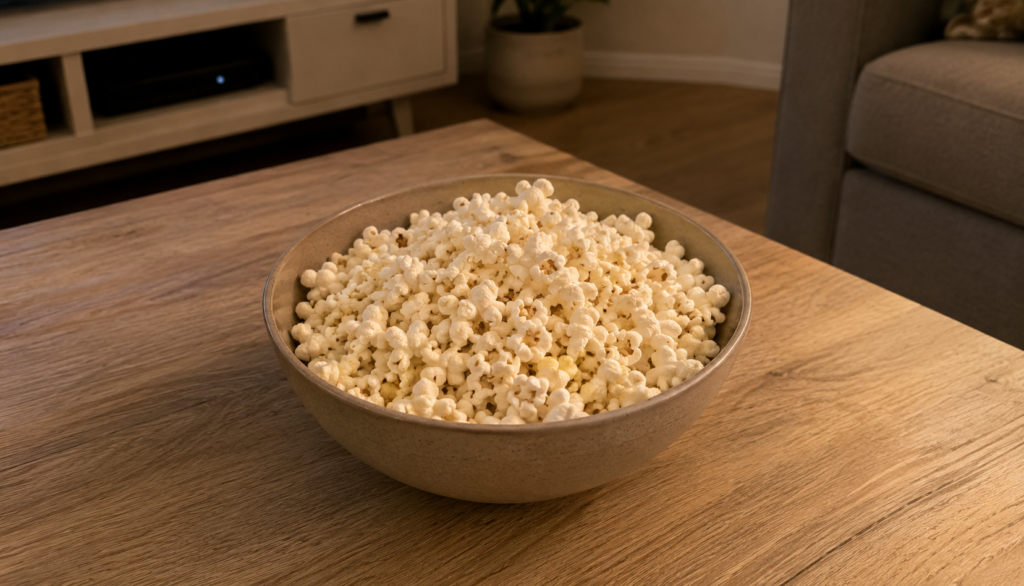
Popcorn is one of those snacks that feels harmless to share simply because it’s light, crunchy, and seems mostly like air with a thin shell of starch around it. The reality is more conditional than that. I’ve shared plain popcorn with dogs during movie nights for years without any issue, but the moment butter, salt, or any seasoning gets involved, the calculation changes considerably. Can dogs eat popcorn? Yes — plain, air-popped, unsalted popcorn is a genuinely low-risk snack in moderate amounts. The version most people actually eat at the movies or make at home, loaded with butter and salt, is a different story entirely, and the unpopped kernels that inevitably end up at the bottom of every bowl carry their own specific hazard worth understanding.
Plain Popcorn — Why the Basic Version Works Fine
Air-popped popcorn without any added butter, oil, salt, or seasoning is essentially a plain whole grain snack — low in calories, reasonably high in fiber, and not carrying any toxic compound that would make it inappropriate for dogs in modest amounts. The corn itself is not a problem for dogs the way some other human foods are; corn is a common ingredient in many commercial dog foods already, and popped corn in its plain form doesn’t introduce anything dogs aren’t already regularly consuming.
The fiber content in popcorn supports digestion in a mild way, similar to other whole grain snacks, though popcorn isn’t a significant nutritional contributor the way fruits or vegetables are. It’s best understood as a low-calorie, relatively harmless snack rather than something with meaningful health benefits — the appeal is mostly about sharing an activity and giving a dog something to crunch on during a movie or relaxed evening, not about nutritional density.
What surprised me was how readily most dogs accept plain popcorn despite its relatively bland flavor compared to butter and salt versions. The light, crunchy texture seems to have enough appeal on its own that dogs don’t necessarily need the added flavor most humans prefer. This makes plain popcorn a genuinely shareable snack during movie nights or other occasions where a dog is clearly interested in what everyone else is eating, without needing to compromise on the preparation to satisfy that interest.
Popcorn for dogs in its plain form is occasionally used by owners specifically because it’s low calorie and provides a satisfying chewing activity without much caloric cost — similar in spirit to how celery or cucumber gets used, just with a different texture and context. It’s not a treat I’d recommend as a primary nutritional source, but as an occasional shared snack, plain popcorn earns its place reasonably well.
Butter, Salt, and Why the Usual Version Is a Problem
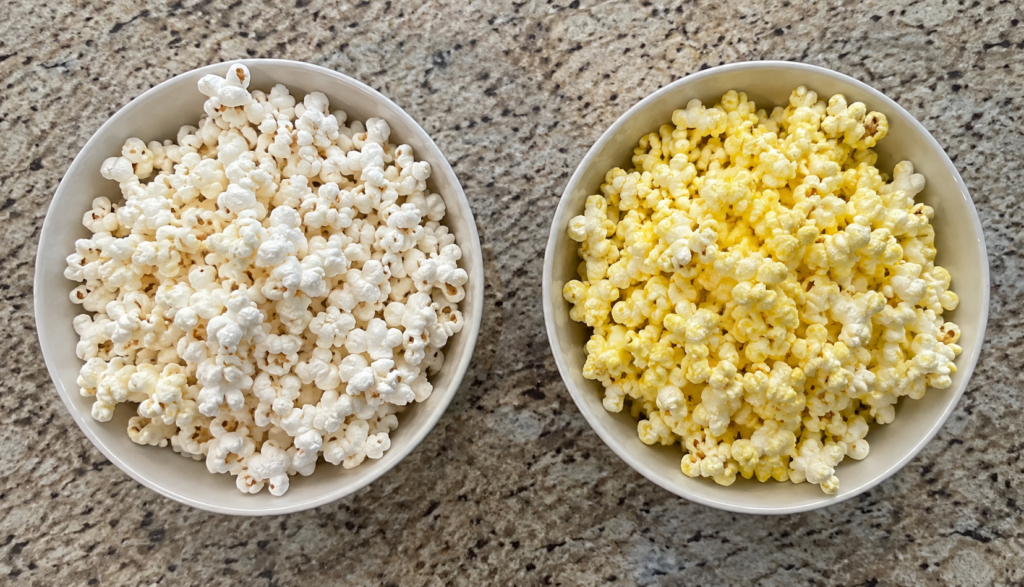
The popcorn most people actually eat — buttered, salted, sometimes with additional seasoning — is where the risk profile changes substantially. Butter adds significant fat content that, in any meaningful quantity, can cause digestive upset in dogs and, with regular exposure to high-fat foods, contributes to the kind of fat load that’s associated with pancreatitis risk in predisposed dogs. The same concern that applies to giving dogs too much coconut or other high-fat foods applies here.
Salt is the more immediate concern with standard movie-style popcorn. Dogs require far less sodium in their diet than humans do, and commercially salted popcorn — particularly the kind served at movie theaters or made with heavily salted microwave popcorn bags — contains salt levels that can cause digestive upset in smaller quantities and, in larger amounts, more serious sodium ion poisoning, with symptoms including excessive thirst, vomiting, lethargy, and in severe cases, more critical neurological symptoms.
Most dog owners miss this completely: a small amount of buttered, salted popcorn shared casually during a movie isn’t likely to cause serious harm to a healthy adult dog, but it’s also not something to make a habit of, and the calculation changes considerably for smaller dogs where the same handful represents a much larger proportional dose of fat and sodium. Treating standard movie popcorn as an occasional, very limited exception rather than a regular shareable snack is the more sensible approach.
Caramel popcorn, kettle corn, and any sweetened popcorn variety add sugar content on top of the existing butter and salt concerns, compounding the issue further. These specialty popcorn varieties are even less appropriate to share than standard buttered popcorn, given the additional sugar load alongside everything else.
Unpopped Kernels — The Hazard Everyone Forgets
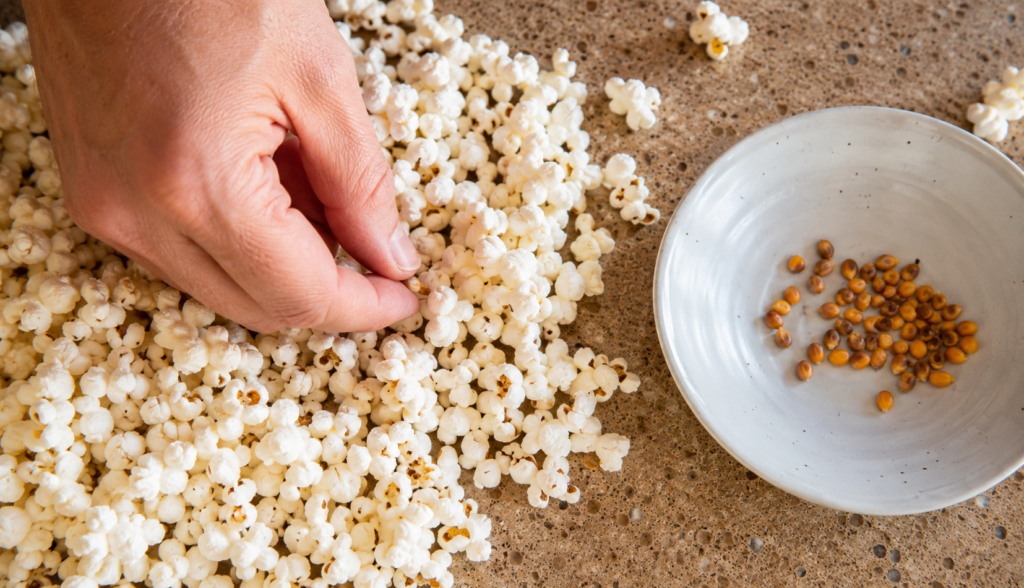
Every batch of popcorn, regardless of how it’s prepared, produces some number of unpopped or partially popped kernels mixed in with the fully popped pieces. These kernels are hard, small, and easy to overlook when sharing a handful with a dog, but they present a genuine choking hazard and, if swallowed, can cause gastrointestinal irritation or, in less common cases, contribute to blockage concerns depending on quantity and the dog’s size.
This is the detail that gets overlooked most often when people think about popcorn safety for dogs — the conversation tends to focus entirely on butter and salt, while the unpopped kernel issue applies even to the plainest, most carefully prepared air-popped batch. There’s no preparation method that eliminates unpopped kernels entirely; some percentage of kernels simply don’t pop regardless of method, and a thorough check before sharing is the only real safeguard.
I’ve seen this become an issue with a small dog who got into a bowl of popcorn unsupervised and worked through a meaningful number of unpopped kernels along with the popped pieces. The resulting digestive discomfort, while not severe, was uncomfortable enough to make clear that kernel checking matters in practice, not just in theory. For smaller dogs especially, where a kernel represents a larger proportional hazard, this preparation step deserves real attention rather than being treated as a minor afterthought.
Before sharing any popcorn with a dog, sorting through the portion you intend to give them and removing any unpopped or partially popped kernels is a worthwhile few extra seconds. This is particularly important if a child or less safety-conscious family member is the one sharing popcorn with the dog, since the kernel-checking step is easy to skip when someone isn’t specifically thinking about it.
How Much Popcorn Dogs Can Have
For plain, air-popped, unsalted popcorn with kernels removed, the serving guidance is fairly relaxed given the low calorie and low risk profile. A small handful for small dogs, a slightly larger handful for medium dogs, and a generous handful for large breeds all represent reasonable occasional portions. This isn’t a treat that needs to be offered daily, but as an occasional shared snack during a movie or relaxed evening, modest amounts of plain popcorn don’t present much concern.
For any popcorn with butter, salt, or seasoning, the appropriate amount drops considerably — a few pieces as an occasional taste rather than a generous handful, and this should genuinely be treated as a rare exception rather than something offered regularly. Dogs prone to pancreatitis, dogs with existing sodium-sensitive health conditions, and very small breeds where the proportional dose matters more should skip seasoned popcorn entirely.
From experience, the smarter call for regular movie nights is to prepare a separate small batch of plain, air-popped popcorn specifically for the dog rather than sharing from the seasoned bowl everyone else is eating from. This removes the temptation to share “just a little” of the buttered version and gives the dog a genuinely appropriate snack that doesn’t require the same restraint and caution that seasoned popcorn does.
What Most People Don’t Know
Microwave popcorn bags frequently contain chemical coatings and flavoring agents beyond just butter and salt, some of which haven’t been specifically evaluated for safety in dogs and are best avoided regardless of the plain-versus-seasoned distinction that applies to home-popped corn. The microwave popping process itself also tends to leave a higher proportion of unpopped kernels compared to air-popping or stovetop methods, compounding the kernel hazard already discussed.
Popcorn seasoning blends — the powdered flavor packets sold for home popcorn, ranging from cheese to white cheddar to various savory blends — often contain onion powder or garlic powder, both of which are genuinely toxic to dogs in concentrated form. This is a more serious concern than the standard butter and salt issue, since onion and garlic compounds can cause damage to red blood cells with sufficient exposure. Any popcorn made with commercial seasoning packets should be kept away from dogs entirely, not just minimized.
The other detail worth knowing: stovetop popcorn made with cooking oil falls somewhere between air-popped and butter-laden microwave popcorn in terms of fat content, depending on how much oil is used. A small amount of plain stovetop popcorn made with minimal oil and no salt is reasonably close to air-popped in terms of dog appropriateness, while a heavily oiled version moves closer to the butter-laden category in terms of risk. If symptoms persist or worsen after a dog eats popcorn of any kind, a vet visit is always the right call, particularly if seasoning packets containing onion or garlic powder were involved.
Making Movie Night Dog-Friendly
For households that regularly share snacks with their dog during movies or relaxed evenings, preparing a dedicated batch of plain, air-popped popcorn specifically for the dog — checked for unpopped kernels, served without any butter or salt — is the most sustainable way to include the dog in the activity without introducing unnecessary risk. This small extra step removes the need to negotiate around the seasoned version everyone else is enjoying.
For dogs that don’t seem particularly interested in plain popcorn once they realize it lacks the flavor of what everyone else is eating, there’s no need to compensate by offering the seasoned version instead. Plenty of other safe snacks — carrot sticks, a few blueberries, a small piece of plain cooked chicken — work just as well for movie night sharing without any of the popcorn-specific considerations around kernels, salt, and butter.
Safe human foods for dogs include popcorn in its plain form, but the qualifier matters more here than with most other foods on a comparable list. Popcorn isn’t unsafe in the way grapes or chocolate are — it’s conditionally safe, dependent entirely on preparation, and that condition is easy to overlook specifically because popcorn feels so universally harmless in its most common, heavily seasoned form.
Frequently Asked Questions
Q. Is buttered popcorn bad for dogs?
A. Yes, in any meaningful quantity. Butter adds significant fat that can cause digestive upset and contribute to pancreatitis risk with regular exposure. A small taste occasionally isn’t an emergency, but it shouldn’t be a regular treat.
Q. Are unpopped popcorn kernels dangerous for dogs?
A. Yes. Unpopped or partially popped kernels are hard and present a choking hazard and potential digestive irritation. Every batch of popcorn contains some kernels that didn’t pop, so check thoroughly before sharing any with a dog.
Q. Can dogs eat popcorn with seasoning?
A. No. Many popcorn seasoning blends contain onion or garlic powder, which are toxic to dogs. Stick to plain, air-popped popcorn with no butter, salt, or seasoning packets if you want to share it with your dog.