
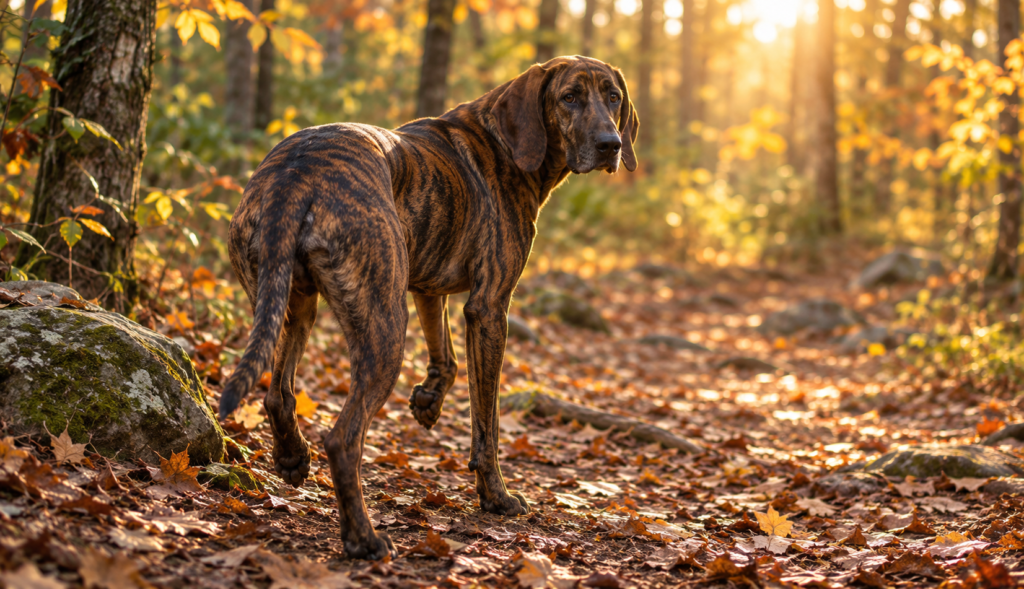
If your dog is limping on a back leg, you are probably asking the same thing every owner asks: why is my dog limping, and is it serious? A dog limping back leg can mean anything from a pulled muscle after a hard game of fetch to a torn ligament that needs surgery. The tricky part is that dogs hide pain well, so a small hitch in their step can be the only early clue. This guide walks through the most common causes, what you can safely check at home, what home care actually helps, and the signs that mean you should stop waiting and call your vet.
Is Your Dog’s Back Leg Limp Normal or a Warning Sign?
A limp is not a diagnosis. It is simply your dog’s way of protecting a leg that hurts, feels weak, or is not working properly. Sometimes it is minor and clears up fast. Sometimes it is the first visible sign of a problem that gets worse with every day of delay.
A mild case of dog limping after a long walk or dog limping after playing that is gone within a day is often a simple strain. A limp that lasts more than a day or two, keeps coming back, or gets worse is not something to watch indefinitely. That includes a dog limping on and off, or a dog limping after exercise again and again. The same goes for any dog hind leg limping that comes with swelling, crying, or a leg held off the ground.
When It Is Usually Minor
- The limp is mild and your dog still puts weight on the leg
- It showed up after hard exercise or rough play
- It improves noticeably within 24 hours of rest
- Your dog is eating, drinking, and acting like themselves
When It Is Not Minor
- Your dog will not put any weight on the leg at all
- You see a dog limping and swollen leg together, or the leg is bent at a strange angle or dangling
- Your dog cries, snaps, or pulls away when you touch the leg
- The limp follows a fall, a car accident, or a hard impact
- There is fever, loss of appetite, or unusual tiredness along with the limp
Common Causes of a Dog Limping on a Back Leg
The back legs carry a lot of the work when a dog runs, jumps, and turns, and the knee and hip are two of the most injury-prone joints in the body. Here are the causes vets see most often when a dog is limping on a hind leg.
Sprains and Muscle Strain
A dog sprain or muscle strain is the most common reason for a sudden limp. Slipping on a wood floor, jumping off the couch, or sprinting after a squirrel can stretch or tear soft tissue. Mild muscle strain and ligament injury often settle with rest, but a bad one can look almost identical to a more serious tear, which is why a persistent limp deserves an exam.
Torn ACL (Cruciate Ligament Tear)
A torn ACL in dogs, properly called a cranial cruciate ligament tear, is one of the leading causes of back leg lameness. Dogs with a cruciate ligament tear often hold the leg up, toe-touch the ground, or sit with the injured leg kicked out to the side. Some dogs limp on and off at first, then get suddenly worse. Large and active breeds are at higher risk, but any dog can tear a ligament. This usually needs a vet’s diagnosis and often surgery or structured rehab.
Luxating Patella
A luxating patella means the kneecap slides out of its groove. It is most common in small breeds, and owners often describe a dog that suddenly skips or hops on a back leg for a few steps, then walks normally again. Mild cases may need monitoring, while severe ones are treated surgically.
Hip Dysplasia in Dogs
Hip dysplasia in dogs is a developmental problem where the hip joint does not fit together properly. It often shows up as stiffness, a swaying walk, “bunny hopping” when running, or reluctance to climb stairs. It can start in young dogs and gets more painful as arthritis develops.
Dog Arthritis and Joint Pain
Dog arthritis is a leading cause of limping in older dogs. Joint pain tends to be worse after rest, so you may notice a dog limping back leg after sleeping that eases once they warm up and move around. A senior dog limping in the morning or after a cold, damp day is a classic pattern.
Paw Injuries and Foreign Objects
Not every limp starts in the leg. A dog limping with a paw injury may have a cut pad, a torn or broken nail, a thorn, a burr, a splinter, or a grass seed lodged between the toes. Insect stings and interdigital cysts can also cause a limp. Since paws are easy to check, this is the first thing worth ruling out at home.
Tick-Borne Disease and Infection
Tick-borne disease, including Lyme disease, can cause a shifting limp that moves from one leg to another, often with fever and low energy. If you live in a tick area and the limp seems to jump around, mention it to your vet.
Growing Pains and Developmental Problems in Puppies
A dog limping as a puppy can be caused by a condition called panosteitis, and limping puppy growing pains of this kind affect young large-breed dogs and may shift between legs. Other developmental problems can look similar, so a puppy that limps for more than a day or two should still be examined.
Nerve or Spinal Problems
Sometimes the issue is not the leg at all. A nerve or spinal problem, such as a slipped disc, can cause dog hind leg weakness, a case where your dog back leg gives out, dragging toes, or wobbling. Because spinal problems can progress quickly, sudden weakness or loss of coordination in the back end should be treated as urgent.
Fractures and Bone Tumors
A fracture causes severe pain and usually a dog that will not walk on the leg. Less commonly, a persistent limp in a middle-aged or older large-breed dog can be linked to a bone tumor. This is rare, but it is one more reason a limp that does not resolve should not be written off as old age.
Quick Guide: What the Pattern of the Limp Can Tell You
This table is not a diagnosis, but it shows how common causes tend to look. Your vet will confirm what is really going on.
| Possible Cause | What You Might Notice | How Urgent |
|---|---|---|
| Muscle strain or sprain | Mild limp after play, improves with rest | Low if improving in 24–48 hours |
| Paw injury or foreign object | Licking the paw, favoring one foot, visible cut or thorn | Low to moderate |
| Luxating patella | Skipping or hopping for a few steps, then normal | Moderate, vet visit advised |
| Arthritis | Stiffness after rest, worse in cold weather | Moderate, ongoing care |
| Hip dysplasia | Swaying walk, bunny hopping, trouble with stairs | Moderate |
| Torn cruciate ligament | Holding leg up, toe touching, sitting with leg out to the side | High, vet visit soon |
| Spinal or nerve problem | Weak back end, dragging toes, wobbling | High, treat as urgent |
| Fracture | Will not use leg, swelling, severe pain | Emergency |
How to Check Your Dog’s Back Leg at Home
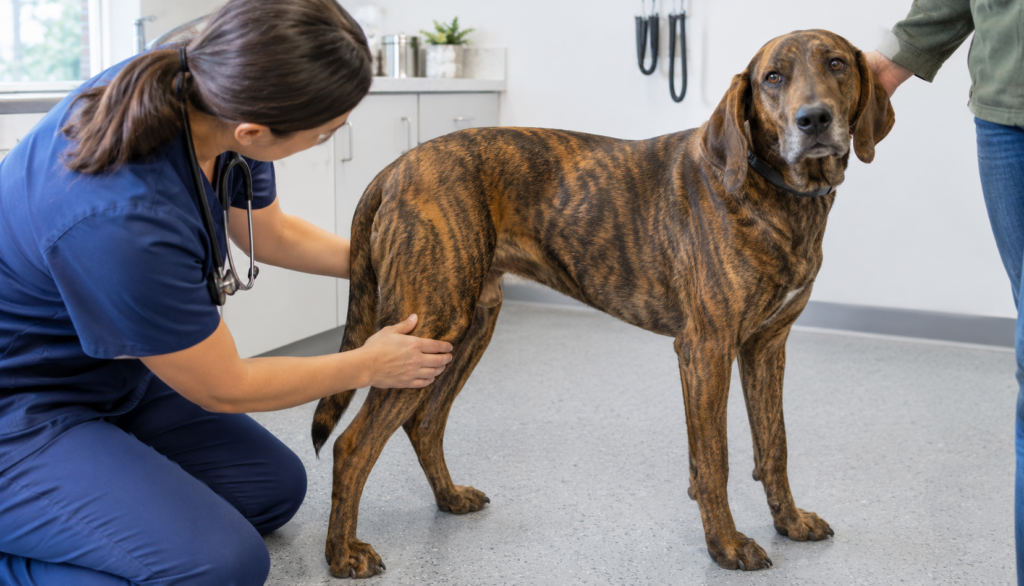
A careful, calm check can tell you a lot and give your vet useful information. Keep your dog relaxed, ideally on a non-slip surface, and stop if they show pain or try to bite. Pain can make even the gentlest dog snap, so a second person to hold and reassure your dog is helpful.
- Watch them walk first. Note whether the dog limping on the back leg bears weight, toe-touches, or holds the leg up completely.
- Check the paw. Spread the toes and look between them and across the pads for cuts, thorns, burrs, or a cracked nail.
- Feel for swelling or heat. Compare the sore leg with the other one, working gently from the toes up toward the hip.
- Test the range of motion. Gently bend and extend the leg only as far as it moves easily. Never force a joint.
- Look for a pattern. Does the dog limp on and off, only after exercise, or mainly after sleeping?
If you find a thorn or burr that is easy to remove, you can take it out. If you see a deep wound, heavy bleeding, an object stuck in the pad, or severe swelling, skip the home care and call your vet.
Dog Limping Back Leg Home Remedies: What Is Safe
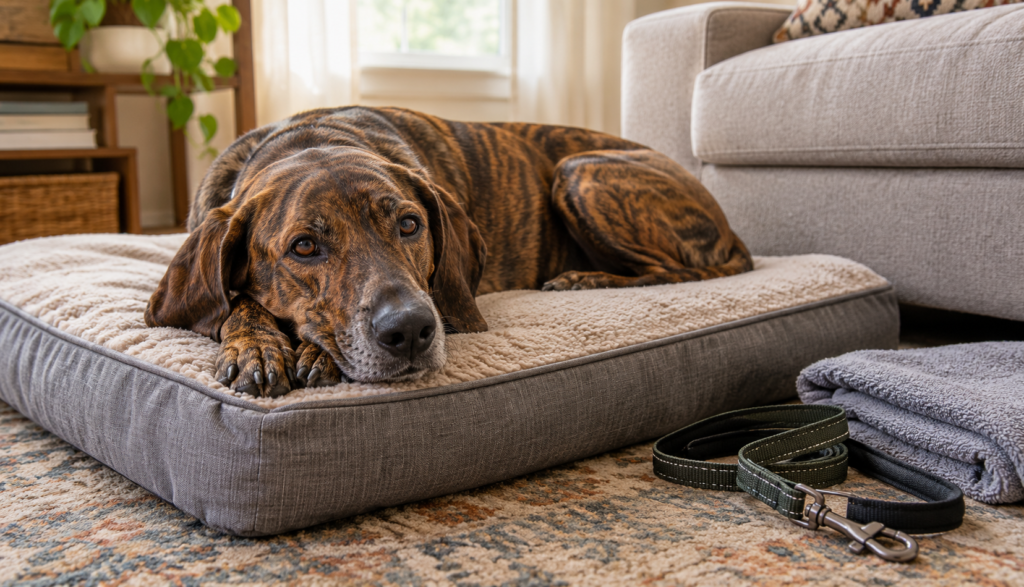
When the limp is mild, your dog is bearing weight, and nothing looks seriously wrong, a short period of careful home care is reasonable. Think of it as a bridge to a vet visit, not a replacement for one.
Rest and Restricted Activity
Rest and restricted activity are the single most useful thing you can do. That means leash-only bathroom breaks, no running, no jumping on furniture, no stairs if you can avoid them, and no rough play with other dogs. Many owners make the mistake of letting a dog run around the moment the limp seems better, which can turn a small strain into a bigger injury.
Cold Compress, Then Warmth
In the first day or two after a sudden injury with swelling, a cold compress wrapped in a thin towel can be applied for about ten minutes at a time. Never put ice directly on the skin. For stiffness in an older dog with arthritis, gentle warmth can be more soothing than cold. If your dog dislikes either, do not force it.
What You Should Never Give
One of the most dangerous mistakes is reaching for human painkillers. Many owners ask, can I give my dog ibuprofen for a limp? The answer is no. Ibuprofen, naproxen, and acetaminophen can cause stomach ulcers, kidney failure, or liver damage in dogs, and some can be fatal even in small amounts. Only give pain relief that your vet has specifically prescribed for your dog, including any anti-inflammatory medication prescribed by the vet, and only at the dose they set.
A Note on Home Remedies
You will see many home remedies online. Most of them add little beyond rest, and some are risky. Home care helps with mild strains, but it cannot fix a torn ligament, a dislocating kneecap, or a spinal problem. If there is no clear improvement after a day or two, the next step is an exam, not another remedy.
What Most People Don’t Know
Many owners believe that if a dog limping is not crying, it must not be painful. That is not true. Dogs instinctively hide pain, and a dog limping but not crying can still have a serious injury. A silent dog with a limp can have a torn cruciate ligament or advanced arthritis.
Another surprise is that a dog limping on a back leg with no pain apparent to you may be the early stage of a bigger problem. Dogs with a partial cruciate tear often seem to recover after a few days of rest, and then the limp returns. Those on-and-off episodes are not the leg healing. They are often a sign that the joint is unstable and the tear is getting worse, sometimes damaging the cartilage inside the knee.
Finally, a limp does not always mean the leg is the source. A dog limping with no swelling can still have a problem in the hip, the knee, or even the spine. This is why vets examine the whole dog and not just the spot that looks sore, and why a limp that has no obvious cause should still be looked at.
When to See a Vet About Your Dog’s Limping
Knowing when to see a vet can save your dog from a lot of unnecessary pain. Book an appointment if the limp lasts longer than 24 to 48 hours, keeps returning, or is getting worse. Your dog may need an orthopedic exam, and often X-rays, to find the cause. Depending on the problem, treatment may include prescribed anti-inflammatory medication, rest, physical therapy, joint supplements, or surgery.
Emergency Signs
Treat the situation as a dog limping emergency and go to a vet or emergency clinic right away if you see any of the following:
- Your dog will not put any weight on the leg after an accident or fall
- The leg is visibly swollen, deformed, or hanging at an odd angle
- There is heavy bleeding or a deep wound
- Sudden weakness, wobbling, or dragging of both back legs
- Your dog cannot stand or has lost control of urine or stool
- Severe pain, crying, panting, or collapse
What to Tell the Vet
Your observations help the vet narrow things down quickly. Be ready to say when the limp started, whether it came on suddenly or slowly, whether it is worse after rest or exercise, which leg is affected, and whether anything happened beforehand such as a fall, a hard run, or a tick bite. A short phone video of your dog walking can be surprisingly useful, because some dogs stop limping the moment they enter the clinic.
Limping in Puppies and Senior Dogs
Age changes what a limp is likely to mean. In a puppy, a limp may come from growing pains, a developmental joint problem, or a simple strain from over-enthusiastic play. Puppies still need an exam when the limp lasts, since early treatment of joint problems can change the outcome.
For a senior dog limping on a back leg, arthritis is the most likely culprit, but it is not the only one. Older dogs can also develop ligament tears, spinal disease, and tumors. Many people write off a senior dog’s limp as age, when in reality there is often something the vet can do to help, from pain management to mobility aids.
How to Help Prevent Back Leg Injuries
You cannot prevent every injury, but you can lower the odds. Keep your dog at a healthy weight, because extra pounds add stress to every joint and are one of the biggest risk factors for ligament injury and arthritis. Warm up with a short walk before intense play, avoid sudden stop-and-start games on slippery floors, and keep nails trimmed so the paws grip properly.
Regular, moderate exercise keeps muscles strong enough to support the joints. For dogs prone to joint trouble, ask your vet about joint supplements and whether a ramp for the car or couch makes sense. Weekend warriors who sit all week and then run hard for hours are especially prone to injury, so build up activity gradually.
Frequently Asked Questions
Q. Why is my dog limping on his back leg but not crying?
A. Dogs often hide pain, so a quiet dog can still be hurting. Common causes include a muscle strain, a paw injury, early arthritis, or a ligament problem. If the limp lasts more than a day or two, see your vet.
Q. Can a dog’s limp heal on its own?
A. A mild strain can improve with a day or two of strict rest. A limp that keeps coming back, or does not improve, usually needs an exam, since conditions like a torn ligament will not heal properly without treatment.
Q. Is it okay to give my dog ibuprofen for limping?
A. No. Ibuprofen, naproxen, and acetaminophen are dangerous for dogs and can cause serious stomach, kidney, or liver damage. Only use pain medication prescribed by your vet.
Q. When is a dog limping an emergency?
A. Go to a vet right away if your dog will not put any weight on the leg, the leg looks deformed or swollen, there is heavy bleeding, or your dog has sudden weakness in the back legs. Severe pain or collapse is also an emergency.