
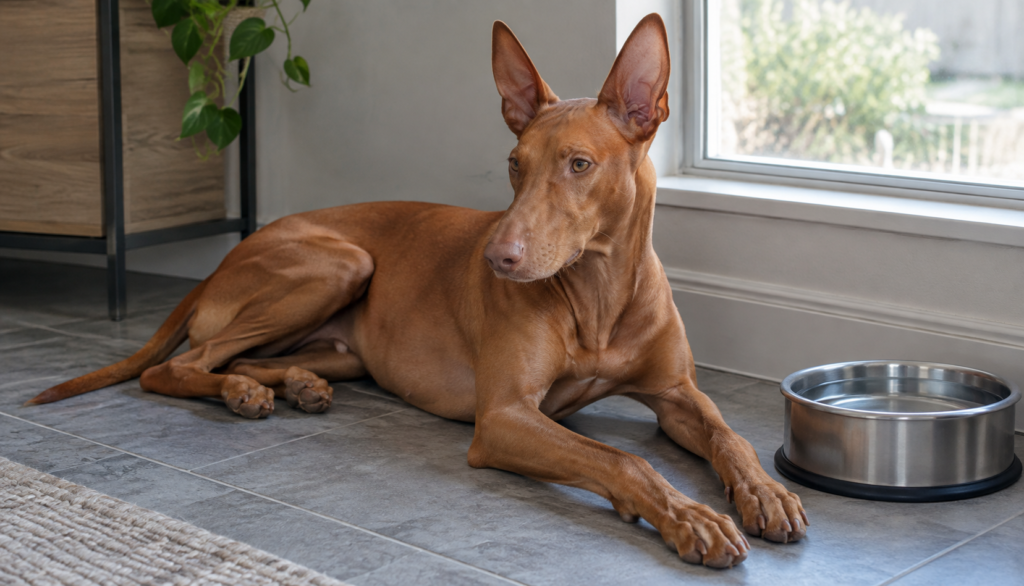
Liquid diarrhea in dogs — stool with no form at all, essentially pouring out rather than holding any shape — is one of the more alarming versions of an already unpleasant symptom. Because it’s almost entirely fluid, it carries a much higher dehydration risk than looser-but-still-formed stool, and it often points to a more active gut issue underneath. This guide covers what causes fully liquid diarrhea, how to judge severity, and when it crosses from a home-care situation into one that needs a vet the same day.
What Counts as Liquid Diarrhea?
Veterinary stool charts typically score consistency on a scale, with liquid diarrhea sitting at the most severe end — stool that has no discernible shape and essentially takes the form of whatever surface it lands on, similar to a puddle. This is different from “soft serve” style diarrhea, which still holds some log shape but is clearly loose. The distinction matters because pure liquid diarrhea signals faster gut transit and a higher fluid loss rate than firmer, loose stool.
Liquid diarrhea can happen as a single, isolated episode or as a repeated pattern over several bowel movements in a day. The more frequent and the more purely liquid the stool becomes, the greater the dehydration risk, particularly in small dogs, puppies, and seniors who have less fluid reserve to begin with.
Color and smell can add useful context alongside consistency. Liquid diarrhea that’s brownish and only mildly odorous is generally less concerning than liquid stool that’s unusually dark, greenish, or carries a sharply foul or metallic smell, which can point toward infection, significant inflammation, or blood breakdown further up the digestive tract. Tracking these details, even in a quick note on your phone, gives your vet far more to work with than a vague description if you do need to call in.
Common Causes of Liquid Diarrhea in Dogs
Fully liquid stool tends to result from causes that trigger a strong, fast gut response rather than a mild irritation. Working through the likely triggers helps determine whether this is something to monitor or something requiring same-day care.
- Dietary indiscretion: Eating spoiled food, garbage, or something far outside the normal diet often produces a sudden, severe liquid response as the gut tries to expel the irritant quickly.
- Viral infections: Parvovirus, coronavirus, and other viral infections are common causes of severe, watery diarrhea, especially in puppies and unvaccinated dogs.
- Bacterial infections: Salmonella, E. coli, and Clostridium overgrowth can all trigger acute, liquid diarrhea, sometimes with blood or mucus mixed in.
- Parasites: Giardia and coccidia frequently cause watery, sometimes foul-smelling diarrhea, particularly in puppies and dogs with recent exposure to contaminated water or soil.
- Food allergies or sudden intolerance: A reaction to a new protein or ingredient can produce a sudden, severe liquid response rather than a gradual, mild loosening.
- Toxin ingestion: Certain toxic plants, chemicals, or foods (like large amounts of chocolate or xylitol) can trigger severe watery diarrhea as one of several symptoms.
- Inflammatory bowel disease (IBD): Chronic gut inflammation can cause recurring episodes of liquid diarrhea, often alongside weight loss or intermittent vomiting.
- Severe stress: Extreme anxiety, such as from a traumatic event or major environmental change, can occasionally trigger a fully liquid stress response in sensitive dogs.
- Antibiotic or medication side effects: Some medications disrupt gut flora aggressively enough to cause watery stool as a side effect.
Why Liquid Diarrhea Carries a Higher Dehydration Risk
Compared to soft or loose-but-formed stool, liquid diarrhea represents a much greater fluid and electrolyte loss per episode. Because there’s essentially no solid matter retaining moisture, nearly all of what’s expelled is water and electrolytes the body needs to function normally. Repeated liquid episodes over a short period can lead to dehydration within just a few hours, particularly in dogs under 20 pounds, puppies, and senior dogs with reduced kidney reserve.
Signs of dehydration to watch for include dry or tacky gums, sunken eyes, reduced skin elasticity (skin that’s slow to spring back when gently pinched and released), lethargy, and reduced urination. Any combination of these alongside ongoing liquid diarrhea is a signal to seek veterinary care rather than continuing to monitor at home.
Liquid Diarrhea vs. Other Diarrhea Types: Severity Comparison
Not all diarrhea carries the same level of urgency. The table below compares liquid diarrhea against other common presentations to help put the severity in context.
| Consistency | Description | Dehydration Risk |
|---|---|---|
| Liquid diarrhea | No form at all, pours out like a puddle | High — fastest fluid loss rate |
| Soft serve diarrhea | Loose but holds a rough shape briefly | Moderate |
| Soft, formed diarrhea | Holds shape but is noticeably softer than normal | Low to moderate |
| Mucus-covered diarrhea | Liquid or loose stool coated in visible mucus, often from colon irritation | Moderate — depends on frequency |
| Bloody diarrhea | Liquid or loose stool with visible blood, streaks, or a black/tarry appearance | High — requires same-day vet attention |
What Most People Don’t Know
Many owners assume the main danger of diarrhea is the mess or discomfort, but with fully liquid diarrhea specifically, electrolyte loss is often the bigger hidden risk. Sodium, potassium, and chloride are lost right alongside water, and severe imbalances in these electrolytes can affect heart rhythm and muscle function, not just hydration. This is part of why vets sometimes recommend a rehydration solution formulated for pets rather than plain water alone for more severe cases — plain water replaces fluid volume but not the lost electrolytes.
Another point that surprises people: a single episode of liquid diarrhea in an otherwise completely healthy, active dog is actually fairly common and often resolves within 24 hours without any specific cause ever being identified. Vets sometimes call this “idiopathic” diarrhea, meaning the trigger, whether a subtle dietary shift or a brief viral irritation, simply isn’t traceable and isn’t always worth extensive testing if the dog recovers quickly and shows no other symptoms.
It’s also worth knowing that puppies dehydrate dramatically faster than adult dogs relative to their size, sometimes within just a few hours of repeated liquid diarrhea. A puppy showing any dehydration signs alongside liquid stool should be treated as more urgent than the same symptoms in a healthy adult dog, even if the puppy still seems energetic between episodes.
Home Care for Mild, Isolated Episodes
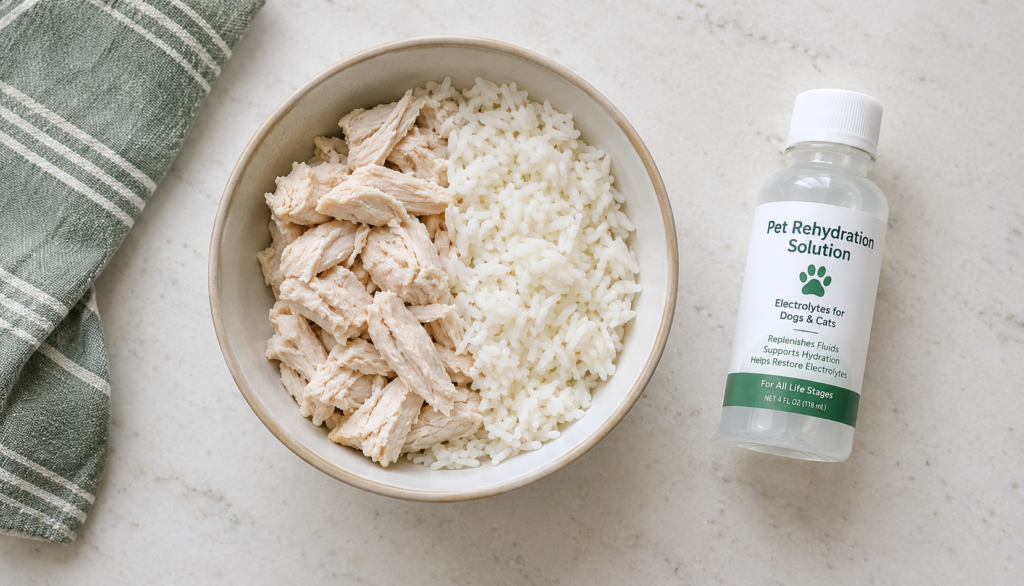
If your dog has had one liquid episode, is otherwise acting completely normal, and shows no dehydration signs, these steps support recovery over the following 24 hours.
- Offer small, frequent water access: Rather than large amounts at once, which can trigger vomiting in an already upset stomach, offer water in small amounts more often.
- Feed a bland diet: Plain boiled chicken and white rice in small portions gives the gut something easy to process while it settles.
- Skip fasting for small dogs and puppies: Current vet guidance favors small, frequent bland meals over withholding food entirely, especially for dogs who can’t tolerate long gaps without eating.
- Avoid dairy, fatty foods, and new treats: These can prolong or worsen an already sensitive gut during recovery.
- Track frequency and appearance: Note how many episodes occur and whether the stool starts firming up, since improvement within the first 12–24 hours is a good sign.
When to Seek Emergency Vet Care
Liquid diarrhea escalates from a home-care issue to an urgent one when certain signs appear. Because fluid loss happens fast with this specific stool type, don’t wait through a full 24-hour window if any of these apply.
- More than 3–4 liquid episodes within a few hours
- Visible blood, black/tarry color, or a strong foul odor beyond typical diarrhea smell
- Repeated vomiting alongside the diarrhea
- Signs of dehydration: dry gums, sunken eyes, lethargy, reduced urination
- Fever, shivering, or visible abdominal pain
- A puppy, senior dog, or dog with an existing health condition experiencing liquid diarrhea of any duration
- Known or suspected exposure to a toxin, spoiled food, or foreign object
- Diarrhea persisting beyond 24 hours without any improvement
Diagnosis and Treatment Options
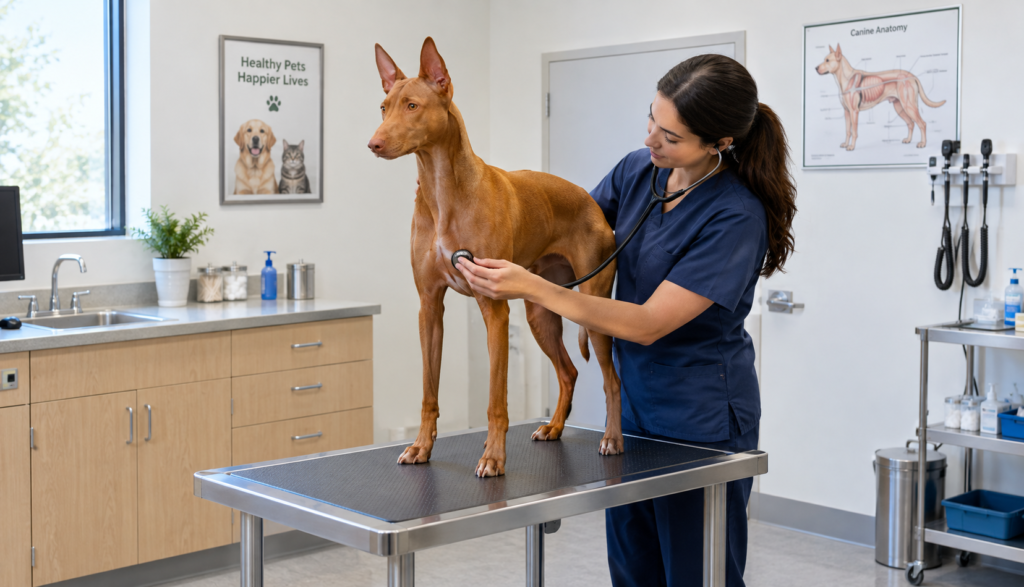
For persistent or severe liquid diarrhea, a vet visit typically begins with a physical exam, hydration assessment, and history of recent diet, environment, and exposure. Common next steps include:
- Fecal testing for parasites, including giardia and coccidia
- Bloodwork to check electrolyte balance, kidney function, and signs of infection or inflammation
- Fluid therapy, either subcutaneous or intravenous, to correct dehydration and electrolyte loss in moderate to severe cases
- Parvovirus testing for unvaccinated or under-vaccinated puppies showing severe symptoms
- Anti-diarrheal or gut-protectant medication, prescribed based on the suspected underlying cause rather than used blindly
Treatment is directed at the underlying cause once identified — antiparasitics for parasites, targeted antibiotics for confirmed bacterial infections, supportive fluid therapy for viral cases, and dietary management for allergy or IBD-related chronic cases. Most dogs with mild to moderate liquid diarrhea respond well within 24 to 72 hours of starting appropriate treatment, while more severe infectious causes like parvovirus require intensive hospitalization and a longer recovery window. Your vet will typically ask you to monitor stool consistency closely over the following days and report back if symptoms plateau or worsen rather than steadily improve.
Preventing Future Episodes
While not every case of liquid diarrhea is preventable, a few habits reduce the odds of recurring episodes tied to common triggers.
- Keep vaccinations current, particularly for parvovirus in puppies
- Secure trash, compost, and anything a dog might scavenge on walks
- Introduce new foods gradually over 5–7 days rather than switching abruptly
- Stay current on parasite prevention and routine fecal screening
- Avoid unfiltered standing water sources on walks, which can carry giardia and other parasites
- Discuss any recurring or chronic episodes with your vet rather than treating each one as unrelated
FAQ
Q. Is liquid diarrhea worse than loose diarrhea in dogs?
A. Yes, generally. Liquid diarrhea has no solid matter retaining moisture, so nearly all of what’s lost is water and electrolytes, meaning dehydration can set in faster than with softer but still-formed stool.
Q. How quickly can a dog dehydrate from liquid diarrhea?
A. It can happen within just a few hours, especially in puppies, small dogs, and seniors. Watch for dry gums, sunken eyes, lethargy, and reduced urination as key warning signs.
Q. Should I give my dog Pedialyte for liquid diarrhea?
A. A pet-specific rehydration solution can help replace lost electrolytes, not just fluid volume. Check with your vet on the right product and amount before giving anything, especially for small dogs or puppies.
Q. When is liquid diarrhea a vet emergency?
A. If there are more than 3–4 episodes in a few hours, blood or a black/tarry color, repeated vomiting, dehydration signs, or the dog is a puppy or senior — these all warrant same-day vet care rather than home monitoring.