
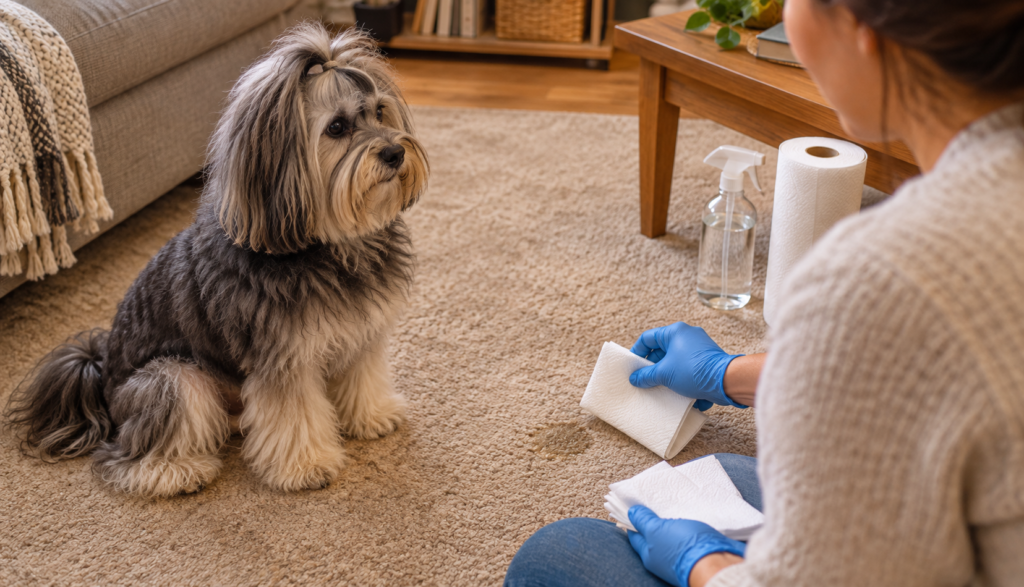
Dog diarrhea on carpet is one of those messes that gets worse the longer it sits. Beyond the immediate cleanup, loose stool soaks into carpet fibers and padding fast, carrying bacteria, staining pigments, and odor-causing compounds deep below the surface. Handled quickly and correctly, though, most diarrhea accidents come out completely clean with no lingering smell or stain. This guide walks through the full process, from the first five minutes to deep odor removal, plus what NOT to do, since a few common instincts actually make the stain and smell worse.
Act Fast: The First 5 Minutes Matter Most
Diarrhea is thinner and more liquid than solid stool, which means it spreads and penetrates carpet fibers far faster. The single biggest factor in whether a stain and odor fully disappear is how quickly you start the cleanup. Every minute the mess sits, more liquid works its way into the padding underneath, which is much harder to treat than the visible carpet surface.
As soon as you notice the accident, put on disposable gloves and grab paper towels or old rags you don’t mind tossing. Speed matters more than technique at this stage — get as much of the mess off the surface before it has a chance to soak deeper.
Step-by-Step: Removing Fresh Diarrhea From Carpet
Once you’re set up, work through the mess in stages rather than trying to scrub it all clean in one pass. Rushing straight to scrubbing is one of the most common mistakes, since it pushes the mess deeper instead of lifting it out.
- Step 1 — Remove solids first: Use a paper towel, disposable spatula, or even a piece of cardboard to gently scoop up as much of the solid material as possible without pressing it into the fibers.
- Step 2 — Blot, don’t rub: Press clean paper towels or rags straight down onto the wet area to absorb liquid. Rubbing spreads the stain outward and works it deeper into the carpet backing.
- Step 3 — Rinse with cool water: Lightly dampen the area with cool water and blot again. This dilutes the remaining residue and makes the next step more effective. Avoid hot water, which can set both the stain and the odor permanently.
- Step 4 — Apply an enzymatic cleaner: Spray a pet-specific enzymatic cleaner generously over the entire affected area, not just the visible stain, since liquid diarrhea spreads wider underneath the surface than it appears on top.
- Step 5 — Let it sit: Enzymatic cleaners need dwell time to work. Follow the product’s instructions, typically 10–15 minutes, so the enzymes have time to fully break down the proteins and bacteria causing the odor.
- Step 6 — Blot dry: Once the dwell time is up, blot the area with clean, dry towels until most of the moisture is absorbed.
- Step 7 — Air dry completely: Leave the area to air dry fully, ideally with a fan or open window nearby to speed up airflow. A damp carpet is more likely to develop mildew or trap lingering odor.
Enzymatic Cleaners vs. Regular Carpet Cleaner: What’s the Difference?
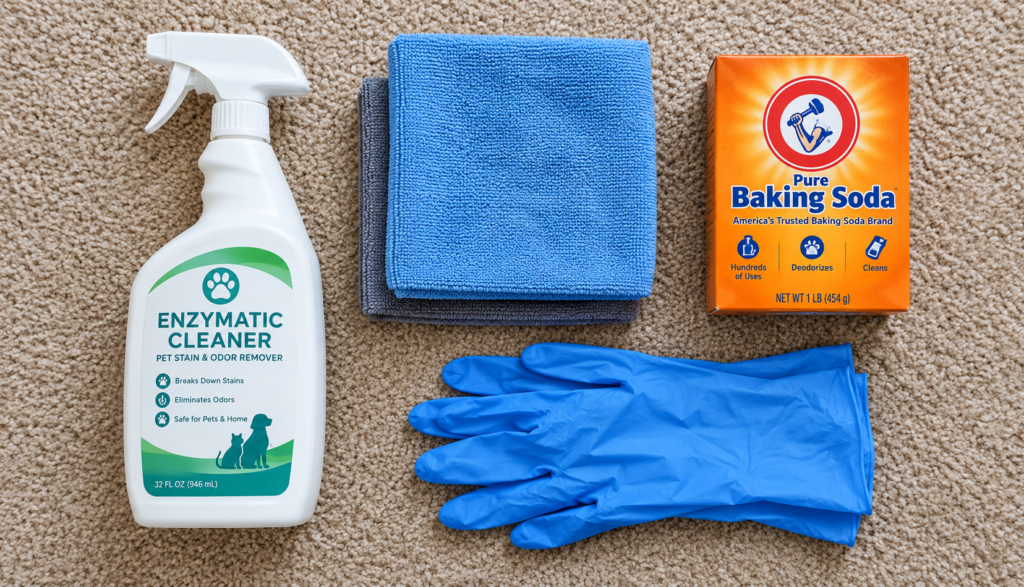
Not all carpet cleaners work the same way on pet accidents, and the difference matters more than most people realize. The table below compares the two main options for handling diarrhea stains.
| Cleaner Type | How It Works | Best For |
|---|---|---|
| Enzymatic pet cleaner | Uses bacterial enzymes to break down organic proteins, fats, and bacteria at the molecular level | Diarrhea, vomit, urine — eliminates odor and discourages repeat marking |
| Standard carpet shampoo | Surfactants lift dirt and surface stains but don’t break down organic waste | General dirt, mud, everyday grime — not effective on biological odor sources |
| Vinegar and water solution | Mild acid neutralizes some odor and disinfects lightly | Backup or supplemental step; not as thorough as enzymatic cleaners alone |
| Baking soda | Absorbs moisture and neutralizes surface odor | Final drying/deodorizing pass after the wet cleaning stage |
Enzymatic cleaners are the clear standout for diarrhea specifically because they target the biological source of the odor rather than masking it. Regular carpet shampoos and air fresheners only cover the smell temporarily, and dogs can often still detect the residual scent, which increases the odds they’ll be drawn back to the same spot.
What Most People Don’t Know
Most people assume the smell comes purely from the stool itself, but a large part of the lingering odor after a “cleaned” spot actually comes from bacteria that continue breaking down organic matter trapped in the carpet backing and padding, invisible from the surface. Standard cleaning products and store-bought sprays can lift the visible stain while leaving these bacteria completely intact underneath, which is why a spot can look clean but still smell days later, especially in humid weather.
Another detail most owners miss: dogs have a sense of smell many times more sensitive than humans, and even trace residue undetectable to a person can signal to a dog that a spot is an acceptable bathroom location. This is one of the leading reasons dogs repeatedly have accidents in the same general area — not disobedience, but genuine scent-based reinforcement. Using an enzymatic cleaner isn’t just about eliminating smell for your own comfort; it actively breaks the scent cue that draws the dog back.
It’s also worth knowing that heat is the enemy of stain removal in this specific situation. Hot water and heated dryers or steam cleaners can chemically bond protein stains to carpet fibers, turning what would have been a fully removable stain into a permanent one. Cool or room-temperature water throughout the entire process gives you the best odds of a complete, stain-free result.
Removing Set-In or Dried Diarrhea Stains
If the mess wasn’t caught right away and has already dried, the process takes a bit more patience but is still very workable in most cases.
- Gently scrape off any dried solid residue with a dull tool, taking care not to grind it further into the fibers
- Vacuum the area lightly to lift loose dried particles before applying any liquid
- Rehydrate the stain by lightly misting it with cool water and letting it sit for a few minutes to soften
- Blot up the loosened residue, then apply an enzymatic cleaner as you would for a fresh stain, allowing extra dwell time since dried stains take longer to break down
- Repeat the enzymatic treatment a second time if any discoloration or odor remains after the carpet dries
Removing Lingering Odor
Even after the visible stain is gone, odor can persist if bacteria remain active beneath the surface. A few additional steps help finish the job completely.
- Sprinkle baking soda: Once the area is fully dry from the enzymatic treatment, sprinkle a generous layer of baking soda over the spot and let it sit for several hours or overnight to absorb any remaining odor.
- Vacuum thoroughly: Vacuum up the baking soda completely, going over the area a few times to lift as much residue as possible from deep in the fibers.
- Check the padding: For larger or repeated accidents in the same spot, the padding underneath the carpet may need direct treatment or replacement, since padding absorbs and holds odor longer than the carpet fibers themselves.
- Use a black light if needed: A UV black light in a darkened room can reveal old stains and residue invisible in normal lighting, which is especially useful for locating the true source of a persistent smell.
What NOT to Do When Cleaning Dog Diarrhea
A handful of common instincts actually make the outcome worse rather than better. Avoiding these keeps the cleanup faster and more effective.
- Don’t use hot water: Heat sets protein-based stains permanently and can bond the odor-causing compounds into the fibers.
- Don’t scrub aggressively: Scrubbing pushes the mess deeper into the carpet and padding instead of lifting it out, and can damage carpet fibers.
- Don’t use ammonia-based cleaners: Ammonia smells similar to a component of urine to dogs, which can actually encourage repeat accidents in the same spot.
- Don’t rely on air fresheners or masking sprays alone: These cover the smell temporarily for humans but don’t eliminate the scent cues dogs can still detect.
- Don’t skip the padding check on repeat accidents: Treating only the visible carpet surface while ignoring saturated padding underneath leads to recurring odor no matter how many times the surface is cleaned.
When Diarrhea Accidents Signal a Bigger Issue
An occasional accident from a healthy dog is normal and not usually a behavioral or medical concern. However, if diarrhea accidents on carpet or elsewhere in the house are becoming frequent, it’s worth looking at whether an underlying digestive issue, stress trigger, or dietary problem is behind the repeated episodes rather than treating each one as an isolated cleaning task. Sudden changes in frequency, especially combined with vomiting, lethargy, or blood in the stool, warrant a vet visit rather than repeated cleanup alone.
Preventing Future Accidents and Stains
A few proactive habits reduce both the frequency of accidents and how much damage they do to carpet when they happen.
- Keep a stocked cleanup kit — enzymatic cleaner, gloves, and rags — easily accessible rather than searching for supplies mid-accident
- Use washable rugs or mats in high-risk areas near entry points or a dog’s usual resting spots
- Address any recurring digestive issues with your vet rather than only managing the cleanup side
- Consider a carpet protector spray in high-traffic pet areas to reduce how deeply future accidents can penetrate
- Keep a consistent feeding and bathroom schedule to reduce stress-related or urgency-related accidents indoors
FAQ
Q. What’s the best cleaner for dog diarrhea on carpet?
A. An enzymatic pet cleaner is the most effective option. It breaks down the organic proteins and bacteria causing the odor, rather than just masking the smell like regular carpet shampoo or air freshener.
Q. Does hot water help remove dog diarrhea stains?
A. No — hot water can actually set the stain and odor permanently by bonding the protein compounds to the carpet fibers. Cool or room-temperature water works better throughout the entire cleanup process.
Q. Why does my dog keep having diarrhea accidents in the same spot?
A. Dogs have a very sensitive sense of smell and can detect trace residue left behind even after a spot looks clean. This scent cue can draw them back to the same location repeatedly, which is why enzymatic cleaning matters.
Q. Can dried dog diarrhea stains still be removed from carpet?
A. Yes, in most cases. Rehydrate the dried area with cool water, blot up the loosened residue, then apply an enzymatic cleaner with extra dwell time since dried stains take longer to break down.