
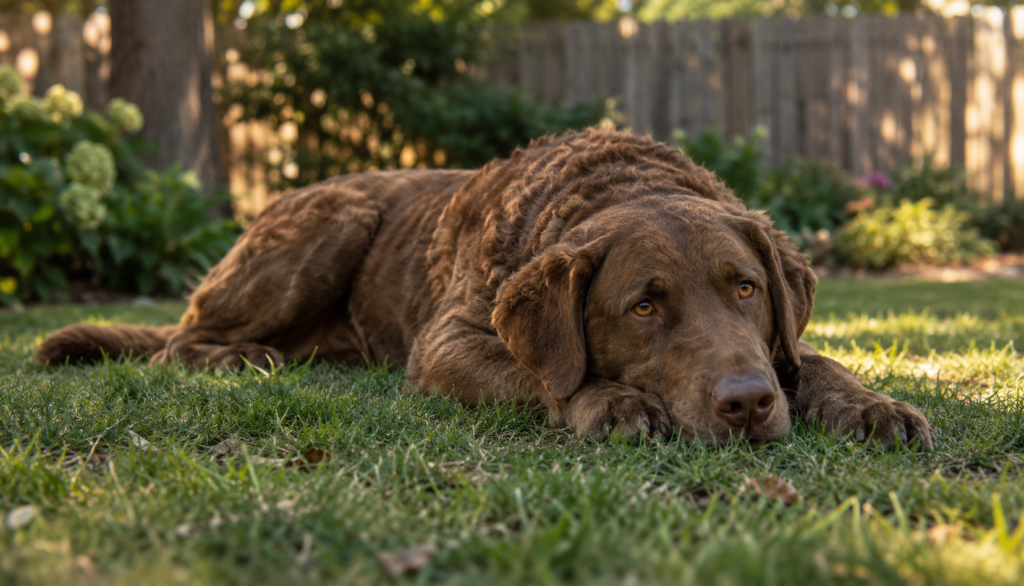
Few things alarm a dog owner faster than a dog that is vomiting and has diarrhea at the same time. One of these symptoms alone is often a passing stomach upset, but the combination raises the stakes because your dog is losing fluid from both ends. The good news is that many cases come from something simple, like eating something unusual, and settle within a day or two. The harder truth is that this same pairing can also signal serious problems such as parvovirus, pancreatitis, a blockage, or poisoning. Knowing which situation you are looking at, and how quickly it can change, is what this guide is for.
Below you will find the most common causes of dog vomiting and diarrhea, a clear way to separate a mild upset from an emergency, a practical home care plan for the mild cases, and the signs that mean it is time to call your vet. This article is general education and cannot replace an exam. When you are unsure, a quick phone call to your vet or an emergency clinic is always the safer move.
What Vomiting and Diarrhea Together Usually Mean
When vomiting and diarrhea show up together, vets often describe the picture as gastroenteritis, which simply means inflammation of the stomach and intestines. It is a description of what is happening, not a diagnosis of why. The irritation can be triggered by food, bacteria, viruses, parasites, toxins, stress, or an underlying illness, and the symptoms look very similar regardless of the trigger.
Both symptoms are the body’s way of clearing something irritating out of the digestive tract. Vomiting expels what is in the stomach, and diarrhea moves contents through the intestines faster than normal so less water is absorbed. In a mild case this is protective and short lived. The risk is that fluids and electrolytes leave the body faster than your dog can replace them, especially if the dog also refuses to drink or cannot keep water down.
This is why the combination deserves more attention than either symptom alone. A healthy adult dog can often handle one loose stool or a single bout of vomiting without trouble. A dog that is doing both repeatedly can become dehydrated within hours, and small dogs and puppies can go downhill even faster.
Common Causes of Dog Vomiting and Diarrhea
The cause matters because it decides whether home care is reasonable or whether your dog needs treatment. The most common reasons fall into a few groups.
Dietary Indiscretion and Food Changes
Dietary indiscretion is the polite vet term for a dog eating something it should not have: garbage, table scraps, spoiled food, a greasy leftover, or something found on a walk. It is the single most common reason for a sudden stomach upset. A rapid switch to a new food or a pile of new treats can cause the same pattern, because the gut needs several days to adjust to a different diet. Food intolerance or an allergy to a specific ingredient can also cause repeated episodes of vomiting and loose stool, often after meals.
Infections and Parasites
Viral and bacterial infections are a major cause, particularly in puppies. Parvovirus is the one every owner should know about: it causes severe vomiting, foul-smelling and often bloody diarrhea, lethargy, and loss of appetite, and it is a true emergency in unvaccinated or incompletely vaccinated puppies. Bacterial overgrowth, or exposure to contaminated water, can also trigger illness. Intestinal parasites such as giardia and roundworms commonly cause diarrhea with occasional vomiting, and they are especially common in puppies and in dogs that drink from puddles, ponds, or shared water bowls.
Toxins and Poisons
Poisoning has to be on the list whenever a previously healthy dog suddenly becomes sick. Chocolate, grapes and raisins, xylitol (a sweetener in many gums and baked goods), certain plants, rodent poison, antifreeze, and human medications can all cause vomiting and diarrhea as early signs. If there is any chance your dog ate something toxic, do not wait for more symptoms to appear. Call your vet or a pet poison hotline right away.
Pancreatitis
Pancreatitis is inflammation of the pancreas, and it is often triggered by a fatty meal such as bacon grease, a holiday ham, or a stolen piece of steak. Dogs with pancreatitis typically vomit repeatedly, may have diarrhea, and often show a hunched posture or a tender belly. This condition can become serious quickly and needs veterinary treatment.
Foreign Objects and Blockages
Socks, toys, corn cobs, bones, and fabric can lodge in the stomach or intestines. A dog with a blockage may vomit repeatedly, refuse food and water, strain, or pass only small amounts of loose stool. A blockage does not clear on its own and often needs imaging and sometimes surgery.
Stress and Underlying Illness
Boarding, travel, a move, fireworks, or a new pet in the house can upset a dog’s digestion enough to cause both symptoms. In older dogs, repeated or recurring vomiting and diarrhea can point to kidney disease, liver disease, inflammatory bowel disease, Addison’s disease, or even cancer. If the episodes keep coming back, the answer is rarely a change of food alone, and a vet workup is worth pursuing.
When It Is Usually Normal: Signs of a Mild Upset
Not every sick stomach is an emergency. A mild upset usually looks like this: your dog has vomited once or twice and had a couple of loose stools, then settled. The dog is still alert, interested in its surroundings, and willing to drink water without throwing it back up. The gums look moist and pink, there is no blood in the vomit or stool, the belly is soft rather than tight, and there is an obvious likely trigger such as raiding the trash or a new treat.
In an otherwise healthy adult dog, this pattern can be watched at home for 12 to 24 hours with careful attention. The key word is watching. If anything on the red flag list below appears, or if your dog is not clearly improving by the next day, the situation has changed and so should your plan.
When to Worry: Red Flags That Need a Vet
Vomiting plus diarrhea moves from monitor-at-home to call-the-vet when you see any of the following. Several of these can become emergencies within hours, so do not wait overnight if they apply.
- Repeated vomiting: more than two or three episodes in a few hours, or vomiting that continues for more than 24 hours
- Blood: red streaks, a coffee-ground look in the vomit, black tarry stool, or diarrhea that looks like raspberry jam
- Lethargy or weakness: a dog that will not get up, seems wobbly, or is unusually quiet
- Refusing water: or drinking and immediately vomiting it back up
- Signs of pain: a hunched back, a tight or swollen belly, whining, or the “praying” position with the front legs down and rear in the air
- Unproductive retching: trying to vomit with nothing coming up, especially in deep-chested breeds, which can signal bloat
- Pale, white, gray, or tacky gums
- Known or suspected toxin, medication, or foreign object ingestion
- Fever, tremors, or collapse
- Puppies, seniors, toy breeds, or dogs with existing health conditions: any vomiting with diarrhea in these dogs deserves a prompt call
A useful rule of thumb is that the more of these boxes a dog ticks, and the faster the symptoms are coming, the less appropriate home care becomes. An unvaccinated puppy with vomiting and diarrhea should be treated as a possible parvovirus case until a vet says otherwise.
Dehydration: The Real Danger
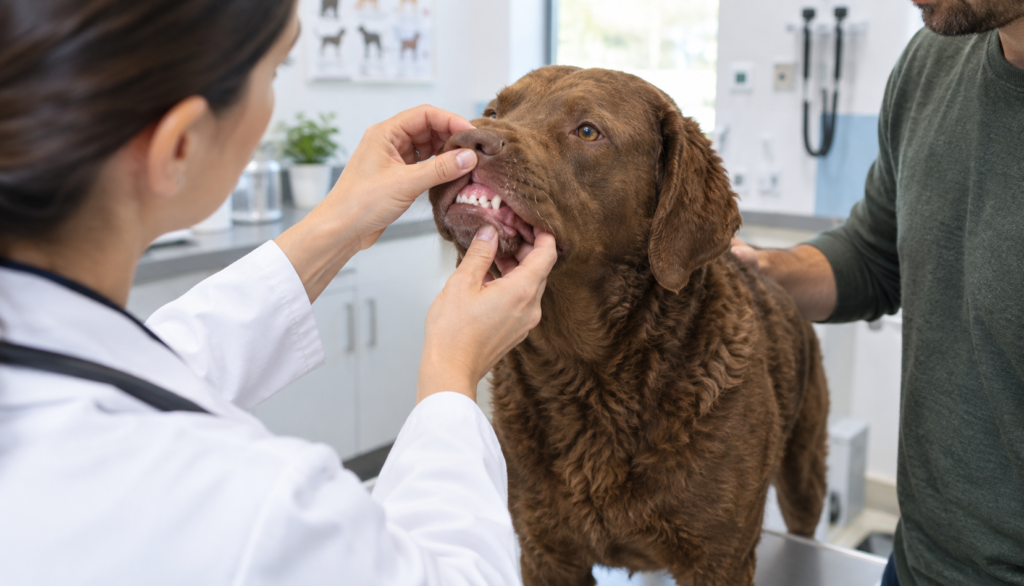
Most of the harm from vomiting and diarrhea comes from dehydration and the loss of electrolytes, not from the stomach upset itself. Checking for it takes less than a minute and gives you real information to share with your vet.
| What You Check | Mild or Normal | Concerning |
|---|---|---|
| Gums | Pink and slippery | Dry, sticky, pale, or gray |
| Skin elasticity | Pinched skin between the shoulders snaps back quickly | Skin returns slowly or stays tented |
| Energy | Alert and responsive | Listless, weak, or hard to rouse |
| Eyes | Bright | Dull or sunken |
| Urination | Normal frequency | Little or none for many hours |
| Water intake | Drinks and keeps it down | Refuses or vomits it back up |
If your dog shows any of the concerning signs, especially while still vomiting, it is time for a vet. Dehydrated dogs often need fluids given under the skin or through an IV, which cannot be replaced by coaxing water into them at home.
What Most People Don’t Know
Many owners believe that withholding all water is the right way to stop vomiting. In reality, the main danger is dehydration, so access to small amounts of water matters. Offering a few sips at a time, rather than letting a nauseated dog gulp a full bowl, is the usual approach. The goal is to avoid both dehydration and triggering another round of vomiting.
Another common surprise is that a dog can look bright and energetic and still be seriously ill. Puppies in particular often keep playing between episodes of parvovirus until they are significantly dehydrated. Dogs with a partial blockage may also seem fine for hours. Behavior is helpful, but it should never be the only thing you rely on when vomiting and diarrhea are both present.
It is also worth knowing that human medications are a frequent cause of trouble. Pink bismuth products, ibuprofen, and naproxen can be harmful to dogs, and anti-diarrheal drugs are not safe for every dog or every cause. Giving them before you know what is going on can hide symptoms, delay proper care, or make things worse. Check with your vet before giving any medication, including anything you already keep in the cabinet.
Finally, the color and look of what comes up and out tells a story. Yellow bile often means an empty stomach, white foam can be an irritated stomach or an airway problem, and undigested food hours after a meal can suggest the stomach is not emptying properly. Taking a quick photo of the vomit and stool to show your vet is more useful than trying to describe it later.
Home Care for a Mild Upset in a Healthy Adult Dog
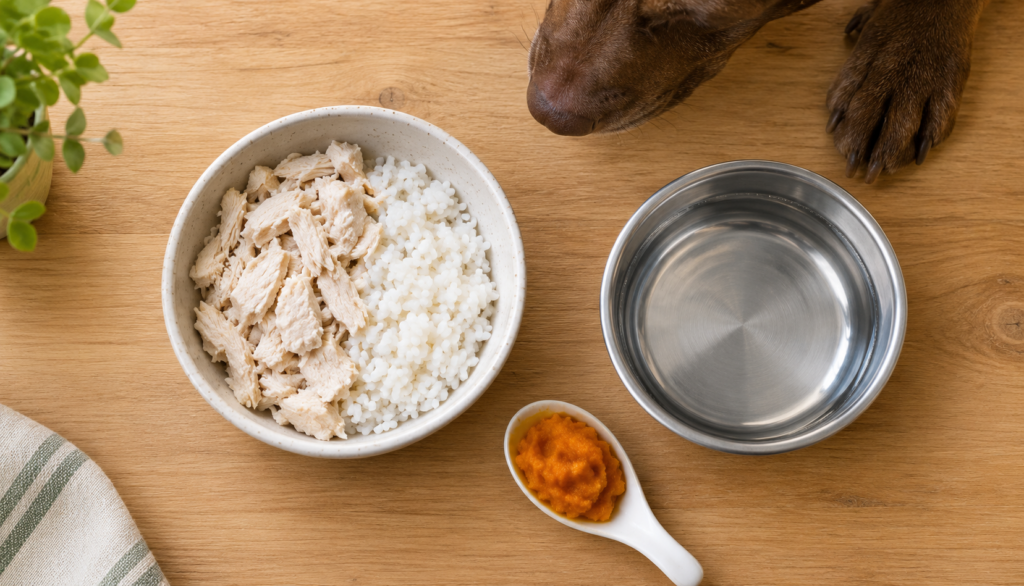
If your dog fits the mild upset picture and shows none of the red flags, a short and careful home care plan is reasonable. This plan is for otherwise healthy adult dogs. Puppies, toy breeds, seniors, diabetic dogs, and dogs with chronic illness should be checked by a vet rather than managed at home.
- Give the stomach a short rest. Some vets suggest holding food for a few hours in a healthy adult dog after vomiting, while others prefer to skip fasting altogether. Ask your vet which they recommend for your dog, and never fast a small breed or a puppy without guidance.
- Offer small amounts of water often. A few sips every 20 to 30 minutes is gentler than a full bowl. Ice chips are another option for dogs that gulp.
- Reintroduce food slowly. Once vomiting has stopped for several hours, offer a small portion of a bland diet, such as plain boiled chicken with no skin or seasoning mixed with plain white rice. Feed small meals several times a day instead of one or two large ones.
- Add fiber if the stool is still loose. A spoonful of plain canned pumpkin, not pumpkin pie filling, can help firm up stool for some dogs.
- Transition back gradually. Over two to three days, mix the regular food back in and increase the proportion each meal. Switching straight back to full portions can restart the upset.
- Skip treats, dairy, and fatty foods until your dog’s stool is back to normal.
- Keep notes. Track how many episodes happen, when they occurred, and any changes in appetite or energy. This helps your vet if you need to call.
Most dogs on this plan begin to improve within 24 to 48 hours. If your dog vomits again after eating, develops new symptoms, or the diarrhea is not improving, stop home care and call your vet.
When to See a Vet and What to Expect
Call your vet the same day if vomiting and diarrhea continue beyond 24 hours, or immediately if any red flag appears. A visit usually begins with a physical exam, a hydration check, and questions about your dog’s diet, vaccinations, recent changes, and anything it could have eaten. Depending on what the vet finds, testing may include a fecal exam for parasites, a rapid parvovirus test, bloodwork, or X-rays and ultrasound to look for a blockage or pancreatitis.
Treatment depends on the cause but commonly includes fluid therapy, anti-nausea medication, a prescription bland or gastrointestinal diet, and medication for parasites or infection if needed. Severe cases such as parvovirus, pancreatitis, or obstruction may require hospitalization. The sooner a sick dog is seen, the simpler and less costly treatment tends to be, so calling early is rarely a mistake.
Puppies, Seniors, and Small Dogs: Why the Rules Are Different
Puppies have little fluid reserve and immature immune systems. They can dehydrate and develop low blood sugar within hours of repeated vomiting and diarrhea, and they are the group most at risk from parvovirus. For puppies, vomiting plus diarrhea is a reason to call the vet right away, not to wait and see.
Senior dogs are more likely to have an underlying condition behind the symptoms, and they tolerate dehydration poorly, particularly if they have kidney or heart disease. Toy and small breeds have very little margin for fluid loss. For all of these dogs, the threshold for seeking veterinary care should be lower than for a healthy adult.
Preventing Future Episodes
You cannot prevent every stomach upset, but a few habits meaningfully lower the odds.
- Keep your dog’s vaccinations current, especially the puppy series that protects against parvovirus.
- Change foods gradually over 7 to 10 days by blending old and new in rising proportions.
- Secure garbage, compost, and counters, and keep medications, chocolate, and anything containing xylitol out of reach.
- Avoid sharing fatty table scraps and holiday leftovers.
- Stay on a regular deworming and parasite prevention schedule recommended by your vet.
- Provide fresh water and avoid letting your dog drink from puddles or stagnant ponds.
- Supervise chewing and swap out toys that are breaking into swallowable pieces.
If episodes keep returning, ask your vet about underlying causes such as food sensitivities or chronic gut disease rather than treating each one as a one-off.
Frequently Asked Questions
Q. How long can a dog vomit and have diarrhea before seeing a vet?
A. A healthy adult dog with one or two mild episodes and normal behavior can usually be watched for 12 to 24 hours. If symptoms continue past a day, or appear with blood, lethargy, pain, or refusal of water, call your vet sooner. Puppies and seniors should be seen right away.
Q. What can I give my dog for vomiting and diarrhea at home?
A. For a mild upset in a healthy adult dog, small sips of water and, once vomiting has settled, small portions of plain boiled chicken and white rice are the usual starting point. Avoid human medications unless your vet approves them first.
Q. Is vomiting and diarrhea in a puppy an emergency?
A. It can be. Puppies dehydrate quickly and are at risk for parvovirus, especially if they are not fully vaccinated. Any puppy with both symptoms should be evaluated by a vet promptly.
Q. Can stress cause a dog to vomit and have diarrhea?
A. Yes. Boarding, travel, moves, loud noises, and household changes can all upset a dog's digestion. Stress is a reasonable explanation only when symptoms are mild and short lived. Ongoing or severe symptoms still need a vet.