
Finding yellow diarrhea from your dog is unsettling, especially the first time you see it. The color alone can make you assume the worst, but yellow diarrhea has a fairly specific set of causes, and most of them are manageable at home with close monitoring. This guide breaks down what the yellow color actually means, when it signals something more serious, and how to respond depending on what else is going on with your dog.
What Does Yellow Diarrhea in Dogs Mean?
Yellow diarrhea usually points to one of two things: bile moving through the digestive tract faster than normal, or an issue somewhere in the upper gastrointestinal system, including the liver, pancreas, or small intestine. Bile is a digestive fluid produced by the liver and stored in the gallbladder. It’s naturally yellow-green, and it plays a role in breaking down fats during digestion. When food moves through the gut too quickly, as it does during diarrhea, bile doesn’t get fully reabsorbed or broken down, and it comes out looking bright or mustard yellow in the stool.
The shade matters somewhat. Pale, light yellow diarrhea is more commonly linked to dietary upset, mild food intolerance, or a fast gut transit time. Darker, mustard-yellow or orange-tinged stool can suggest more bile is involved, or that the liver and pancreas are working overtime. Neither shade alone confirms a diagnosis, but the color is a useful clue your vet will ask about if you call in.
Common Causes of Yellow Diarrhea in Dogs
Several everyday and medical triggers can produce this specific stool color. Working through the most likely causes helps you figure out whether this is a wait-and-watch situation or one that needs same-day attention.
- Dietary indiscretion: Eating something outside the normal diet, whether that’s table scraps, spoiled food, or trash, is one of the most common triggers for sudden yellow diarrhea.
- Abrupt food changes: Switching dog food brands or formulas too quickly disrupts gut bacteria and speeds up transit time, which brings bile through undigested.
- Empty stomach bile syndrome: Dogs who go long stretches between meals, especially overnight, can vomit or pass yellow, bile-tinged stool first thing in the morning simply from an empty stomach.
- Stress or anxiety: Travel, boarding, new environments, or household changes can trigger a stress response that shows up as yellow, loose stool.
- Parasites: Giardia, roundworms, and other intestinal parasites commonly cause yellow, mucus-flecked, or greasy-looking diarrhea, especially in puppies.
- Viral or bacterial infections: Gastrointestinal infections can inflame the intestinal lining and change stool color and consistency, sometimes alongside vomiting or fever.
- Pancreatitis: Inflammation of the pancreas interferes with fat digestion and bile processing, often producing yellow, greasy stool along with vomiting and abdominal pain.
- Liver or gallbladder issues: Since bile originates in the liver and gallbladder, dysfunction in either organ can directly alter stool color, sometimes toward a darker yellow or orange.
- Food allergies or intolerances: An ongoing sensitivity to a specific protein or ingredient can cause recurring yellow, soft stool that flares after certain meals.
- Medication side effects: Antibiotics and some other medications disrupt normal gut flora, which can temporarily change stool color and consistency.
Yellow Diarrhea vs. Other Diarrhea Colors: What’s the Difference?
Stool color is one of the fastest ways to narrow down what part of the digestive system is involved. The table below compares yellow diarrhea against other common colors so you know where it fits on the spectrum of concern.
| Stool Color | Likely Cause | Urgency Level |
|---|---|---|
| Yellow | Bile, fast gut transit, diet change, pancreas or liver involvement | Monitor closely; vet visit if persistent beyond 24–48 hours |
| Brown (normal, but loose) | Standard digestive upset, mild dietary indiscretion | Usually low; monitor for 24 hours |
| Green | Fast transit, grass ingestion, bile mixing with normal stool | Low to moderate; monitor |
| Black or tarry | Digested blood, possible upper GI bleeding | High; same-day vet visit |
| Bright red streaks | Fresh blood, lower GI irritation or injury | High; vet visit recommended |
| Gray or pale/clay-colored | Bile duct obstruction, liver or pancreatic disease | High; vet visit recommended |
| White or chalky | Severe parasite load, bile flow obstruction | High; vet visit recommended |
When Yellow Diarrhea Is a Minor, Self-Limiting Issue
Not every episode of yellow diarrhea calls for a vet visit. If your dog is otherwise acting completely normal — eating, drinking, playing, and showing no signs of pain or lethargy — a single loose, yellow stool is often just a passing digestive hiccup. This is especially true if you can point to an obvious trigger, like a new treat, a diet switch, or getting into something they shouldn’t have during a walk.
In these lower-concern cases, one or two soft yellow stools that resolve within a day, with no repeat episodes, no vomiting, and no change in appetite or energy, typically don’t need emergency intervention. Keeping a close eye over the next 24 hours is usually enough.
When to Worry: Warning Signs That Need Vet Attention
Certain accompanying symptoms shift yellow diarrhea from “watch and wait” to “call the vet.” Because the causes range from a minor diet blip to pancreatitis or liver disease, these signs help you tell the difference quickly.
- Diarrhea lasting more than 24–48 hours without improvement
- Repeated vomiting alongside the diarrhea
- Visible blood, mucus, or a black/tarry appearance mixed into the stool
- Lethargy, weakness, or noticeable behavior changes
- Loss of appetite or refusal to drink water
- Signs of abdominal pain, such as a hunched posture, whining, or a bloated belly
- Fever or shivering
- Known or suspected ingestion of a toxic substance, medication, or foreign object
- Yellow diarrhea in a puppy, senior dog, or a dog with an existing health condition
- Recurring episodes over several weeks, even if each one seems mild
If any of these apply, don’t wait out the standard 24-hour observation window. A same-day or emergency vet visit is the safer call, particularly for puppies and senior dogs who dehydrate much faster than healthy adult dogs.
What Most People Don’t Know
Most owners assume yellow diarrhea always means “something is wrong with the liver,” but in the majority of cases it’s simply a sign that bile passed through the gut faster than usual, often with nothing wrong with the liver at all. The liver and gallbladder produce and store bile constantly regardless of what’s happening downstream, so a fast bout of diarrhea from a bad snack can look identical in color to a genuine bile duct problem.
Another detail that surprises people: yellow, foamy stool or vomit first thing in the morning, especially in dogs fed once a day, is often linked to something vets call bilious vomiting syndrome, or the more general “empty stomach” effect. Stomach acid and bile build up overnight with nothing to digest, irritating the stomach lining and producing yellow discharge that can appear in either vomit or stool. Splitting meals into two smaller feedings instead of one large one is a simple, often overlooked fix that resolves this pattern without any medication.
It’s also worth knowing that stress-induced diarrhea in dogs is extremely common and frequently overlooked as a cause. Boarding, vet visits, thunderstorms, moving homes, or even a new pet in the household can trigger a temporary spike in gut motility that produces yellow or greenish loose stool with no dietary or infectious cause at all.
Home Care for Mild Yellow Diarrhea
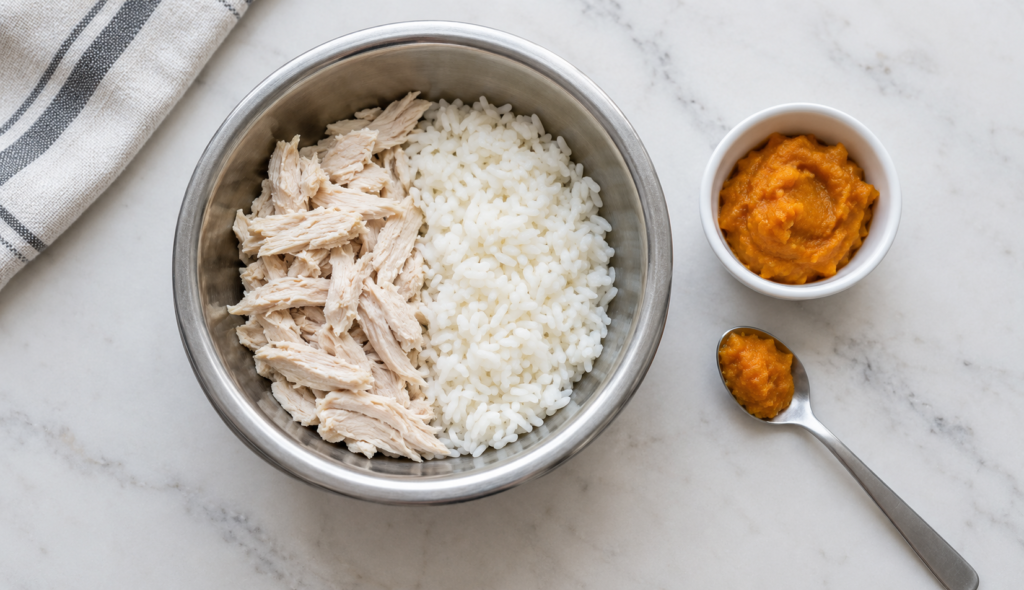
For dogs who are otherwise acting normal, a short period of supportive home care is usually enough to let the gut settle. These steps mirror standard veterinary guidance for uncomplicated diarrhea cases.
- Offer a bland diet: Plain boiled chicken (no skin, no seasoning) with plain white rice in a roughly 1:2 ratio is easy on the digestive system and widely recommended by vets for short-term recovery.
- Keep hydration up: Make sure fresh water is always available. Dogs with diarrhea lose fluids quickly, and dehydration is the biggest immediate risk with any diarrhea episode.
- Don’t withhold food for too long: Older advice suggested a full 24-hour fast, but most vets now recommend feeding small, frequent bland meals rather than fasting, especially in small dogs and puppies who can’t tolerate long gaps without food.
- Add plain canned pumpkin: A small spoonful of plain pumpkin puree (not pie filling) can help firm up stool thanks to its soluble fiber content.
- Avoid rich treats and table scraps: Skip anything fatty, spicy, or unfamiliar until stool has been normal for at least 24–48 hours.
- Monitor and log symptoms: Track frequency, consistency, and any additional symptoms so you have clear information if you do need to call your vet.
Diagnosis and Vet Treatment for Persistent Yellow Diarrhea
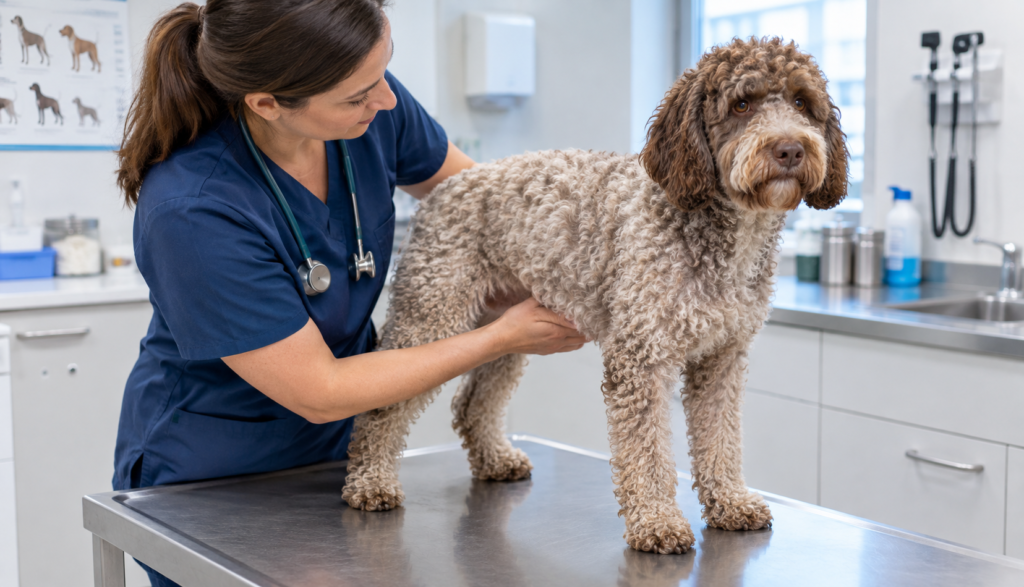
If yellow diarrhea doesn’t resolve with home care, or if it’s accompanied by any of the warning signs above, a vet visit typically starts with a physical exam and a detailed history, including diet, recent changes, and travel or boarding. From there, diagnostic steps commonly include:
- A fecal exam to check for parasites like giardia, roundworms, or hookworms
- Bloodwork to assess liver enzymes, pancreatic markers, and overall organ function
- Abdominal imaging, such as X-rays or ultrasound, if pancreatitis, obstruction, or organ enlargement is suspected
- A trial elimination diet if a food allergy or intolerance is suspected as an ongoing cause
Treatment depends entirely on the underlying cause. Parasites are treated with targeted deworming medication. Bacterial infections may call for antibiotics. Pancreatitis usually requires a low-fat prescription diet, anti-nausea medication, and sometimes hospitalization with IV fluids for more severe cases. Chronic food sensitivities are managed through a long-term diet change, often to a limited-ingredient or hydrolyzed protein formula.
Yellow Diarrhea in Puppies vs. Adult Dogs
Puppies warrant extra caution with any diarrhea, and yellow diarrhea is no exception. Their smaller body size means dehydration sets in much faster, and their immune systems are less equipped to handle parasites, viral infections like parvovirus, or sudden dietary changes. A puppy with yellow diarrhea that lasts more than a few hours, especially alongside vomiting, lethargy, or a poor appetite, should be seen by a vet promptly rather than monitored at home.
Adult dogs generally tolerate a short bout better, but senior dogs fall into a similar higher-risk category as puppies. Older dogs are more likely to have underlying conditions, such as reduced kidney function or a slower metabolism, that make dehydration and complications set in faster. For both puppies and seniors, the safer default is contacting a vet sooner rather than waiting through a full 24–48 hour observation window.
How to Prevent Yellow Diarrhea Going Forward
Once an episode resolves, a few adjustments can reduce the odds of it recurring, particularly if the cause was diet-related or linked to feeding schedule.
- Introduce new foods gradually over 5–7 days, mixing increasing amounts with the old food
- Feed two or more smaller meals a day instead of one large meal, especially for dogs prone to morning bile-related stool
- Keep the trash, compost, and countertops secured to prevent dietary indiscretion
- Stay current on deworming and parasite prevention as recommended by your vet
- Introduce a consistent, high-quality diet and avoid frequent brand switching without a gradual transition
- Manage stressful situations proactively, using calming routines or products recommended by your vet during travel, boarding, or household changes
FAQ
Q. Is yellow diarrhea in dogs an emergency?
A. Not usually on its own. If your dog is eating, drinking, and acting normal, one or two yellow stools often resolve on their own within a day. It becomes urgent if there’s repeated vomiting, lethargy, blood, or it lasts beyond 24–48 hours.
Q. What does bright yellow diarrhea mean in dogs?
A. Bright yellow usually means bile is passing through the digestive tract faster than normal, often from dietary indiscretion, a fast food change, or an empty stomach. Darker mustard-yellow can point more toward liver or pancreas involvement.
Q. Should I feed my dog if they have yellow diarrhea?
A. Yes — most vets now recommend small, frequent bland meals (plain chicken and rice) rather than a full fast, especially for puppies and small dogs who can’t tolerate long gaps without food.
Q. Can stress cause yellow diarrhea in dogs?
A. Yes. Travel, boarding, thunderstorms, and household changes can all trigger stress-related gut motility changes that produce yellow or greenish loose stool with no dietary or infectious cause.