
A little slime on your dog’s stool is one of the most common things dog owners notice and immediately panic about — and for good reason, since mucus in diarrhea looks alarming even when the underlying cause is mild. The good news is that a thin coating of mucus is actually a normal part of how the colon protects itself, and on its own it doesn’t automatically mean something serious is wrong. The bad news is that mucus can also be the first visible sign of colitis, parasites, or a more significant gut problem, so knowing how to read it matters. This guide breaks down what mucus in dog diarrhea actually is, when it’s expected, what it looks like when it’s a real warning sign, and exactly what to do about it at home versus when it’s time to call the vet.
What Mucus in Dog Poop Actually Is
The lining of your dog’s large intestine is coated in a thin layer of mucus produced by specialized goblet cells. This mucus isn’t a byproduct of illness — it’s a lubricant that helps stool pass smoothly through the colon and protects the intestinal wall from friction and irritation. In a healthy dog, you may occasionally see a very light, barely noticeable sheen of clear or slightly cloudy mucus on a normal, formed stool, and that’s nothing to worry about.
Diarrhea changes this picture because it irritates the colon. When the intestinal lining is inflamed, stressed, or moving material through too quickly, the goblet cells ramp up mucus production as a defensive response. That’s why mucus shows up far more often, and in far larger amounts, when a dog has loose stool than when stool is normal. In other words, mucus alongside diarrhea is usually the colon’s reaction to whatever is causing the diarrhea in the first place — not necessarily a second, separate problem.
It helps to think of mucus production as a volume dial rather than an on/off switch. A small amount of extra mucus reflects mild, short-lived irritation, while a heavy, visible coating reflects a colon working overtime to protect itself from ongoing inflammation. This is also why mucus is more closely tied to large-bowel (colon) diarrhea than small-bowel diarrhea — small-bowel issues tend to produce larger volumes of watery stool with little mucus, while large-bowel issues typically produce smaller, more frequent stools that are heavily coated in mucus, sometimes with visible straining. Recognizing which pattern you’re seeing can actually help narrow down where in the digestive tract the problem is occurring, even before a vet gets involved.
Common Causes of Mucusy Diarrhea
Because mucus is a general inflammatory response, it can show up with almost any cause of diarrhea. Some of the most frequent triggers include:
- Dietary indiscretion: Getting into trash, table scraps, or a new food too quickly is one of the most common reasons for sudden mucusy stool.
- Stress colitis: Boarding, travel, thunderstorms, or a change in routine can inflame the colon enough to trigger visible mucus, often without any other illness present.
- Intestinal parasites: Whipworms, giardia, and coccidia irritate the colon directly and are a very common cause of chronic or recurring mucus in stool, especially in puppies.
- Bacterial overgrowth or infection: Clostridium, salmonella, and E. coli can all trigger colon inflammation with mucus as a hallmark sign.
- Inflammatory bowel disease (IBD): Dogs with chronic GI inflammation often show recurring mucusy, small-volume stools as a defining pattern.
- Food allergies or intolerances: An ongoing sensitivity to a protein or ingredient can cause low-grade colon irritation that shows up as periodic mucus.
- Sudden diet change: Switching foods too abruptly disrupts the gut microbiome and is a frequent, easily fixable cause.
When Mucus Is Normal vs. When to Worry
| Situation | What It Usually Means |
|---|---|
| Thin, clear mucus coating on an otherwise formed stool | Normal colon lubrication — not a concern |
| Mucus with soft or loose stool, dog acting normal | Likely mild irritation from diet or stress — monitor at home |
| Thick, jelly-like mucus in larger amounts | More significant colon inflammation — watch closely, consider a vet call if it persists |
| Mucus plus streaks of red blood | Colitis is likely — call your vet, especially if it continues past a day |
| Mucus with frequent straining and small volume stools | Classic large-bowel diarrhea pattern — vet visit recommended if recurring |
| Mucus plus lethargy, vomiting, or loss of appetite | Treat as urgent — this points to something beyond simple irritation |
Color and consistency together tell you more than either one alone. A single episode of mild mucus with an otherwise energetic, eating, drinking dog is very different from repeated mucusy stools paired with straining, weight loss, or blood — the first is usually a wait-and-watch situation, the second warrants a vet visit.
What Most People Don’t Know
Most owners assume mucus means something is seriously wrong internally, but in reality, mucus is one of the least specific signs in canine GI health — it shows up with everything from a stressful car ride to a parasite infection to a bland diet switch. What actually matters far more than the presence of mucus itself is the pattern: how much there is, how long it lasts, and what else is happening alongside it. A dog with one mucusy stool after eating something unusual and who is otherwise acting completely normal is in a very different category than a dog with mucus appearing in every bowel movement for a week. Vets pay close attention to frequency and accompanying symptoms far more than to the mucus itself, and that’s the mindset worth adopting at home too.
Home Care for Mild Cases
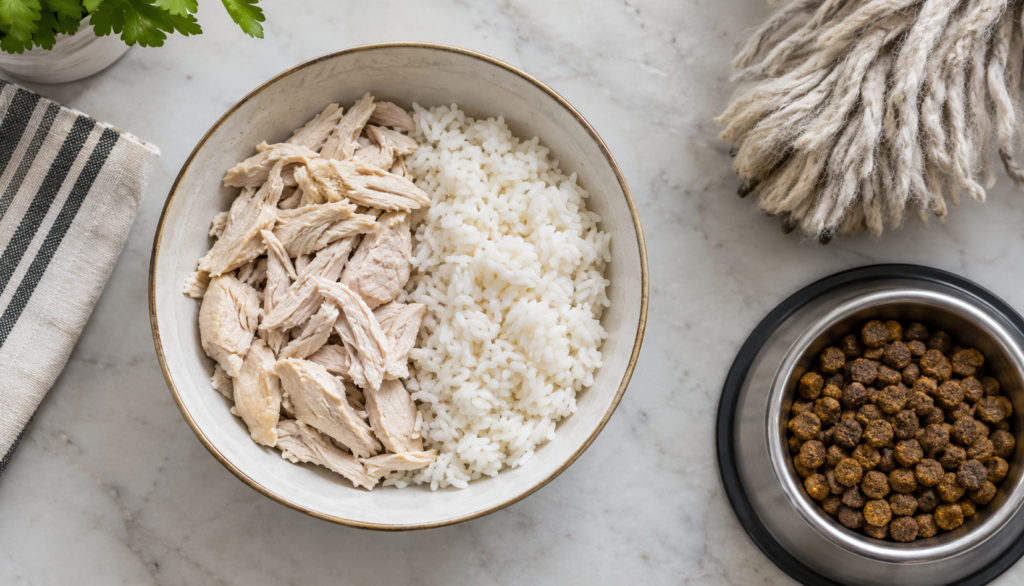
If your dog has a mild episode of mucusy diarrhea and is otherwise acting normal — still eating, drinking, playful, and not showing pain — there’s usually room to manage it at home for a day or two before involving a vet.
- Bland diet: Boiled plain chicken and white rice, or plain canned pumpkin mixed into food, can help settle the colon and firm up stool.
- Hydration: Make sure fresh water is always available, since diarrhea increases fluid loss even when a dog seems otherwise fine.
- Short fast if appropriate: For adult, healthy dogs, withholding food for 12–24 hours (never for puppies, seniors, or dogs with health conditions) can give the gut a chance to rest.
- Probiotics: A dog-specific probiotic can help rebalance gut flora, particularly after a diet change or mild stomach upset.
- Monitor closely: Track how many episodes occur, whether mucus amount is increasing or decreasing, and whether new symptoms appear.
Most mild cases resolve within 24 to 48 hours with these steps. If mucus and loose stool continue beyond that window, it’s time to escalate to a vet visit rather than continuing to wait it out.
When to See a Vet
Certain signs move mucusy diarrhea from a watch-and-wait situation into one that needs professional attention. Contact your vet if you notice any of the following:
- Mucus persisting for more than 2 days despite home care
- Blood mixed with the mucus, whether bright red streaks or darker digested blood
- Frequent straining with little to no stool produced (tenesmus)
- Lethargy, reduced appetite, or vomiting alongside the diarrhea
- Known or suspected exposure to toxins, foreign objects, or spoiled food
- Puppies, senior dogs, or dogs with existing health conditions showing any mucusy diarrhea, since these groups dehydrate and decline faster
- Recurring episodes that keep coming back over weeks, which points toward a chronic issue like IBD, food sensitivity, or parasites needing diagnosis
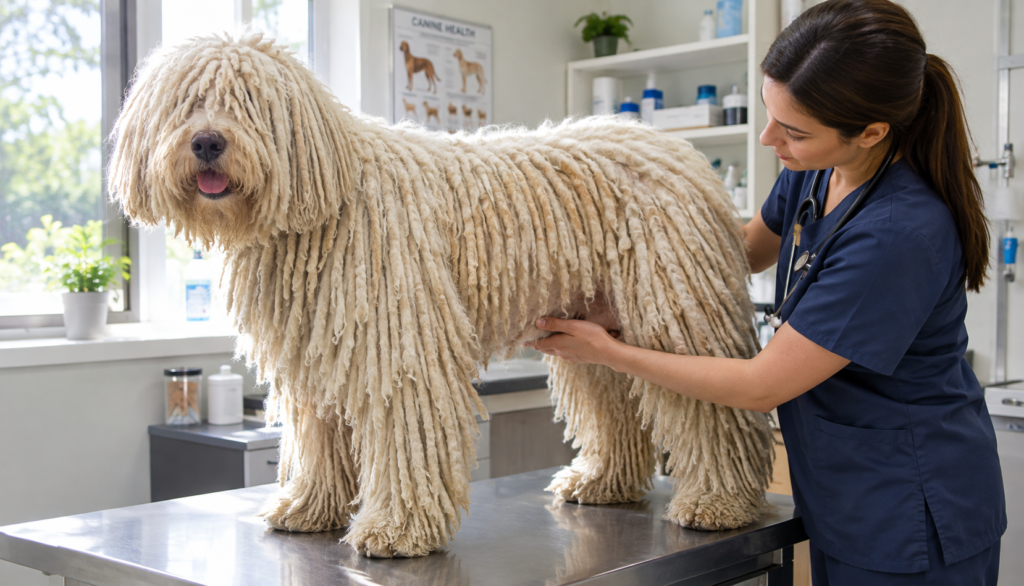
A vet will typically run a fecal exam to rule out parasites first, since this is the fastest and most common diagnosis behind persistent mucusy stool. Bloodwork, diet trials, or further imaging may follow if parasites are ruled out and symptoms continue. Bringing a fresh stool sample to the appointment, ideally collected within a few hours of the visit, speeds up diagnosis considerably and saves a return trip. If the vet suspects a chronic condition like IBD or a food sensitivity rather than an acute infection, expect the process to involve a period of diet elimination and monitoring rather than a single test with an immediate answer — chronic GI issues in dogs are often diagnosed by ruling things out step by step.
Puppies and Mucus in Stool
Mucus in a puppy’s diarrhea deserves extra caution compared to an adult dog. Puppies have less digestive reserve, dehydrate much faster, and are far more likely to have an underlying cause like parasites, a viral infection, or a sudden diet change from weaning. Roundworms, hookworms, giardia, and coccidia are especially common in puppies and often present with mucus as one of the earliest visible signs. Because of how quickly a puppy can decline, mucusy diarrhea that lasts more than a single day, or that appears alongside lethargy or reduced appetite, warrants a same-day vet call rather than a wait-and-see approach.
Diet and Prevention Tips
While not every cause of mucusy diarrhea is preventable, several habits reduce how often it happens:
- Transition to new foods gradually over 5–7 days rather than switching all at once
- Keep a consistent feeding schedule and avoid sudden treats or table scraps in large amounts
- Stay current on deworming and fecal parasite screening, especially for dogs with outdoor or dog-park access
- Reduce stress during travel or boarding where possible, since stress colitis is a common trigger
- Keep trash, compost, and human food secured to prevent dietary indiscretion
Dogs prone to recurring mucusy stool often benefit from a food trial under veterinary guidance to identify whether a specific ingredient is the trigger.
FAQ
Q. Is mucus in dog diarrhea always a sign of something serious?
A. No. A small amount of mucus is a normal colon response and often clears up on its own within a day or two, especially if your dog is otherwise acting normal.
Q. What does jelly-like mucus in dog poop mean?
A. Thick, jelly-like mucus usually points to more significant colon inflammation (colitis) than a thin coating does, and it’s worth monitoring closely or calling your vet if it persists past 48 hours.
Q. Can stress cause mucus in dog diarrhea?
A. Yes — stress colitis from travel, boarding, or a routine change is one of the most common causes of sudden mucusy stool, and it typically resolves once the stressor passes.
Q. Should I be worried if my puppy has diarrhea with mucus?
A. Yes, more so than with an adult dog. Puppies dehydrate quickly and are prone to parasites and infections, so mucusy diarrhea lasting more than a day warrants a same-day vet call.