
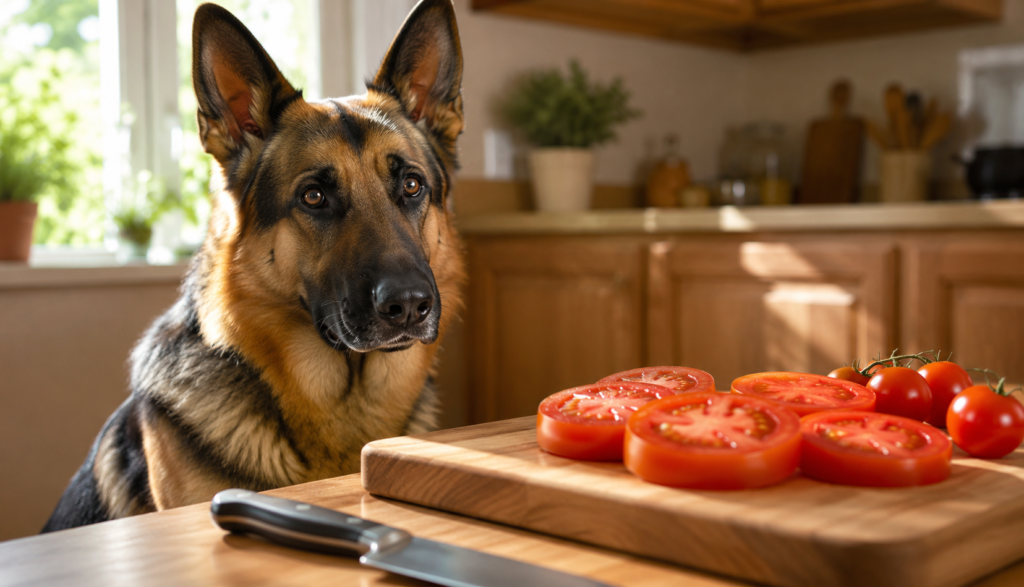
My dog once dug up an entire unripe tomato plant from my garden bed, vines and all, and that single afternoon taught me more about tomatoes than years of casually tossing him ripe slices ever did. Tomatoes are one of those foods that genuinely split down the middle, where one part is fine and another part carries real risk, and the line between them isn’t always obvious if you’ve never looked into it. Understanding exactly which part of the tomato plant is safe, and which part absolutely isn’t, makes this a far less confusing topic than it first appears.
Are Tomatoes Safe for Dogs?
I’ve seen this firsthand with several dogs now: a ripe, red tomato in small amounts is genuinely safe. It’s not on the same level of concern as something like grapes or onions, and most healthy dogs handle a small piece without any issue at all.
The complication isn’t the ripe fruit itself, it’s everything else attached to a tomato plant. Green tomatoes, the leaves, and the stems all contain a compound that ripe tomato flesh has largely lost by the time it’s ready to eat.
So the honest answer is “yes, but only the ripe part, and only in small amounts.” This isn’t a food where the whole plant gets a blanket safety rating.
Why Green Tomatoes and Plants Are Toxic
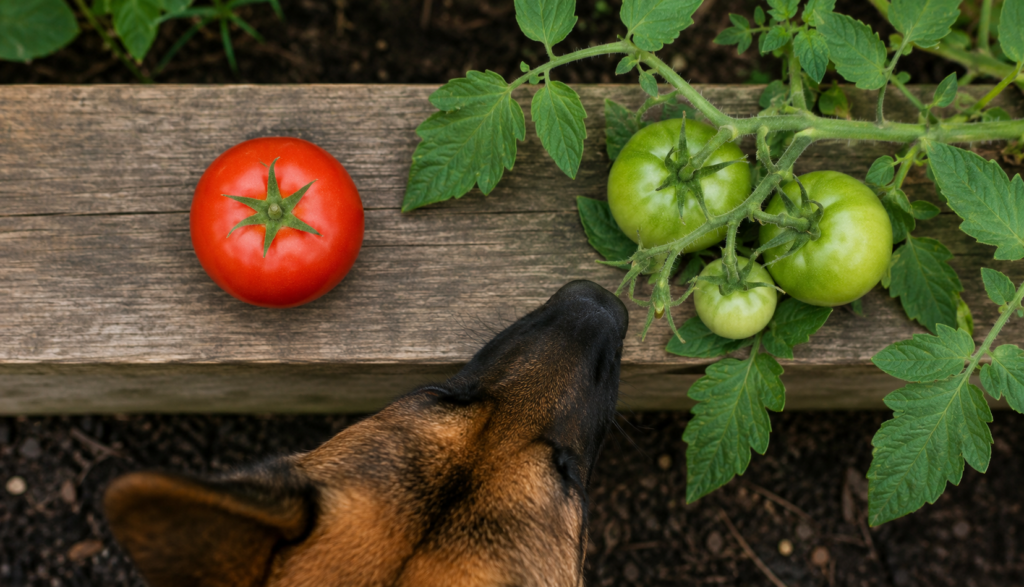
Most dog owners miss this completely, often because they only think about the tomato they’d eat themselves. Tomatoes belong to the nightshade family, and like several other plants in that family, they contain a compound called solanine, along with a related substance called tomatine.
These compounds are concentrated heavily in green, unripe tomatoes, as well as in the leaves and stems of the plant itself. As a tomato ripens, solanine levels drop significantly, which is part of why a ripe red tomato poses far less risk than a green one or the vine it grew on.
A dog that gets into a vegetable garden and chews on tomato plants, rather than eating a ripe tomato off the counter, is dealing with a meaningfully different level of risk entirely.
Ripe Tomatoes: The Safe Part
The first time I dealt with this question from a reader, the relief in their voice when I confirmed ripe tomatoes were fine was obvious, since most people assume the whole plant is dangerous. Plain, ripe tomato flesh in small amounts is genuinely safe for the vast majority of dogs.
Cherry tomatoes fall into this same safe category when fully ripe, though their small, round shape can present a mild choking hazard if swallowed whole rather than chewed, particularly in smaller dogs.
This is the version of tomato worth thinking about when the question “can dogs eat tomatoes” comes up: ripe, plain, and offered in moderation, not the plant itself or anything still green.
Sauce, Ketchup, and Hidden Dangers
What surprised me was how often the actual risk comes from what’s mixed with tomatoes rather than the tomato itself. Tomato sauce frequently contains garlic, onion, and added salt content, all of which carry their own separate toxicity or health concerns for dogs.
Ketchup is similarly loaded with sugar and sodium content, making it a poor choice despite being tomato-based. Canned tomatoes, even without garlic or onion, often contain meaningful added sodium that adds up quickly in small dogs.
The safest version of tomato remains plain, ripe, and unprocessed, completely separate from sauces, condiments, or canned products designed for human cooking rather than dog-safe snacking.
What Most People Don’t Know
Here’s a detail that rarely gets mentioned: cooking tomatoes doesn’t meaningfully reduce solanine levels the way ripening does, so a green tomato that’s been cooked into a sauce isn’t necessarily safer than a raw green tomato in terms of this specific compound. This is part of why unripe tomato-based products, like certain green sauces or relishes, deserve the same caution as raw green tomatoes themselves, regardless of how they were prepared.
Signs of Tomato Poisoning
I’ve watched concern arise mostly when a dog gets into a garden rather than steals a slice off a sandwich. Watch for vomiting, diarrhea, lethargy, weakness, or an unusually slow heart rate after a dog has eaten green tomatoes, leaves, or stems in any real quantity.
A single ripe tomato slice rarely causes any of these tomato poisoning symptoms, but a dog that’s chewed through a significant portion of a tomato plant is a different situation entirely and worth monitoring closely.
If symptoms persist or worsen, a vet visit is always the right call, particularly any time a dog has had access to the green or plant portions rather than just the ripe fruit.
How to Safely Offer Ripe Tomatoes
From experience, the smarter call is to only ever offer small pieces of plain, fully ripe tomato, with the stem removed and no sauce, salt, or seasoning added. A few small chunks is plenty as an occasional treat.
If you grow tomatoes at home, keeping your dog away from the garden bed itself removes the bigger risk entirely, since the plant and unripe fruit are where the real concern lives, not the ripe tomatoes you’d eat yourself.
This isn’t a food worth building into a regular rotation regardless. It’s a “fine occasionally, ripe only” treat rather than a daily addition to your dog’s diet.
Frequently Asked Questions
Q. Are green tomatoes toxic to dogs?
A. Yes, green tomatoes contain higher levels of solanine and tomatine than ripe ones, making them genuinely risky if a dog eats a significant amount.
Q. Can dogs eat cherry tomatoes?
A. Yes, ripe cherry tomatoes are safe in small amounts, though their small round shape means they should be chewed properly rather than swallowed whole to avoid choking hazard.
Q. What should I do if my dog eats tomato plant leaves?
A. Watch for vomiting, lethargy, or weakness over the next several hours, and contact your vet if symptoms appear or if a significant amount of the plant was consumed.