
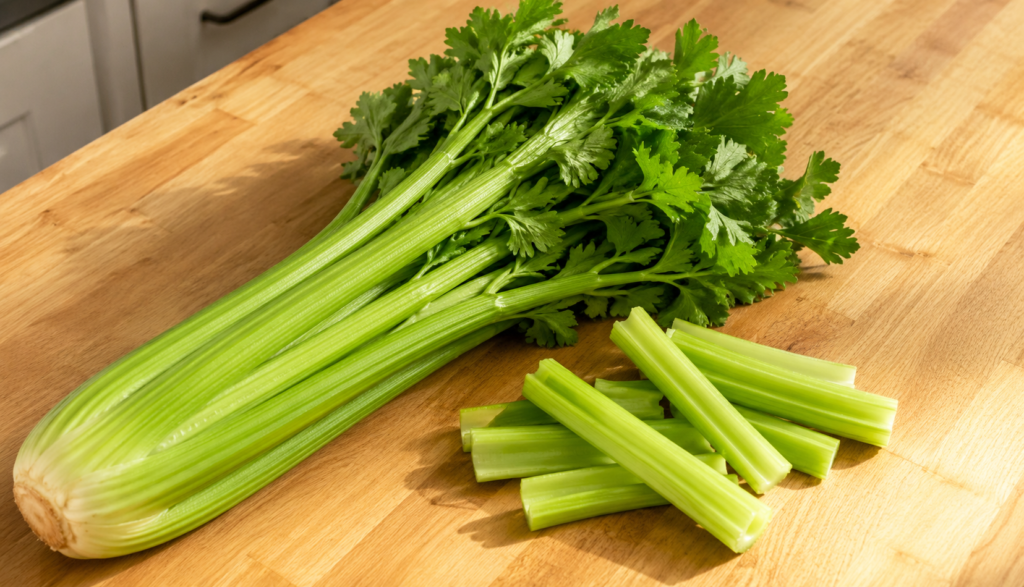
Celery doesn’t get talked about nearly as much as carrots in dog treat conversations, but it deserves a place in the same category — low calorie, genuinely nutritious, and well tolerated by most dogs. I started using celery with a dog who needed to lose some weight, specifically because it offered crunch and volume without much caloric cost, and the response was good enough that it’s stayed in rotation since. Can dogs eat celery? Yes — it’s safe, hydrating, and a smart choice for dogs managing their weight. The one preparation detail worth knowing involves the stringy fibers running through the stalk, which can occasionally cause issues if not addressed, but beyond that single consideration, celery is a straightforward and beneficial vegetable to offer.
What Celery Offers Nutritionally
Celery is mostly water — over ninety percent by volume — which makes it one of the more hydrating vegetable options available, similar in that respect to cucumber. For dogs that need encouragement to take in more fluids, particularly during warm weather, celery’s high water content contributes meaningfully to overall hydration alongside regular drinking water.
Vitamin K and vitamin A are both present in useful amounts in celery, supporting blood clotting function and immune health respectively. Vitamin C adds antioxidant support, and folate contributes to cellular function and metabolism. Potassium, also present in celery, plays a role in muscle and nerve function. None of these nutrients are at the dramatic concentration levels found in something like blueberries, but the overall profile is solid for a vegetable that’s primarily valued for its low calorie, high crunch qualities.
The low calorie density of celery is really the standout feature. A cup of chopped celery contains very few calories, which makes it one of the better options for dogs on a weight management program who still need treats with real volume and chewing satisfaction. Celery for dogs delivers that volume without contributing meaningfully to daily caloric intake, a quality that’s hard to match with most other treat options.
What surprised me was how often celery gets overlooked in favor of carrots when the two vegetables actually complement each other well — carrots bring more beta carotene and natural sweetness, celery brings even fewer calories and a different, slightly bitter crunch that some dogs specifically seem to prefer. Having both in rotation gives more variety than relying on either alone.
The Stringy Fiber Issue — What to Actually Watch For
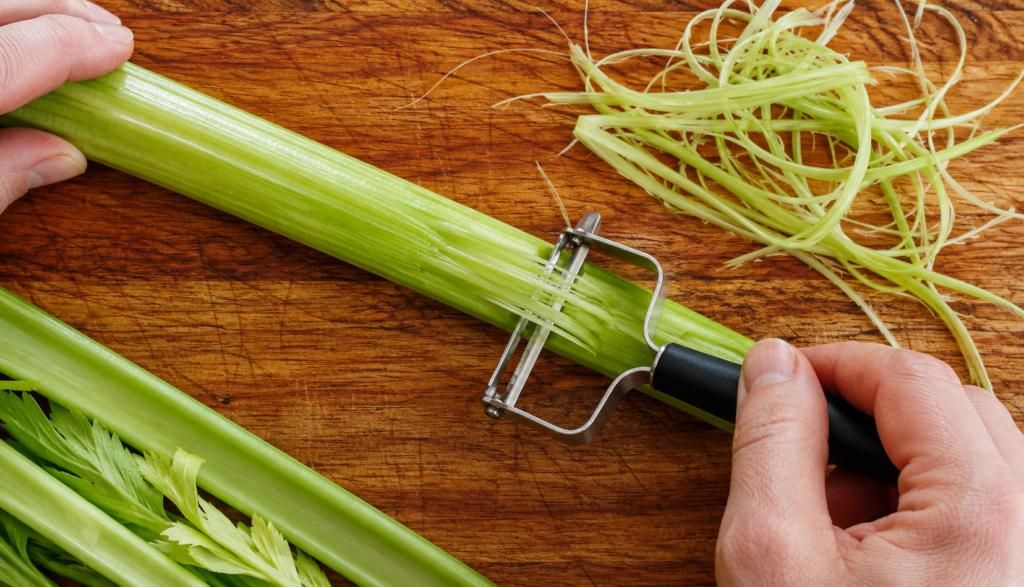
Celery’s defining textural feature — the stringy fibers running the length of each stalk — is the one preparation detail that separates celery from a vegetable like cucumber in terms of how much attention preparation requires. These strings are tough and don’t break down easily during chewing, which creates two related concerns: a choking hazard if a dog tries to swallow a string-laden piece without adequately chewing it, and a minor digestive irritation risk from the fibrous strings passing through the digestive tract largely intact.
For most adult dogs chewing celery normally, the strings aren’t a significant problem — they get chewed along with the rest of the stalk and pass through without issue. The concern becomes more relevant for dogs that tend to gulp food without much chewing, smaller dogs and puppies with less developed chewing mechanics, or senior dogs with dental issues that make thorough chewing more difficult.
I’ve watched this become an issue with a small terrier who tended to swallow pieces almost whole rather than chewing them properly. A few celery sticks resulted in a brief choking scare before the dog managed to work through it on his own, which was enough to change how celery got prepared for him going forward — cutting the stalks into smaller pieces and occasionally removing the more pronounced outer strings with a vegetable peeler before serving.
For dogs prone to gulping or for very small breeds, cutting celery into smaller pieces than you might otherwise, or lightly peeling the stringiest outer layer, reduces this risk considerably. For most dogs eating at a normal pace, standard stick-sized pieces are perfectly fine without any special string removal.
How Much Celery Dogs Can Have
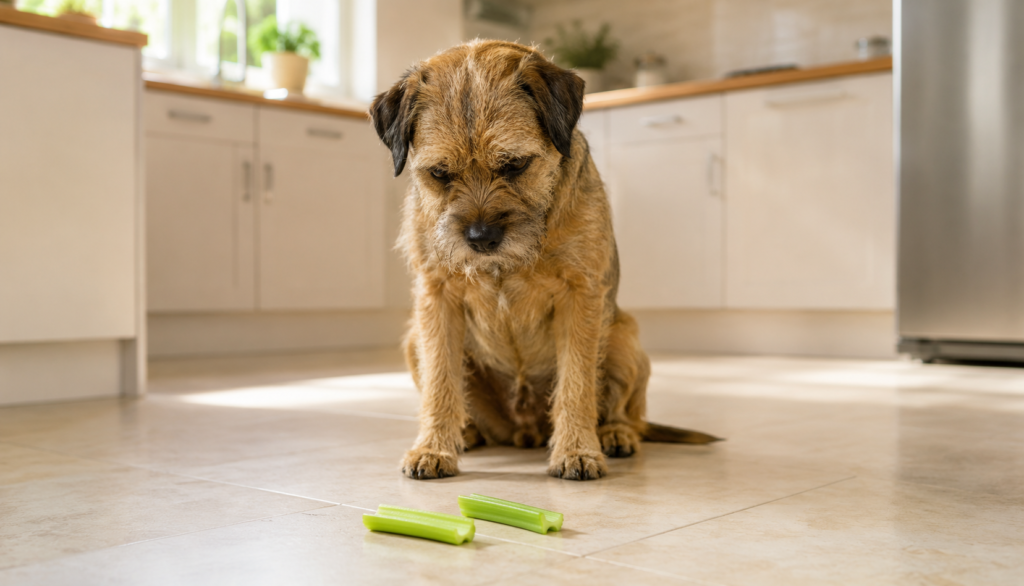
Celery’s low calorie and low sugar profile means portion guidance here is fairly relaxed compared to most fruits. Too much celery can still cause mild digestive upset in large quantities, mostly from the fiber and water content moving through the system quickly, but this requires a substantial amount relative to typical serving sizes.
For small dogs, one or two small celery pieces per serving is appropriate. Medium dogs can handle a few pieces or a half stalk. Large breeds can manage a full stalk or more without much concern. Celery can be offered several times a week, and many owners use it as a regular low-calorie treat option without much restriction beyond the basic size and chewing considerations already discussed.
From experience, the smarter call for dogs new to celery is to start with one small piece and observe how thoroughly they chew before offering more. This isn’t about toxicity risk — celery has none of the concerning compounds that apply to many fruits — it’s purely about confirming the dog handles the texture appropriately before making celery a regular offering, particularly for dogs whose eating style you’re less familiar with.
Celery for Dog Breath — Does It Actually Help?
Celery’s reputation for freshening dog breath comes up often enough to address directly. There’s some plausible mechanism behind this — the act of chewing fibrous, crunchy vegetables can help mechanically dislodge food particles from teeth, similar to the dental benefit attributed to carrots, and the high water content may have a mild rinsing effect in the mouth. Celery also doesn’t carry strong odor compounds of its own that would contribute to breath issues the way some other foods might.
That said, celery isn’t a targeted breath-freshening solution in the way that’s sometimes implied. Persistent bad breath in dogs is usually a sign of dental disease, gum issues, or sometimes a broader health concern, and celery chewing addresses none of these underlying causes directly. It may contribute marginally to a fresher-smelling mouth as a side effect of the chewing action and water content, but it’s not a substitute for proper dental care or a solution for breath issues that have an underlying medical cause.
Most dog owners miss this completely: if bad breath is persistent and not improving with regular dental care, the right response is a veterinary checkup rather than relying on celery or other home remedies to mask or marginally improve the symptom. Celery as a crunchy treat with a possible mild breath benefit is a reasonable bonus, not a dental health strategy on its own.
Raw, Cooked, and Serving Celery the Right Way
Raw celery is the standard way most owners serve this vegetable, and it’s the preparation that delivers the crunch and chewing engagement that makes celery appealing as a treat in the first place. Wash the celery thoroughly, cut into appropriately sized pieces for your dog, and serve plain. There’s no need to remove the leaves — celery leaves are not toxic and are sometimes left on as part of the stalk without any issue.
Cooked celery is softer and easier to manage for dogs with dental sensitivities or for puppies still developing their chewing ability, though it loses some of the crunch-based dental benefit that raw celery provides. Steaming celery without any added salt, butter, or seasoning is the appropriate preparation if you choose to cook it. Cooked celery can also be more easily incorporated into a dog’s regular food as a vegetable addition.
Plain celery, served on its own without any dip, dressing, or seasoning, is always the right approach. Celery is sometimes paired with peanut butter as a treat — this is fine as long as the peanut butter is plain, unsweetened, and contains no xylitol, which is genuinely dangerous and appears in some “natural” or “diet” peanut butter products specifically because it’s used as a sugar substitute.
What Most People Don’t Know
Celery’s diuretic properties, sometimes mentioned in human nutrition contexts, have led to occasional speculation about whether celery might help dogs with certain health conditions related to fluid retention. This isn’t a well-supported use case for dogs, and any dietary approach to managing fluid retention or related conditions should come from veterinary guidance rather than home remedies involving celery. The vegetable’s high water content is a hydration benefit, not a treatment for any specific medical condition.
Celery seed and celery salt are different products entirely from the vegetable stalk and aren’t appropriate substitutes when thinking about celery as a dog treat. Celery salt in particular contains significant sodium content that has no place in a dog’s regular diet, and celery seed, while not acutely toxic, isn’t something to intentionally offer dogs given its concentrated nature compared to the stalk itself.
The other detail worth knowing: celery is part of the same plant family as carrots, parsley, and parsnips, all of which are generally safe for dogs following similar preparation principles. If you’re building out a vegetable rotation, these related vegetables share enough preparation logic with celery that learning one makes the others more approachable. If symptoms persist or worsen after a dog eats celery, a vet visit is always the right call, though adverse reactions to this vegetable are uncommon.
Building Celery Into a Vegetable Rotation
Celery works well alongside carrots, cucumber, and green beans in a rotating vegetable treat schedule, particularly for dogs on weight management programs where low calorie volume matters more than nutrient density from any single source. Each vegetable brings something slightly different — carrots offer more vitamin A and natural sweetness, cucumber offers even higher water content, celery offers its distinctive crunch and very low calorie profile.
For dogs that respond well to celery specifically, it’s a useful addition to homemade treat preparations or as a mix-in with a dog’s regular meals for added volume and hydration without much caloric contribution. The versatility across raw and cooked preparations, combined with the genuine weight management benefit, makes celery a practical vegetable to keep in regular rotation rather than treating it as a rare or occasional offering.
Safe vegetables for dogs include several solid low-calorie, high-water options, and celery holds its own among them through a combination of genuine nutritional contribution and the kind of crunchy chewing satisfaction that makes it a treat dogs actually enjoy rather than just tolerate. With basic attention to preparation and chewing style, celery earns a regular place in a sensible dog treat rotation.
Frequently Asked Questions
Q. Can the strings in celery hurt dogs?
A. The stringy fibers can be a minor choking hazard for dogs that gulp food without much chewing, especially smaller dogs and puppies. Cutting celery into smaller pieces or lightly peeling the outer strings reduces this risk.
Q. How much celery can a dog eat?
A. Small dogs can have one or two small pieces per serving. Medium dogs can handle a few pieces or a half stalk. Large breeds can manage a full stalk. Celery can be offered several times a week given its low calorie profile.
Q. Does celery actually help with dog breath?
A. It may help marginally through the mechanical action of chewing and its high water content, but it’s not a targeted solution. Persistent bad breath usually points to a dental issue that needs veterinary attention rather than a dietary fix.