
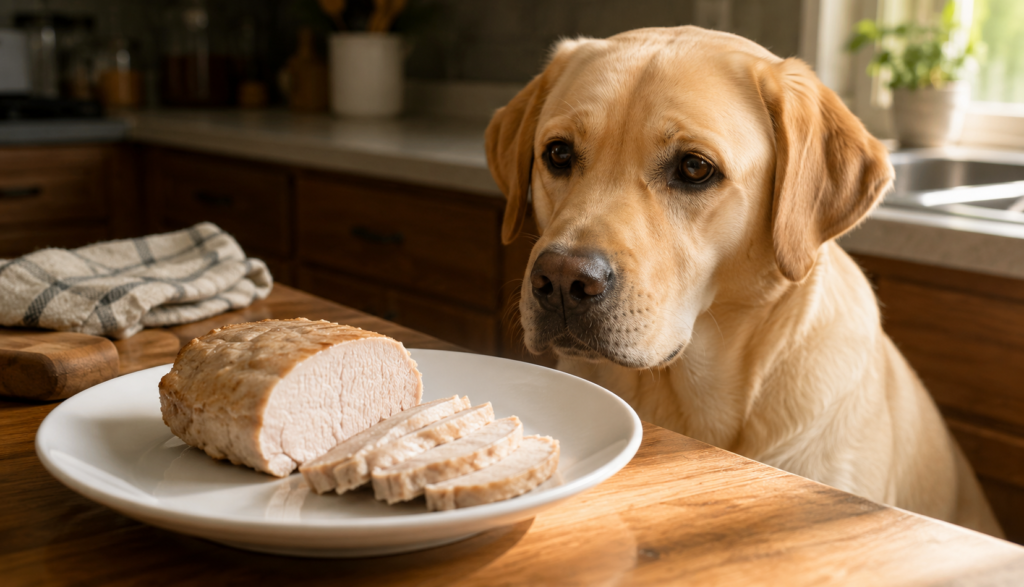
My dog has the kind of nose that could locate a pork chop through three closed doors, and the look on his face every time I cook one used to make me feel like I was holding out on him. I eventually looked into it properly rather than just assuming either “it’s meat, so it’s fine” or “human food, so it’s off limits.” Pork lands somewhere more nuanced than either of those shortcuts, and the specific form it comes in matters far more than the meat itself. Understanding what makes plain cooked pork different from bacon, bones, or a seasoned pork belly is what actually answers this question properly.
Is Pork Safe for Dogs?
I’ve seen this firsthand with several dogs now: a small piece of plain cooked pork causes no obvious problem for most healthy dogs. It’s not toxic on the level of something like onions or grapes, and cooked pork served without seasoning is a reasonable occasional treat for the vast majority of dogs.
The concern with pork isn’t really about the meat itself — it’s about preparation, form, and fat content. Plain pork is a different food from bacon, ham, pork rinds, or a pork chop cooked in garlic butter, even though they all technically come from the same animal.
So the answer is yes, with the understanding that “plain cooked pork” is doing a lot of heavy lifting in that sentence, and most versions of pork a dog is likely to encounter don’t actually fit that description.
Why Raw Pork Is a Real Risk
Most dog owners miss this completely, often because raw feeding has become more popular and people assume raw meat is generally safer or more natural. Raw pork specifically carries a meaningful trichinosis risk, caused by a parasite called Trichinella that can survive in undercooked or raw pork and cause genuine illness if ingested.
This isn’t a theoretical concern applied equally to all raw meats — it’s a pork-specific issue that’s particularly important with domestic pork compared to game meats. Cooking pork thoroughly eliminates this parasite risk entirely, which is part of why the “plain cooked” requirement matters more here than it does with something like plain chicken.
A dog that steals a small piece of raw pork off the counter is a different situation from a dog regularly fed raw pork as part of a raw diet, but the risk is worth knowing about regardless of the quantity involved.
The Fat Content Problem
The first time I dealt with this question from a reader, the pancreatitis concern came up, and for good reason. Pork tends to be higher in fat content than leaner proteins like chicken or turkey, and dogs that regularly consume high fat foods are at greater risk of developing pancreatitis, a serious and painful inflammatory condition of the pancreas.
This doesn’t mean a lean pork loin served occasionally causes pancreatitis, but it does mean fatty cuts, pork belly, crackling, and anything with significant visible fat should be trimmed before offering any to your dog.
Dogs with a prior history of pancreatitis or known sensitivity to high fat diets should avoid pork more cautiously than a healthy dog with no such history, since even moderate fat intake can trigger a flare in sensitive individuals.
Bacon, Ham, and Processed Pork
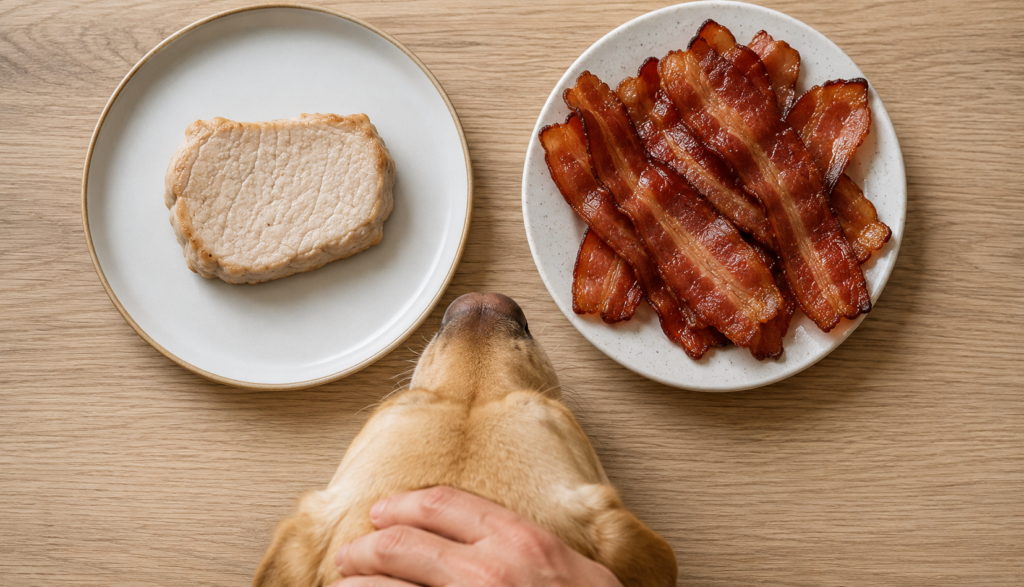
What surprised me was how often people assume bacon is a reasonable dog treat because dogs love it so enthusiastically. Bacon and ham are among the worst processed pork options for dogs, not because pork itself is dangerous, but because both are cured with extremely high sodium content alongside preservatives and often added sugar.
The sodium content in a single strip of bacon exceeds what a small dog should consume in an entire day, making it a genuinely poor snack choice regardless of how desperately wanted it is. Pork rinds fall into the same category — high in fat, often heavily salted, and offering nothing beneficial that plain cooked pork doesn’t already provide without the risks.
Ham is similarly loaded with sodium content and often contains added seasonings that have nothing to do with the pork and everything to do with the curing process. Plain cooked pork and processed pork products are genuinely different foods in terms of what they do to a dog’s body.
Pork Bones: A Specific Warning
I’ve watched this go wrong more clearly with bones than with any other part of the pork conversation. Cooked pork bones splinter into sharp fragments far more readily than raw bones, creating a serious choking hazard and a real risk of internal injury if a sharp fragment makes it past the throat.
Even raw pork bones, while somewhat safer than cooked ones in terms of splintering, carry their own concerns and should only ever be given with direct supervision rather than left with a dog unsupervised.
The bone question is honestly where the biggest real risk lives in this whole topic, more than the meat itself or even the fat content conversation, since bone injuries can escalate quickly and require emergency veterinary attention.
What Most People Don’t Know
Here’s a detail that rarely gets mentioned: pork is actually one of the more common protein sources used in dog food formulas marketed for dogs with chicken or beef allergies, since it’s considered a novel protein for many dogs who haven’t been exposed to it regularly. This means pork as an ingredient isn’t some fringe consideration — it’s a legitimate protein source used commercially in properly formulated dog food. The risks associated with home-fed pork are almost entirely about preparation and form rather than the protein itself being inherently problematic for dogs.
How to Safely Offer Pork
From experience, the smarter call is to only ever offer lean, fully cooked, plain pork with all visible fat trimmed away and absolutely no seasoning, garlic, onion, or sauce involved in the cooking process. A small piece of plain pork loin or a plain pork chop cooked simply without additions is the version worth thinking about.
Portion size matters here more than with lower-fat proteins — keeping pieces small and infrequent avoids the cumulative fat content concern while still letting your dog enjoy pork as an occasional treat.
This isn’t a daily protein source for dogs eating a standard commercial diet. It works as an occasional reward rather than a regular dietary addition.
Signs of Trouble to Watch For
Watch for vomiting, diarrhea, lethargy, or an unusually hunched or painful posture after a dog eats a significant amount of pork, particularly fatty cuts, since those can signal the early stages of pancreatitis rather than simple digestive upset.
Symptoms tied to trichinosis from raw pork can include muscle stiffness, fever, or general lethargy appearing a few days after ingestion, since the parasite takes time to produce noticeable effects.
If symptoms persist or worsen following any pork exposure, a vet visit is always the right call, particularly if bones, raw pork, or large amounts of processed pork were involved rather than a small piece of plain cooked meat.
Frequently Asked Questions

Q. Can dogs eat bacon?
A. Bacon isn’t recommended for dogs — it’s extremely high in sodium content and fat, making it a poor treat choice even in small amounts despite how much most dogs want it.
Q. Can dogs eat pork bones?
A. Cooked pork bones should be avoided entirely since they splinter into sharp fragments easily, creating a choking hazard and risk of internal injury that isn’t worth taking.
Q. Is raw pork safe for dogs?
A. Raw pork carries a real trichinosis risk from parasites that cooking eliminates, making plain fully cooked pork the significantly safer option in every case.