
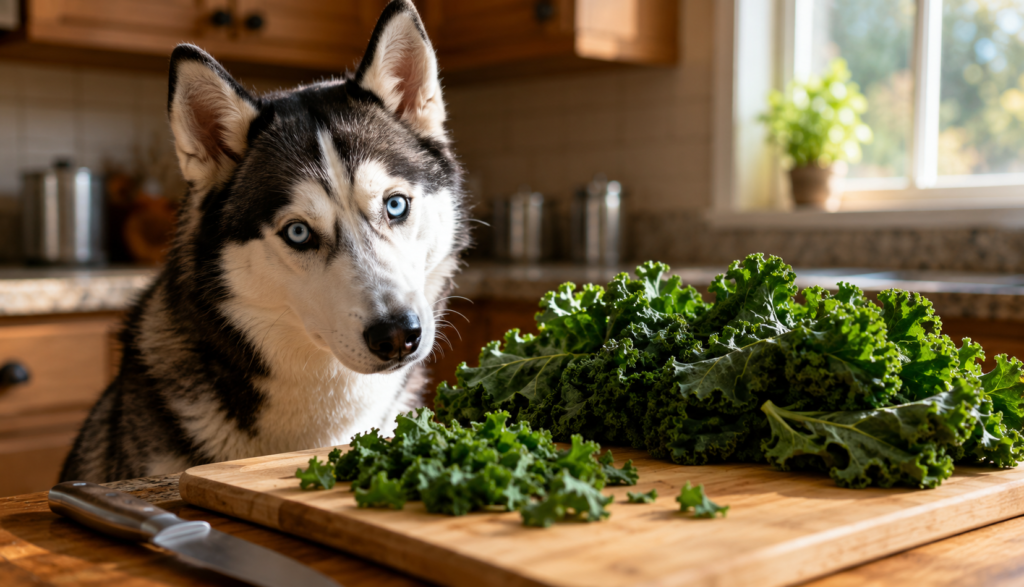
I went through a phase a few years back where kale ended up in nearly everything I cooked, and naturally my dog started getting the occasional stray leaf that fell on the floor. It took me a while to actually look into whether that was a good idea or just something I’d been doing on autopilot. Kale turns out to be one of those vegetables that’s genuinely healthy in moderation but comes with a real asterisk that a lot of “superfood” articles conveniently leave out. Understanding that asterisk is what actually matters here, more than the basic safety question alone.
Is Kale Safe for Dogs?
I’ve seen this firsthand with a few different dogs over the years: small amounts of kale don’t cause any obvious problem for most healthy dogs. It’s not toxic in the way onions or grapes are, and plenty of dogs eat a stray leaf here and there without any issue.
That said, kale isn’t a vegetable I’d recommend treating casually the way you might with something like zucchini or green beans. It carries a specific compound that makes “how much” matter more than it does with most leafy greens.
So the answer is yes, in small amounts, but this is a vegetable where moderation genuinely matters rather than being a generic safety disclaimer tacked onto every food.
The Oxalate Concern Explained
Most dog owners miss this completely, mostly because kale gets marketed so heavily as a human superfood without much mention of the downside. Kale contains oxalates, naturally occurring compounds that, in large quantities over time, have been linked to kidney stone formation in some dogs.
This isn’t a concern from an occasional small piece of kale. It becomes relevant with regular, large-volume feeding, particularly in dogs who already have a history of kidney health issues or kidney stones.
Kale also contains isothiocyanates, compounds that in very high doses have been associated with other health concerns in some animal studies, though this risk scales heavily with quantity rather than applying to a leaf or two here and there.
Raw vs Cooked vs Kale Chips
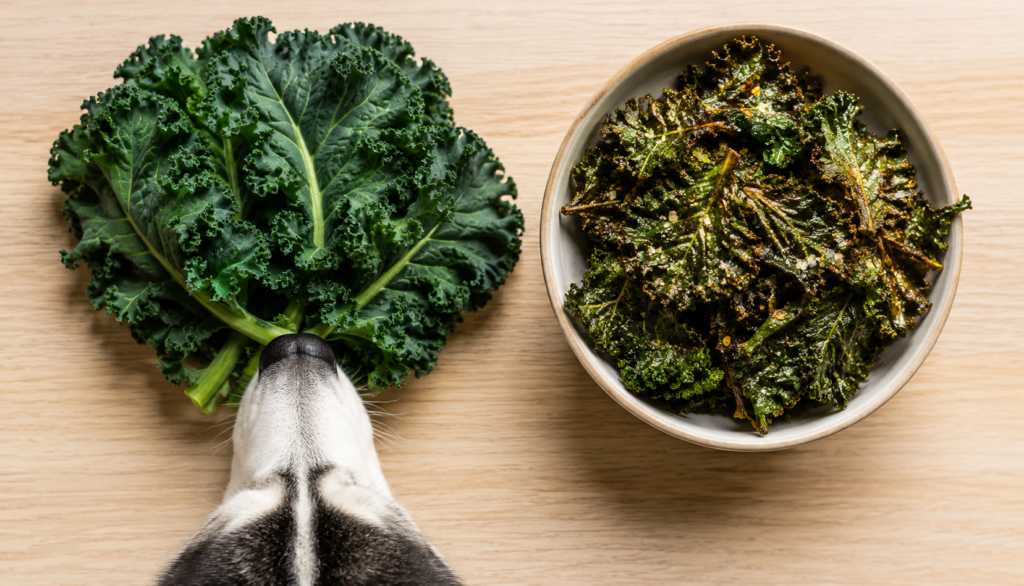
The first time I dealt with this question from a reader, kale chips came up almost immediately, and that’s actually where most of the real risk hides. Raw kale and cooked kale, served plain, are both reasonably similar in terms of safety, with cooking slightly softening the texture for easier digestion.
Kale chips, the crispy snack version popular with people, are usually coated in oil and salt before baking, which introduces unnecessary fat content and sodium that plain kale never carries. These should be avoided entirely regardless of how healthy the base ingredient seems.
Steamed kale tends to be the gentlest option if you’re introducing it for the first time, since it’s easier on digestion than raw while still retaining most of its nutritional value.
Nutritional Benefits
What surprised me was just how nutrient-dense kale actually is relative to its low calorie count. It delivers meaningful vitamin K, vitamin A, and vitamin C, along with calcium and antioxidants, all packed into a genuinely low calorie leafy green.
This nutrient density is exactly why kale gets so much attention as a superfood in the first place, and in small, occasional amounts, dogs can benefit from some of the same vitamin and antioxidant support that makes it popular in human diets.
For dogs managing weight, kale’s low calorie profile makes it a reasonable occasional addition, though it shouldn’t be relied upon as a primary source of nutrition the way a balanced commercial diet already provides.
What Most People Don’t Know
Here’s something that rarely gets mentioned: kale belongs to the same broader plant family as broccoli and cauliflower, meaning it can also contribute to gas and mild bloating in some dogs, similar to those other cruciferous vegetables. This side effect gets far less attention than the oxalate conversation, but it’s actually the more common issue owners notice day to day, especially if kale is introduced suddenly or in a larger amount than a dog’s digestive system is used to handling.
How Much Kale Is Too Much?
From experience, the smarter call is to treat kale strictly as an occasional treat, not a daily addition to your dog’s bowl. A small piece or two, once or twice a week at most, keeps the oxalate exposure low while still letting your dog enjoy the occasional taste.
Dogs with a known history of kidney stones or kidney health concerns are better off avoiding kale altogether, given the oxalate content, rather than trying to manage a “safe” amount on their own.
For everyone else, sticking to small, infrequent portions removes nearly all of the realistic risk while still letting kale be an occasional part of a varied diet.
Risks and Things to Watch For
I’ve watched this go wrong mostly with owners who assume “superfood” means “feed as much as possible,” which is really the opposite of how kale should be approached for dogs. Large or frequent amounts are where the oxalate and digestive concerns actually become relevant.
Mild digestive upset, gas, or diarrhea can occur if a dog eats more than a small amount, particularly if kale hasn’t been introduced gradually into their diet.
If symptoms persist or worsen, a vet visit is always the right call, and any dog with existing kidney health issues should have kale cleared by a vet before being offered any at all.
Frequently Asked Questions
Q. Can dogs eat kale every day?
A. It’s better to limit kale to a small amount once or twice a week rather than daily, since regular large servings increase oxalate exposure and kidney stone risk over time.
Q. Are kale chips safe for dogs?
A. No, kale chips are usually coated in oil and salt, which adds unnecessary fat and sodium content. Plain raw or steamed kale is the safer choice.
Q. Is kale bad for dogs with kidney problems?
A. Yes, kale’s oxalate content can contribute to kidney stone formation, so dogs with existing kidney health issues should generally avoid kale unless a vet says otherwise.