
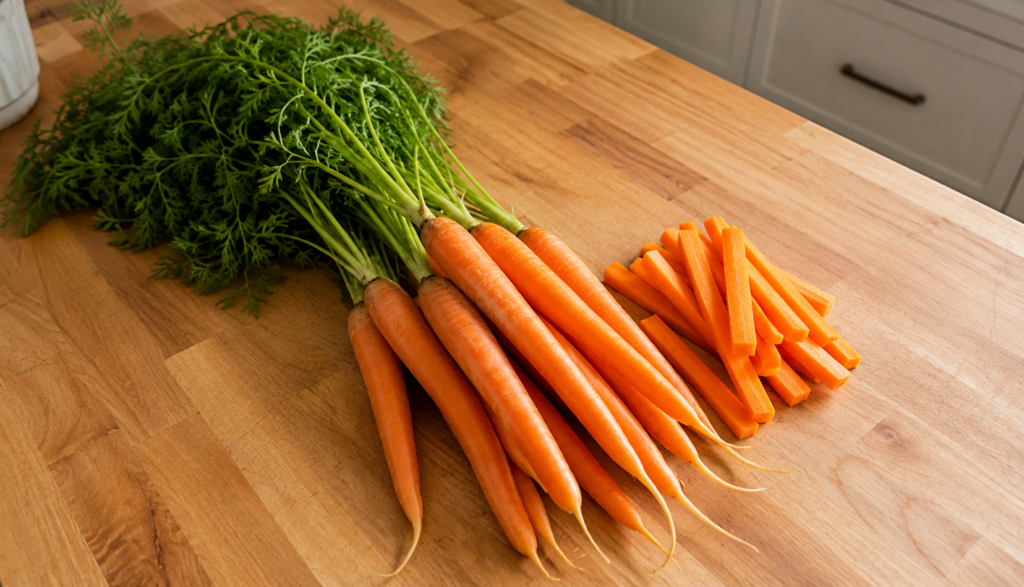
Carrots are the vegetable equivalent of blueberries on the dog-safe list — almost universally recommended, genuinely low risk, and packed with real nutritional value rather than just being harmless. I’ve used carrots as a training treat and a snack for years, and they hold up to frequent use better than almost anything else in the rotation. Can dogs eat carrots? Yes, without much hesitation. They’re crunchy, low calorie, good for the teeth, and most dogs take to them readily. The main considerations are size-appropriate preparation to avoid choking and not overdoing portions to the point of digestive upset, but beyond that, carrots are about as straightforward and beneficial as a treat gets.
Why Carrots Earn Their Reputation as a Top Treat
Fresh carrots deliver beta carotene in significant amounts, which the body converts to vitamin A — a nutrient critical for eye health, immune function, and skin condition in dogs. The vitamin A content in carrots is high enough that they’re frequently cited specifically for supporting vision health, particularly relevant for senior dogs where age-related vision changes are a common concern. Carrots for dogs aren’t just a crunchy snack; they’re doing real nutritional work.
The fiber content in carrots supports digestive health without being intense enough to cause problems even for dogs with sensitive stomachs. This fiber, combined with the low calorie density of carrots, makes them one of the better options available for dogs managing their weight. A generous handful of carrot sticks delivers genuine satisfaction and crunch without much caloric cost, which is part of why carrots show up so consistently in weight management recommendations from veterinarians.
Dental health is one of the more practical benefits carrots provide. The firm, crunchy texture of raw carrot helps mechanically scrape plaque from teeth as a dog chews, contributing a mild but real dental benefit alongside everything else carrots offer. This is one of the reasons carrots are sometimes recommended specifically for dogs who resist toothbrushing or other dental care routines — it’s not a replacement for proper dental care, but it’s a genuinely useful supplement to it.
What surprised me was how reliably carrots work across nearly every dog I’ve offered them to, regardless of size or breed. The crunch and mild sweetness seem to have broad appeal, and unlike some fruits where individual dogs show strong preferences or aversions, carrot acceptance has been close to universal in my experience. For owners looking for a treat that’s almost guaranteed to land well, carrots are a safe bet.
Raw vs. Cooked Carrots — Does It Matter?
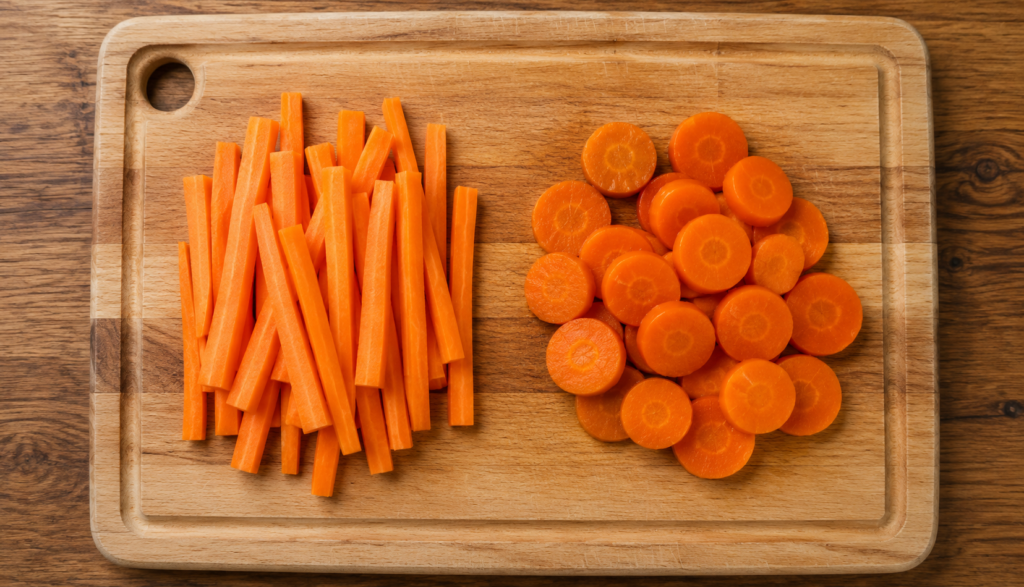
Both raw and cooked carrots are safe for dogs, and the choice between them comes down to texture preference and specific use case rather than any meaningful safety distinction. Raw carrots offer the dental benefit of the crunchy texture and tend to be the default choice for a quick treat or training reward, since they require no preparation beyond washing and cutting to size.
Cooked carrots are softer and easier to digest, which makes them a better option for puppies still developing their chewing ability, senior dogs with dental issues or missing teeth, or any dog recovering from dental surgery where hard textures aren’t appropriate. Steaming or boiling carrots without any added salt, butter, or seasoning preserves the nutritional content while making them gentler to eat. Cooked carrots also mash easily, which works well for mixing into a dog’s regular food as a nutritional boost.
Most dog owners miss this completely: cooking carrots actually increases the bioavailability of beta carotene slightly, meaning a cooked carrot may deliver marginally more usable vitamin A than the same amount of raw carrot, since cooking breaks down some of the plant cell walls that otherwise limit nutrient absorption. This is a minor consideration rather than a compelling reason to choose cooked over raw, but it’s worth knowing if maximizing nutritional uptake is a specific goal.
Neither preparation method requires removing the skin — carrot skin is perfectly safe and contains additional fiber. Washing thoroughly to remove dirt and any pesticide residue is sufficient preparation regardless of whether you’re serving the carrot raw or cooked.
Frozen Carrots and the Teething Puppy Connection

Frozen carrots are one of the more specific and well-regarded uses for this vegetable, particularly for teething puppies experiencing the discomfort that comes with losing baby teeth and growing adult ones. A frozen carrot provides a firm, cold surface that puppies find soothing to chew on, and the size and shape of a whole carrot makes it manageable for a puppy to gnaw on for an extended period without the risk of swallowing large pieces the way smaller treats might present.
For this specific use, whole carrots — not cut into small pieces — work best, since the goal is sustained chewing rather than quick consumption. Supervise puppies during frozen carrot chewing sessions, since pieces can occasionally break off, particularly as the carrot softens slightly from the warmth of chewing. Frozen carrots also work well for adult dogs as a warm-weather treat, offering the same cooling, crunchy satisfaction in a slightly different context than the teething-specific use.
I’ve recommended frozen carrots to several puppy owners dealing with the destructive chewing that often accompanies teething, and the response has consistently been positive — redirecting that chewing energy toward something appropriate and beneficial rather than furniture or shoes. It’s a simple, low-cost solution that does double duty as both a teething aid and a nutritious treat.
How Many Carrots Dogs Can Have
Carrots are gentle enough on digestion and low enough in sugar that portion guidance here is fairly generous compared to most fruits. Too many carrots can still cause digestive upset in large enough quantities, simply from the fiber volume, but this requires a genuinely large amount relative to the dog’s size before becoming an issue.
For small dogs, a few thin carrot slices or a small section of carrot stick per serving works well. Medium dogs can handle a half to a whole small carrot. Large breeds can manage a full carrot or more without much concern. Carrots can reasonably be offered several times a week, and many owners use them as a near-daily training treat without any issues, similar to how blueberries are used given their low risk profile.
From experience, the smarter call for training purposes is to cut carrots into small, uniform pieces that are easy for the dog to eat quickly during a session, reserving whole carrots or larger sticks for supervised chewing time rather than rapid treat delivery. This distinction matters more for practicality than safety, but it makes carrots more versatile across different use cases when prepared with the specific purpose in mind.
What Most People Don’t Know
Carrot tops and greens — the leafy stems sometimes still attached to carrots sold with the tops on — are not toxic to dogs, contrary to a persistent but inaccurate belief that circulates in some gardening and pet circles. The greens are edible and not harmful, though they’re more fibrous and less palatable than the root itself, which is why most dogs show little interest in eating them even when given the opportunity. There’s no need to specifically remove carrot tops out of safety concern.
Choking hazard with carrots is worth flagging specifically for smaller dogs and puppies, particularly with raw carrot sticks or coins that are hard and hold their shape rather than breaking down easily. Cutting carrots into appropriately small pieces for your dog’s size, or grating raw carrot for very small dogs, reduces this risk significantly. This is one of the more common, preventable incidents with an otherwise very safe vegetable, simply because the firm texture that makes carrots good for dental health also makes improperly sized pieces a genuine choking concern.
The other detail worth knowing: carrots are sometimes used as a partial substitute for commercial treats in dogs on a weight management program specifically because veterinarians recognize how favorably the calorie-to-satisfaction ratio compares to most commercial options. If your dog’s vet has recommended weight management, asking specifically about carrots as a treat substitute is a reasonable and well-supported conversation to have. If symptoms persist or worsen after a dog eats carrots, a vet visit is always the right call, though adverse reactions to this vegetable are genuinely rare.
Building Carrots Into a Regular Routine
Unlike many fruits that benefit from rotation to manage sugar content, carrots are gentle enough to function as a consistent, even daily, part of a dog’s treat routine without the same rotation logic applying as strictly. That said, pairing carrots with other vegetables like cucumber or green beans, and occasional fruit like blueberries, still adds valuable variety to a dog’s overall diet beyond what any single vegetable provides.
For dogs that respond particularly well to carrots, incorporating them into homemade treat recipes — mashed into a baked treat base, or used as a mix-in with plain yogurt — extends their use beyond simply handing over a raw or cooked piece. The versatility of carrots across raw, cooked, frozen, and incorporated forms is part of what makes them such a reliably useful addition to a dog’s diet across different contexts and life stages.
Safe vegetables for dogs don’t get more straightforward or more consistently beneficial than carrots. The combination of genuine nutritional value, dental benefit, low calorie cost, and broad acceptance across different dogs makes carrots one of the rare treats that earns an enthusiastic recommendation without much qualification, provided basic size and portion sense is applied.
Frequently Asked Questions
Q. Are raw or cooked carrots better for dogs?
A. Both are safe. Raw carrots offer a dental cleaning benefit from the crunchy texture. Cooked carrots are softer and easier to digest, making them better for puppies, seniors, or dogs with dental issues. Neither requires the skin to be removed.
Q. How many carrots can a dog eat?
A. Small dogs can have a few thin slices per serving. Medium dogs can handle a half to a whole small carrot. Large breeds can manage a full carrot or more. Carrots are gentle enough to be offered several times a week or even daily.
Q. Are frozen carrots good for teething puppies?
A. Yes. A frozen whole carrot provides a soothing, firm surface for teething puppies to chew on. Supervise the chewing session since small pieces can occasionally break off as the carrot softens.