

Few things alarm a dog owner faster than watching their pet tremble and throw up at the same time. One minute your dog is lying quietly, the next they are shivering, drooling, and retching onto the floor. If you are searching for answers right now, the short version is this: dog shaking and vomiting together can be a mild stomach upset, but it can also be an early sign of poisoning, infection, severe pain, or a metabolic emergency. The combination deserves more attention than either symptom alone.
This guide walks you through why dogs shake and vomit, which causes are minor and which are dangerous, how to read the other signs your dog is showing, what you can safely do at home, and exactly when to head to a veterinarian. It is built as a practical symptom checker, so you can match what you are seeing to the right level of urgency.
Why Dogs Shake and Vomit at the Same Time
Shaking and vomiting are both symptoms, not diseases. They are the body’s response to something being wrong, and they often travel together because they share common triggers. When a dog feels nauseated, the same nervous system pathways that prepare the stomach to empty can also cause trembling, drooling, lip licking, and restlessness. A dog who feels sick to their stomach often shakes simply because nausea is uncomfortable and stressful.
In other cases the shaking comes first and the vomiting is a secondary effect. A dog in significant pain, a dog with a fever, or a dog who has swallowed a toxin that affects the nervous system may tremble because the body is under real physiological strain, and the stomach reacts by rejecting whatever is inside it. Understanding which symptom came first, how quickly they appeared, and what else is happening gives you and your vet valuable clues.
It also helps to know that shaking is not always the same thing. A fine, rapid tremor, a shiver like a dog who is cold, full-body trembling, and a violent convulsion each point in different directions. Watching carefully and, if it is safe to do so, taking a short video on your phone can make a real difference when you speak to a veterinarian.
Common Causes of Dog Shaking and Vomiting
Simple Nausea and Stomach Upset
The most common and least worrying cause is a basic upset stomach. Eating something rich, eating too fast, sneaking table scraps, or swallowing grass can irritate the stomach lining. The dog feels nauseated, may shiver and drool, and then vomits once or twice. Many dogs feel better quickly afterward and return to normal behavior within a few hours. If your dog vomited a little white foam or yellow bile, shook for a short time, and then settled down and acted like themselves, a mild stomach upset is a reasonable explanation.
Anxiety, Fear, and Stress
Thunderstorms, fireworks, car rides, vet visits, and separation from their owner can make anxious dogs shake, pant, drool, and even vomit. The stress response speeds up digestion and upsets the stomach. If the shaking and vomiting happen only around a clear stressor and stop when the dog calms down, anxiety is a likely cause. Even so, repeated episodes are worth discussing with your vet, since anxiety can be treated.
Ingesting a Toxin or Poison
This is the cause that makes the combination so important. Many common poisons produce vomiting along with tremors. Chocolate contains theobromine, which can cause vomiting, restlessness, a racing heart, and muscle tremors. Xylitol, a sweetener found in sugar-free gum, some peanut butters, and baked goods, can cause vomiting followed by weakness, tremors, and seizures because it triggers a sudden drop in blood sugar. Other dangerous culprits include grapes and raisins, certain mushrooms, antifreeze, rodenticides, snail bait, marijuana edibles, and human medications such as pain relievers or antidepressants. If there is any chance your dog got into something toxic, treat it as an emergency and contact a vet or an animal poison control service immediately, even if your dog seems to be improving.
Pain and Pancreatitis
Dogs in pain often tremble. Pancreatitis, an inflammation of the pancreas that frequently follows a fatty meal, causes vomiting, a hunched or “prayer” posture, a tender belly, loss of appetite, and shaking. It can become serious quickly and usually needs veterinary treatment, including fluids and pain control. Other painful conditions, such as a swallowed foreign object, a bowel obstruction, or an injury, can also produce the same pairing of symptoms.
Infections Such as Parvovirus and Distemper
Infectious disease is a major concern in puppies and unvaccinated dogs. Parvovirus typically causes repeated vomiting, severe and often bloody diarrhea, lethargy, fever, and refusal to eat, and affected puppies may shiver from fever and weakness. Canine distemper can cause vomiting, fever, discharge from the eyes and nose, and in later stages neurological signs including tremors. Any young or unvaccinated dog with shaking and vomiting should be seen by a vet the same day.
Fever and Illness
A dog with a fever may shiver the way a person does with chills, and viral or bacterial infections can also cause nausea and vomiting. A normal dog temperature runs roughly between 101 and 102.5 degrees Fahrenheit. A reading above about 103 degrees Fahrenheit suggests a fever worth discussing with your vet.
Heatstroke and Overheating
A dog who has been in the heat, exercising hard, or left in a warm car may show heavy panting, drooling, weakness, trembling, and vomiting. Heatstroke is a life-threatening emergency. Move the dog to a cool area, offer small sips of cool water, and head to a vet immediately while using cool, not ice-cold, water on the body.
Low Blood Sugar
Hypoglycemia is especially common in puppies, toy breeds, and diabetic dogs. Signs include shaking, weakness, wobbliness, vomiting, and in severe cases collapse or seizures. If you suspect low blood sugar, rubbing a small amount of honey or corn syrup on the gums while you contact your vet is commonly advised, but the dog still needs to be examined.
Kidney and Liver Disease
When the kidneys or liver are not working properly, toxins build up in the bloodstream and cause persistent nausea, vomiting, weakness, and sometimes tremors. This is more common in older dogs, but it can occur at any age, particularly after ingesting a kidney toxin such as grapes or antifreeze.
Reaction to Medication or Vaccines
Some dogs develop mild nausea, shivering, and tiredness after a vaccination or a new medication. A short, mild reaction can happen, but facial swelling, hives, repeated vomiting, difficulty breathing, or collapse after a shot is an emergency. Call your vet if your dog shakes and vomits after a new medication.
When Dog Shaking and Vomiting Is Not an Emergency
Not every episode means something terrible. A dog may be dealing with a mild issue if all of the following are true. The vomiting happened only once or twice. The shaking was brief and has stopped. Your dog is alert, responds to you normally, and is willing to drink water. There is no blood in the vomit, no repeated retching, no swollen belly, and no known exposure to anything toxic. The dog is an adult in otherwise good health, not a young puppy, a senior, or a toy breed.
If your dog fits that picture, keep a close eye on them for the next several hours. Mild episodes often resolve with a short rest for the stomach and a bland meal. If symptoms return, get worse, or new signs appear, the situation has changed and a call to your vet is the right next step.
When to Worry: Emergency Signs to Watch For
Some warning signs mean you should not wait. Contact an emergency vet right away if your dog has shaking and vomiting along with any of the following:
- Vomiting that happens repeatedly, or an inability to keep down even water
- Blood in the vomit, or vomit that looks like coffee grounds
- A swollen, hard, or painful belly, or unproductive retching, which can signal bloat
- Known or suspected ingestion of chocolate, xylitol, grapes, medication, antifreeze, rat poison, or mushrooms
- Seizures, stumbling, loss of coordination, or collapse
- Pale or blue-tinged gums, or very rapid or labored breathing
- Extreme lethargy, unresponsiveness, or refusal to stand
- Bloody diarrhea, especially in a puppy
- Signs of heatstroke such as heavy panting, drooling, and a very hot body
- Symptoms lasting more than 24 hours, or getting steadily worse
Bloat, medically called gastric dilatation-volvulus, deserves special mention. It mostly affects large and deep-chested breeds, and it can kill within hours. A dog that is retching without bringing anything up, pacing, drooling, and has a tight, enlarged abdomen needs emergency care immediately.
Dog Shaking and Vomiting by Age and Size
The same symptoms carry different weight depending on the dog.
Puppies can become dehydrated and develop low blood sugar very quickly, and they are the most vulnerable to parvovirus. A puppy who is shaking and vomiting should generally be evaluated the same day.
Senior dogs are more likely to have underlying kidney disease, liver problems, pancreatitis, or other chronic conditions. Shaking and vomiting in an older dog should not be brushed off as simple indigestion, because there is less reserve to cope with dehydration.
Small and toy breeds have little body fat and a high metabolism, so they are prone to hypoglycemia and chilling. Small dogs may also shiver more readily, so look at the whole picture rather than the shaking alone.
Large and deep-chested breeds carry a higher risk of bloat, which makes unproductive retching with a swollen belly an immediate emergency.
What Different Symptom Combinations Can Mean
The extra signs that appear alongside shaking and vomiting help narrow down the cause. Use this table as a rough guide, not a diagnosis.
| Symptoms Together | Possible Meaning | Urgency |
|---|---|---|
| Shaking, vomiting once, then normal behavior | Mild stomach upset or brief stress | Monitor at home |
| Shaking, vomiting, and diarrhea | Gastroenteritis, dietary indiscretion, infection | Call vet if it lasts beyond a day |
| Shaking, vomiting, bloody diarrhea, lethargy | Parvovirus or severe gastroenteritis | Emergency |
| Shaking, vomiting, and drooling | Nausea, toxin exposure, or dental or oral irritation | Call vet promptly |
| Shaking, vomiting, and panting | Pain, heatstroke, fear, or poisoning | Urgent |
| Shaking, vomiting, and not eating | Pancreatitis, infection, kidney or liver problems | Vet visit within 24 hours |
| Shaking, vomiting, and a hunched posture | Abdominal pain or pancreatitis | Urgent |
| Shaking, vomiting, and a swollen belly with retching | Bloat | Emergency |
| Shaking, vomiting, stumbling, or seizures | Toxin, low blood sugar, or neurological issue | Emergency |
What Most People Don’t Know
Several surprising facts can change how you respond when your dog shakes and vomits.
First, the shaking may be the more dangerous symptom. Vomiting is the body’s way of getting rid of something harmful, and one or two episodes are often harmless. Tremors, however, can point to nervous system involvement, so shaking that continues or intensifies after the vomiting stops should be treated seriously.
Second, toxin symptoms can be delayed. With xylitol, the drop in blood sugar can appear within thirty minutes, but with some other poisons, signs may take hours or even a day or more to appear. A dog who seems fine after eating something suspicious has not necessarily escaped harm, which is why calling a poison hotline early is better than waiting.
Third, shaking can be mistaken for a seizure, and the reverse. A dog having a seizure is usually unaware of their surroundings and may lose bladder control, paddle their legs, or collapse. A dog who is trembling from nausea or fear is generally still aware of you and responsive. If you are unsure, film it and show your vet.
Fourth, giving human medication can make things worse. Pain relievers such as ibuprofen and acetaminophen are toxic to dogs, and some human anti-nausea products are unsafe or wrong for certain dogs. Never medicate a shaking, vomiting dog without veterinary guidance.
Finally, fasting is not right for every dog. Withholding food briefly can calm an adult dog’s stomach, but puppies, toy breeds, and diabetic dogs can develop dangerous low blood sugar if they go without food, so ask your vet before restricting meals in these dogs.
Home Care While You Monitor Your Dog

If your dog has had a mild episode and none of the emergency signs apply, these steps are generally safe while you watch for changes.
- Stay calm and keep your dog comfortable. Offer a quiet, warm, low-stress spot. Your calm presence helps an anxious dog settle.
- Remove food for a few hours. For a healthy adult dog, resting the stomach for roughly six to twelve hours can help. Do not do this for puppies, small breeds, or dogs with diabetes unless your vet agrees.
- Offer small amounts of water. Let your dog take a few sips at a time rather than gulping a full bowl, which can trigger more vomiting. Ice chips can work for dogs who struggle to keep water down.
- Reintroduce a bland diet. After the stomach settles, offer small portions of plain boiled chicken and white rice, with no seasoning, butter, or oil. Increase gradually over a day or two.
- Check for hidden causes. Look around the house and yard for chewed packaging, spilled medication, plants, garbage, or anything that may have been eaten. Keep any packaging or vomit sample, since a vet may want to see it.
- Take notes. Record when the shaking and vomiting began, how many times each happened, what the vomit looked like, and any other changes. Short videos are very helpful.
Avoid trying to force your dog to vomit at home unless a veterinarian or poison control specialist specifically instructs you to. In some cases, inducing vomiting is dangerous and can make the situation worse.
When to See a Vet and What to Expect
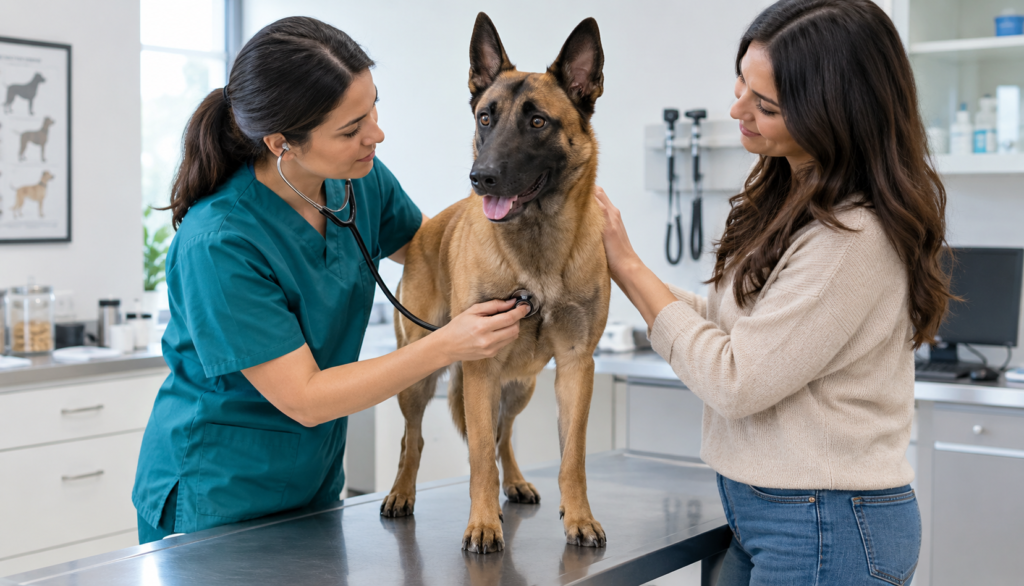
When in doubt, call. A quick phone call to your regular vet, an emergency clinic, or a pet poison helpline can tell you whether to come in right away. Be ready to describe your dog’s age, weight, breed, vaccination status, medications, recent diet, and anything they might have eaten.
At the clinic, your vet will start with a physical exam, checking temperature, heart rate, gum color, hydration, and belly tenderness. Depending on what they find, they may recommend bloodwork to check organ function and blood sugar, X-rays or ultrasound to look for blockages or bloat, and fecal or viral testing if infection is suspected. Treatment often includes anti-nausea medication, fluids to correct dehydration, pain relief, and monitoring. When a toxin is involved, treatment may include induced vomiting under supervision, activated charcoal, or hospitalization for supportive care.
Early treatment usually means a faster recovery and a lower bill. Dogs who are treated before dehydration or toxin damage progresses almost always do better than dogs who are brought in after a long delay.
How to Prevent Shaking and Vomiting Episodes
You cannot prevent every illness, but you can reduce the risk. Keep chocolate, xylitol products, medications, and cleaning supplies stored securely out of reach. Avoid feeding fatty table scraps, which can trigger pancreatitis. Keep vaccinations up to date, especially for puppies. Feed measured meals at consistent times, use slow-feeder bowls for dogs who gulp, and avoid vigorous exercise right after eating in large breeds. Introduce any diet changes gradually over seven to ten days. Finally, make sure your dog has shade and fresh water in hot weather, and never leave a dog in a parked car.
Frequently Asked Questions
Q. Why is my dog shaking and vomiting but acting normal?
A. A dog who vomits once or twice, shakes briefly, and then acts normal usually has a mild stomach upset, nausea, or a stress reaction. Monitor closely for the next 12 to 24 hours. If the vomiting returns, the shaking continues, or your dog stops eating or drinking, call your vet.
Q. Can a dog shaking and vomiting be a sign of poisoning?
A. Yes. Many toxins, including chocolate, xylitol, antifreeze, certain mushrooms, and rodenticides, cause vomiting along with tremors. If you suspect your dog ate something toxic, contact an emergency vet or a pet poison hotline immediately rather than waiting for more symptoms to appear.
Q. Should I take my dog to the vet if they are shaking and vomiting?
A. Go right away if there is blood, repeated vomiting, a swollen belly, seizures, collapse, pale gums, or known toxin exposure, or if your dog is a puppy, senior, or toy breed. For a mild single episode in a healthy adult dog, you can monitor at home, but call your vet if symptoms last longer than 24 hours.
Q. What can I give my dog for shaking and vomiting at home?
A. Offer small sips of water, rest the stomach for several hours if your dog is a healthy adult, then try a small bland meal of plain boiled chicken and rice. Do not give human medications unless your vet says so, and never induce vomiting without professional guidance.