
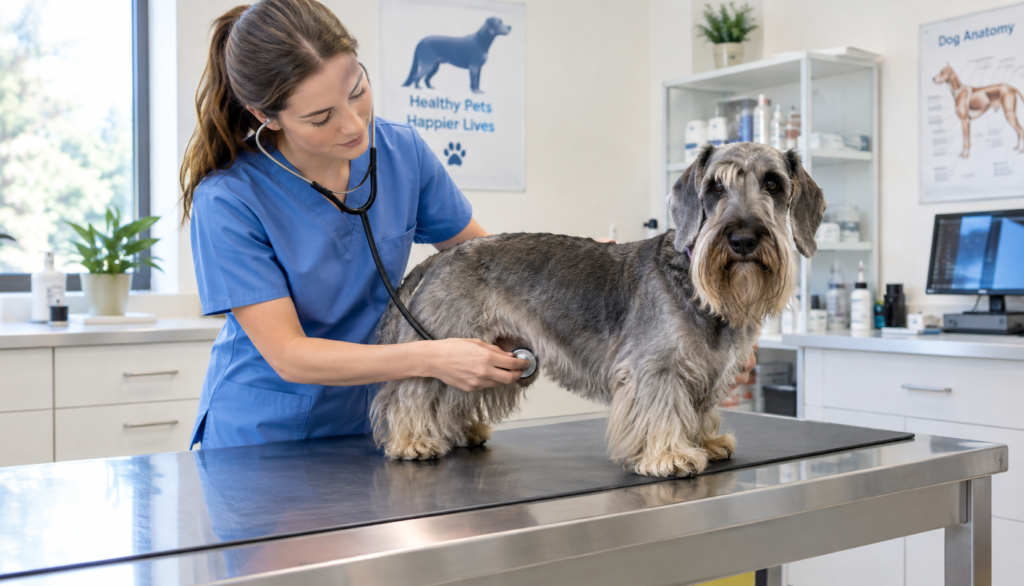
Searching for a quick fix for dog diarrhea often leads owners straight to the medicine cabinet — but human anti-diarrheal drugs are not automatically safe for dogs, and some are outright dangerous. What works for a person’s upset stomach can affect a dog very differently, both because of size and dosing differences and because certain drugs interact badly with a dog’s biology in ways that have nothing to do with the digestive system itself. This guide breaks down exactly which over-the-counter medications are sometimes used for dogs, which ones to avoid entirely, what a vet will actually prescribe once a cause is identified, and how to tell whether medicine is even the right move before trying a bland diet or simply waiting it out.
Should You Give a Dog Medicine for Diarrhea at All?
Diarrhea is usually the body’s way of clearing out something irritating, harmful, or infectious. In many mild cases, the most effective “treatment” is actually a short period of digestive rest followed by a bland diet — not medication. Reaching for medicine first, before understanding the cause, can sometimes suppress a symptom that’s doing useful work, or mask signs that a more serious problem is developing underneath.
That said, there are situations where a vet will use medication deliberately: to control a specific infection, calm inflammation, replace lost probiotics, or manage a chronic digestive condition. The distinction that matters most is whether a professional has assessed the cause first, or whether a medicine is being given blind, based on the symptom alone.
Human Over-the-Counter Medicines: Which Are Sometimes Used, and Which Are Not
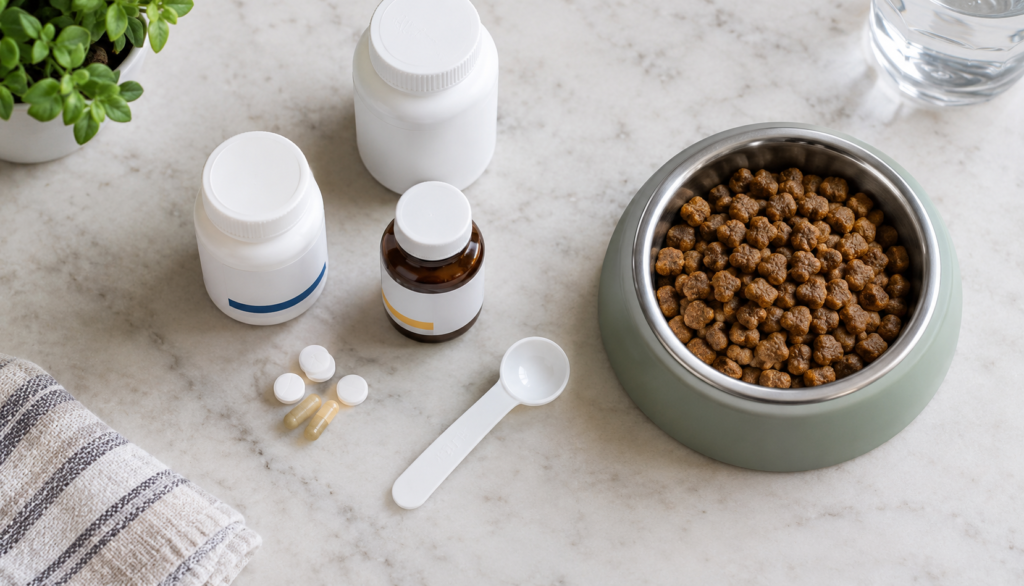
Several common human anti-diarrheal medications occasionally come up in conversations about dogs, but they are not interchangeable, and none should be given without at least a phone consultation with a veterinarian first.
Pepto-Bismol (Bismuth Subsalicylate)
Pepto-Bismol is sometimes used in dogs under veterinary guidance, typically for mild, uncomplicated cases. However, it contains a compound related to aspirin, which means it carries a bleeding risk and should never be used in dogs that are also on other anti-inflammatory medications, have a bleeding disorder, or are pregnant. It can also turn stool a dark, tar-like color, which can be mistaken for gastrointestinal bleeding — a confusing side effect that has sent more than one worried owner to an emergency vet unnecessarily.
Imodium (Loperamide)
Imodium is used in some dogs, but it is genuinely dangerous for certain breeds. Dogs with the MDR1 gene mutation — common in Collies, Australian Shepherds, Shelties, and related herding breeds — can experience severe, even life-threatening neurological side effects from loperamide because their bodies can’t clear the drug properly from the brain. Unless a vet has confirmed a dog’s MDR1 status or breed risk, Imodium should be treated as off-limits without direct veterinary instruction.
Kaopectate
Older formulations of Kaopectate contained the same bismuth subsalicylate as Pepto-Bismol and carried similar risks. Newer formulations have switched to different active ingredients, and dosing guidance varies by version — this is a product where checking the actual label, not just the brand name, matters, and a vet call is still the safer first step.
Anti-Nausea and Anti-Diarrheal Combination Products
Multi-symptom human products marketed for stomach flu or traveler’s diarrhea often contain a mix of ingredients, some of which (like certain decongestants or pain relievers bundled in) are unsafe for dogs regardless of the anti-diarrheal component. These combination products should be avoided entirely rather than assessed ingredient by ingredient at home.
Why “Ask First, Give Second” Matters Here
The reason vets consistently push back on owners self-medicating for diarrhea isn’t overcaution — it’s that the wrong medicine at the wrong dose, in the wrong dog, can turn a manageable digestive upset into a genuine emergency. Dosing for dogs is also weight-dependent in a way that human packaging doesn’t account for, so even a “dog-safe” medication given at a human dose, or given to a small dog at a large-dog dose, can cause problems. A quick call to a vet or a veterinary telehealth line before giving anything is almost always faster and safer than guessing.
It’s also worth remembering that a vet’s answer often depends on details an owner might not think to mention unprompted — the dog’s breed, current medications, age, and how long the diarrhea has been going on. A five-minute phone call that covers those details can rule out a dangerous drug interaction or a breed-specific sensitivity before it becomes a problem, which is exactly the kind of check that’s impossible to do reliably from a product label alone.
What Vets Actually Prescribe for Dog Diarrhea
When a vet visit is warranted, treatment is usually more targeted than anything available over the counter, because it’s based on an actual diagnosis rather than the symptom alone.
- Metronidazole: An antibiotic with anti-inflammatory properties, commonly prescribed for diarrhea linked to bacterial overgrowth or certain parasites like giardia.
- Probiotics (veterinary-grade): Used to help restore healthy gut bacteria, especially after antibiotic treatment or an infection.
- Anti-nausea medication: Often paired with anti-diarrheal treatment when vomiting is also present, to help the dog keep fluids and food down.
- Dewormers or anti-parasitic treatment: Prescribed when a fecal test identifies worms or protozoal parasites as the cause.
- Prescription bland or GI-support diets: Highly digestible commercial diets formulated specifically for digestive upset, sometimes used instead of or alongside medication.
- IV fluids: For dogs showing signs of dehydration, given in-clinic to restore fluid and electrolyte balance quickly.
Because these treatments target a specific underlying cause, they tend to resolve diarrhea faster and more completely than symptom-suppressing medication alone — which is part of why a vet visit, rather than trial-and-error at home, is the better path for anything beyond a mild, short-lived case. It’s also worth noting that a vet may run bloodwork or a fecal test before prescribing anything at all, since treating the wrong cause with the right-sounding medication rarely produces good results. A dog with a parasitic infection, for example, won’t improve on probiotics alone, and a dog with a straightforward dietary upset doesn’t need antibiotics — matching the treatment to the actual cause is what separates a quick recovery from a drawn-out one.
When Medicine Isn’t the Answer — Home Care Comes First
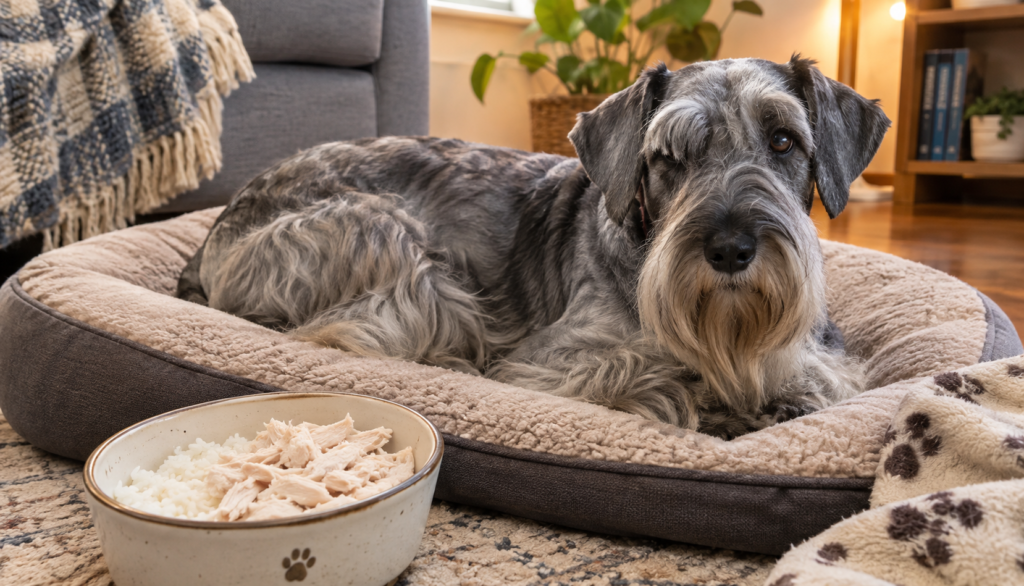
For dogs that are otherwise bright, active, eating, and drinking normally, with mild diarrhea and no other symptoms, most vets recommend starting with dietary management rather than medication:
- A short period without food (12–24 hours, adult dogs only — never puppies, seniors, or dogs with health conditions)
- A bland diet of plain boiled chicken and white rice once eating resumes
- Small, frequent meals rather than one large one
- Plain canned pumpkin in small amounts to help firm stool
- Withholding treats and table scraps during recovery
If diarrhea resolves within a day or two using this approach, medication was likely never necessary. If it doesn’t improve, that’s the signal to move from home care to a vet visit rather than escalating to over-the-counter medicine on your own.
What Most People Don’t Know
Most owners assume the main risk of giving a dog the “wrong” diarrhea medicine is that it simply won’t work. In reality, several human anti-diarrheal medications can actively worsen the underlying problem. Loperamide, for instance, works by slowing intestinal movement — which is exactly the wrong effect if the diarrhea is caused by a toxin, infection, or bacterial overgrowth the body is actively trying to expel. Slowing that process down can trap the harmful material in the gut longer, occasionally making the dog sicker rather than better. This is a major reason vets prefer to identify the cause before reaching for anything that suppresses the symptom itself.
When to Skip Home Remedies and Medicine Entirely — Call a Vet
Some situations call for an immediate vet visit rather than any at-home medication attempt, over-the-counter or otherwise:
- Blood in the stool, or stool that looks black and tarry
- Repeated vomiting alongside diarrhea
- Lethargy, weakness, or refusal to eat or drink
- Diarrhea lasting more than 24–48 hours
- Puppies, senior dogs, or dogs with existing health conditions showing any diarrhea at all
- Known or suspected exposure to a toxin, foreign object, or something outside the dog’s normal diet
In any of these cases, giving an over-the-counter medicine and waiting to see if it helps can waste valuable time that would be better spent getting a proper diagnosis and targeted treatment.
Frequently Asked Questions
Q. Can I give my dog Pepto-Bismol for diarrhea?
A. Only with a veterinarian’s direct guidance. It’s sometimes used in dogs, but it carries a bleeding risk, isn’t safe for all dogs, and can turn stool black — which can be mistaken for a more serious problem.
Q. Is Imodium safe for dogs?
A. Not for every dog. Imodium can cause severe, even life-threatening reactions in dogs with the MDR1 gene mutation, common in Collies, Australian Shepherds, and related herding breeds. Never give it without a vet’s explicit approval.
Q. What does a vet prescribe for dog diarrhea?
A. Depending on the cause, a vet may prescribe metronidazole, veterinary-grade probiotics, anti-nausea medication, a dewormer, or a prescription GI-support diet — treatment targeted at the underlying cause.
Q. Do I need medicine, or will a bland diet fix my dog’s diarrhea?
A. For mild, short-lived diarrhea in an otherwise healthy adult dog, a food break followed by chicken and rice often resolves it without medication. Medicine matters when it persists or comes with other warning signs.